
Postcards from Mars

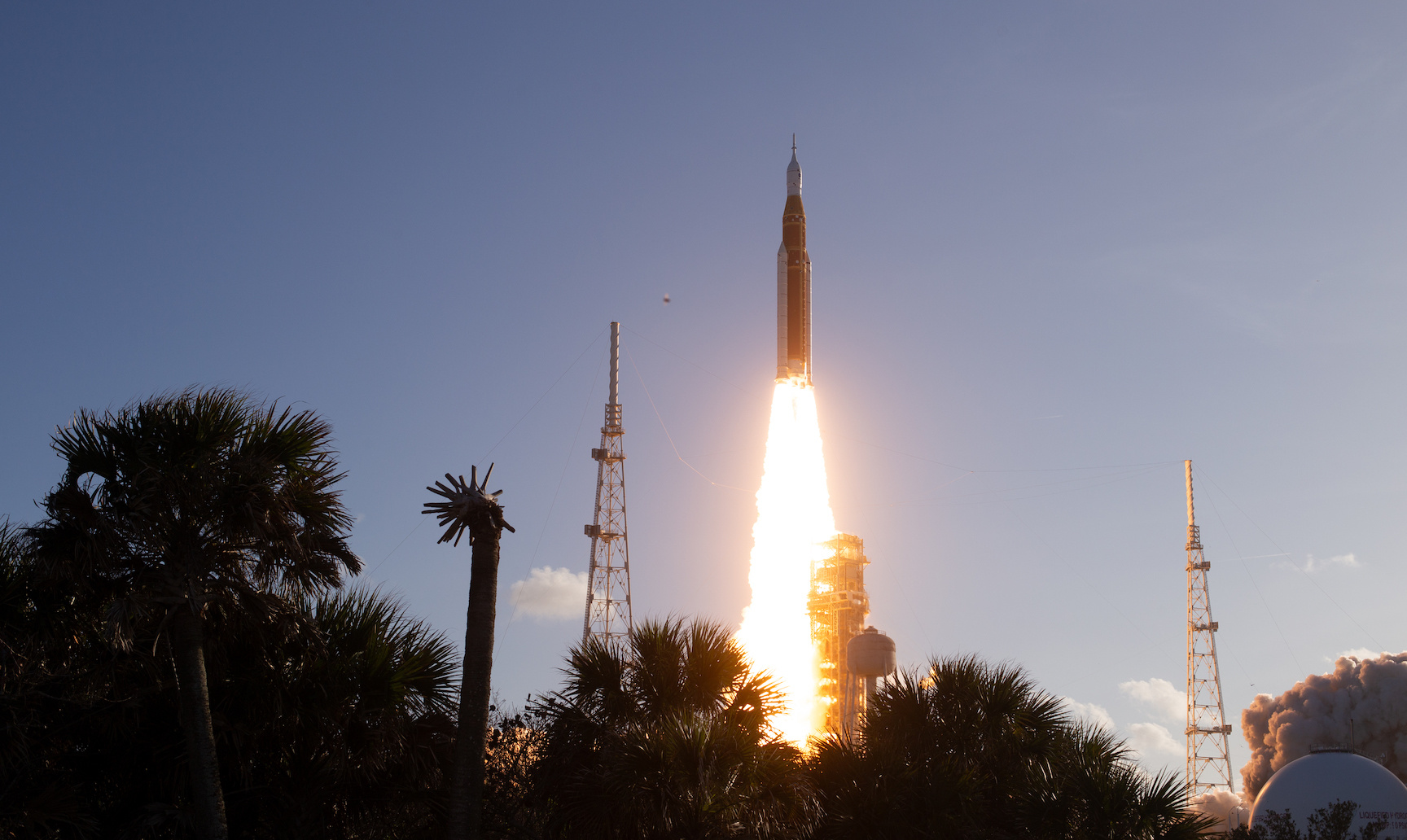
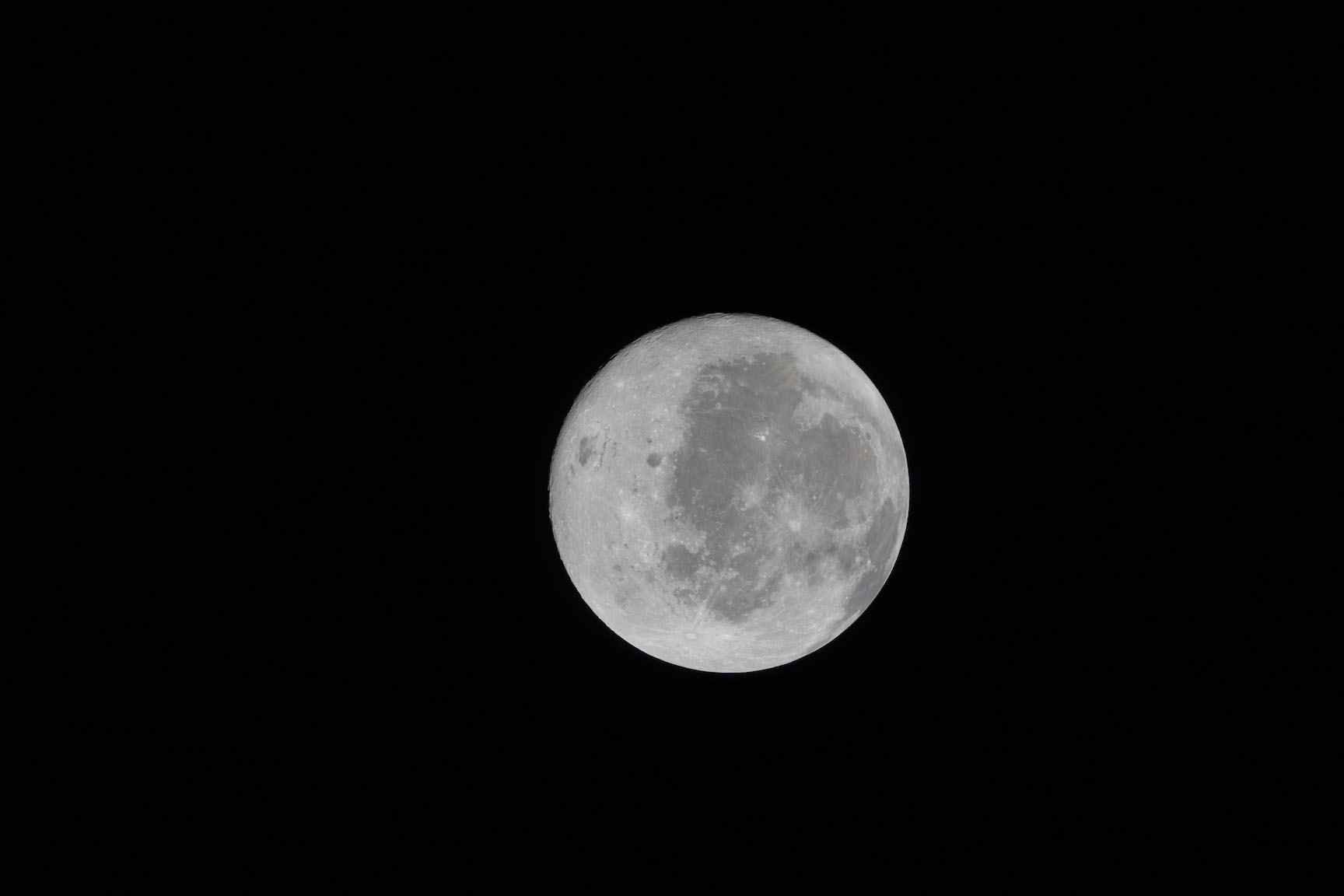
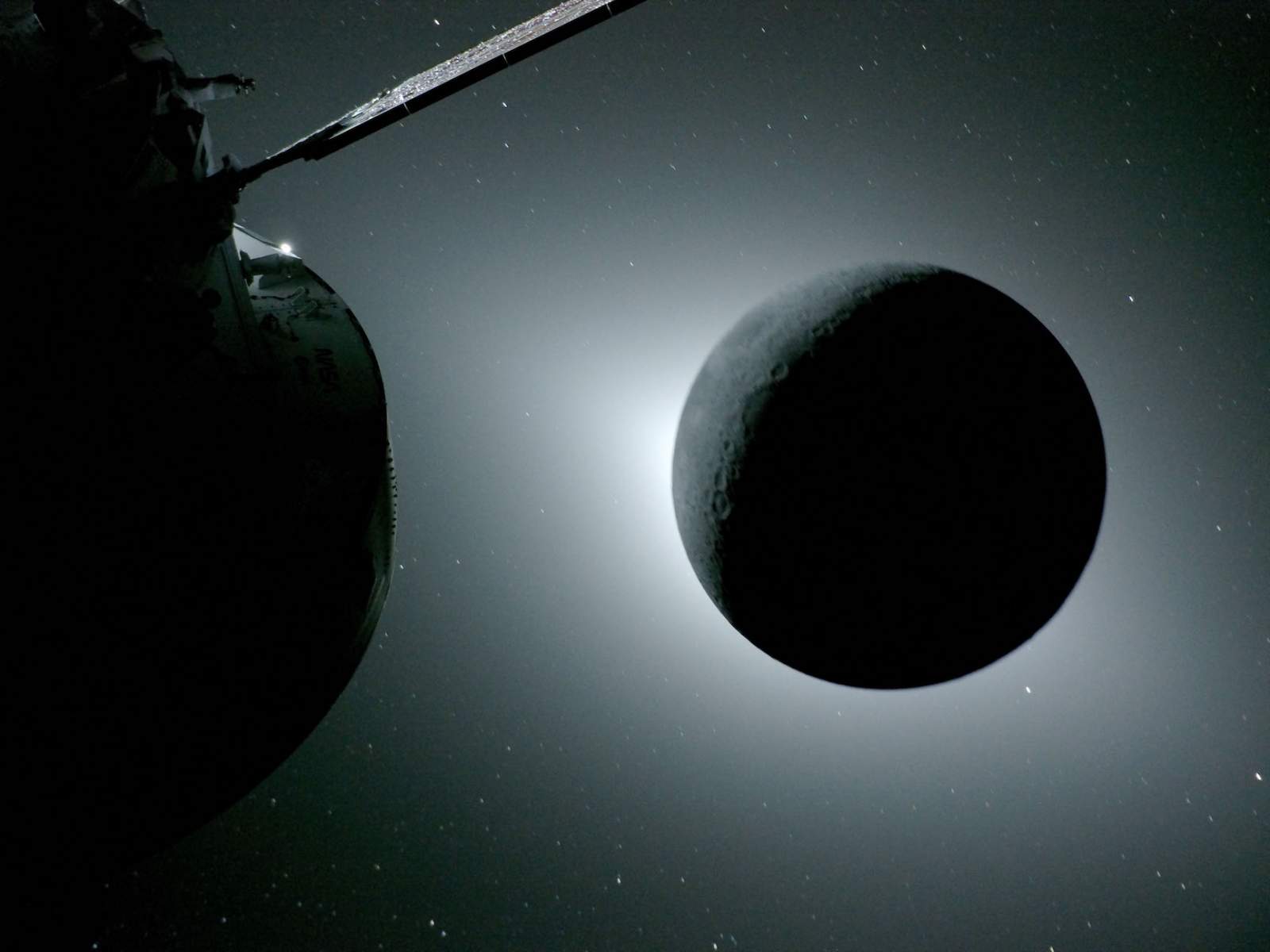
In celebration of Artemis II

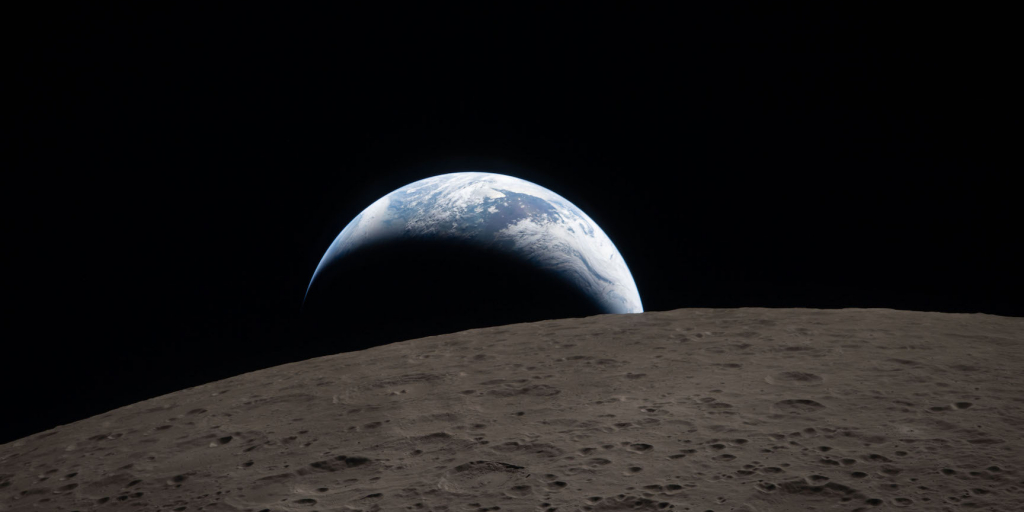
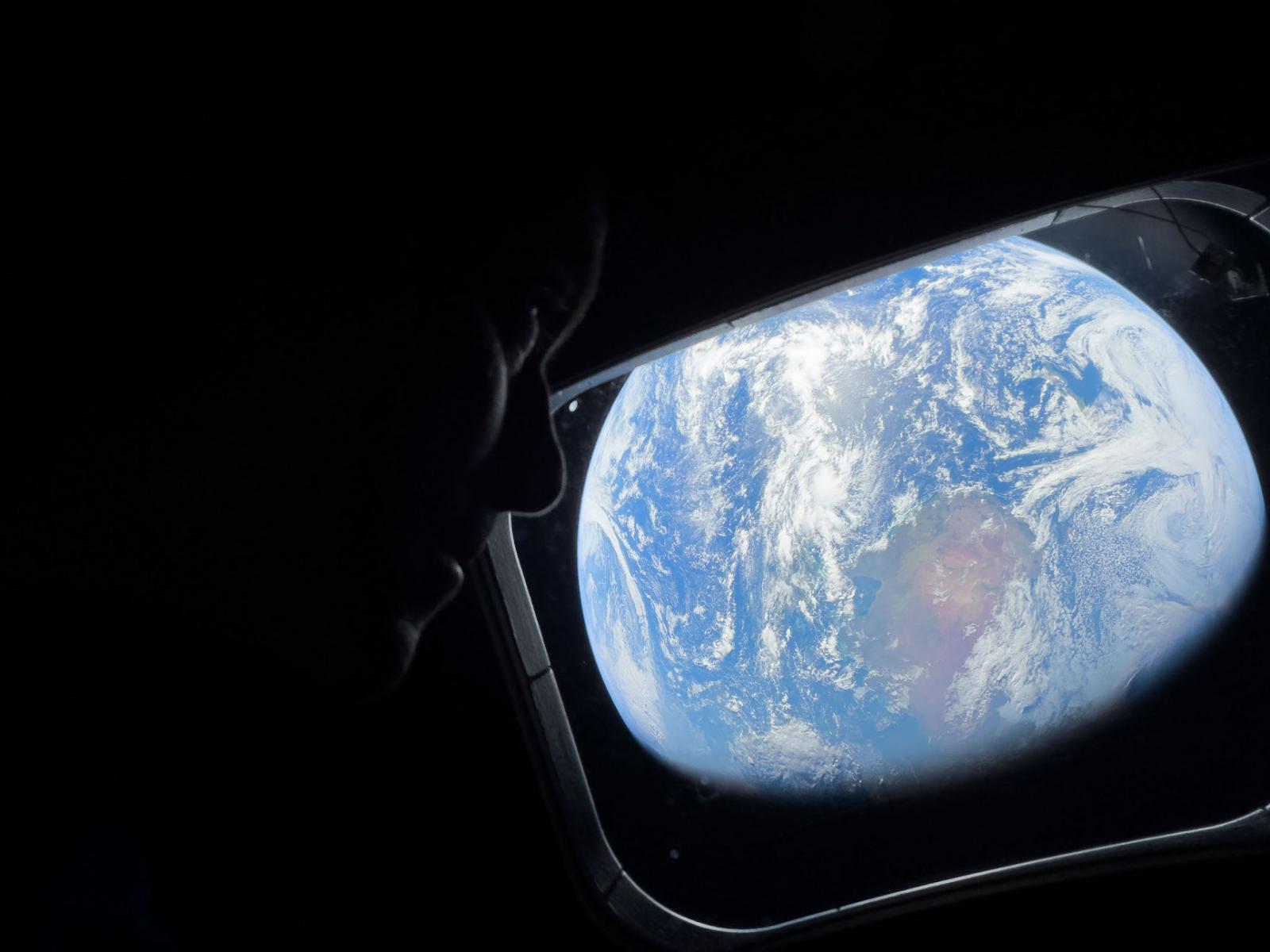
Earthrise over the Moon by Artemis II

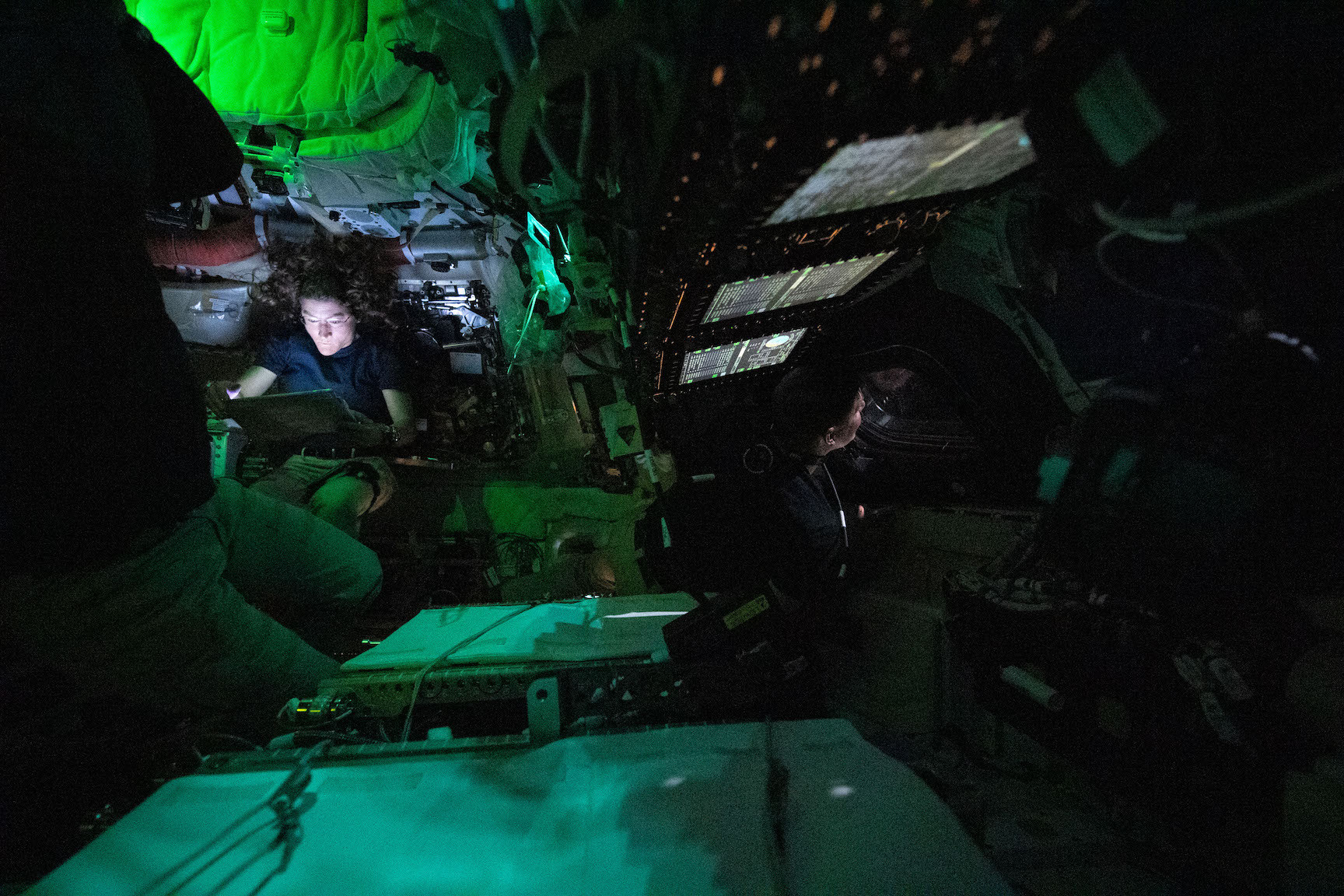
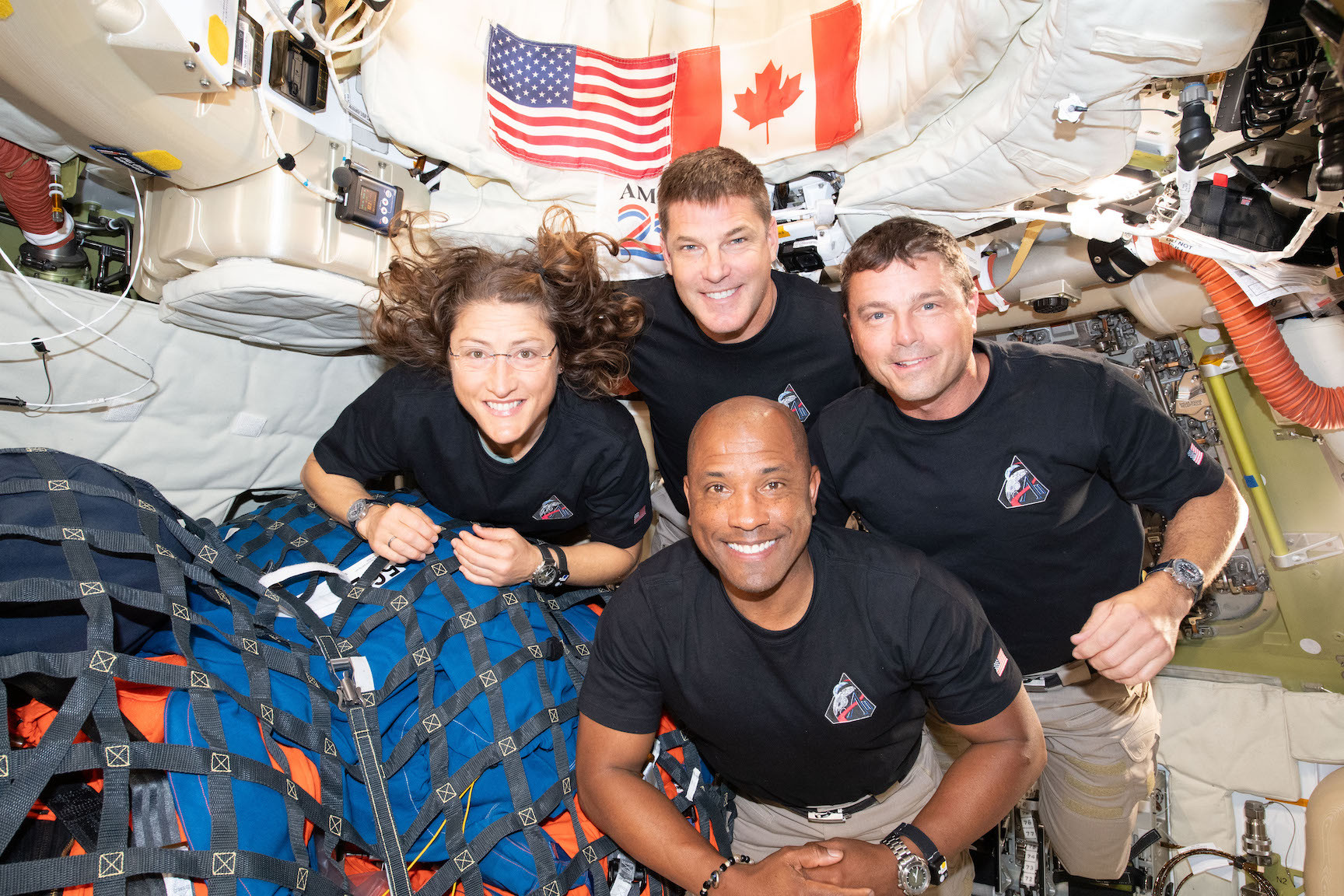
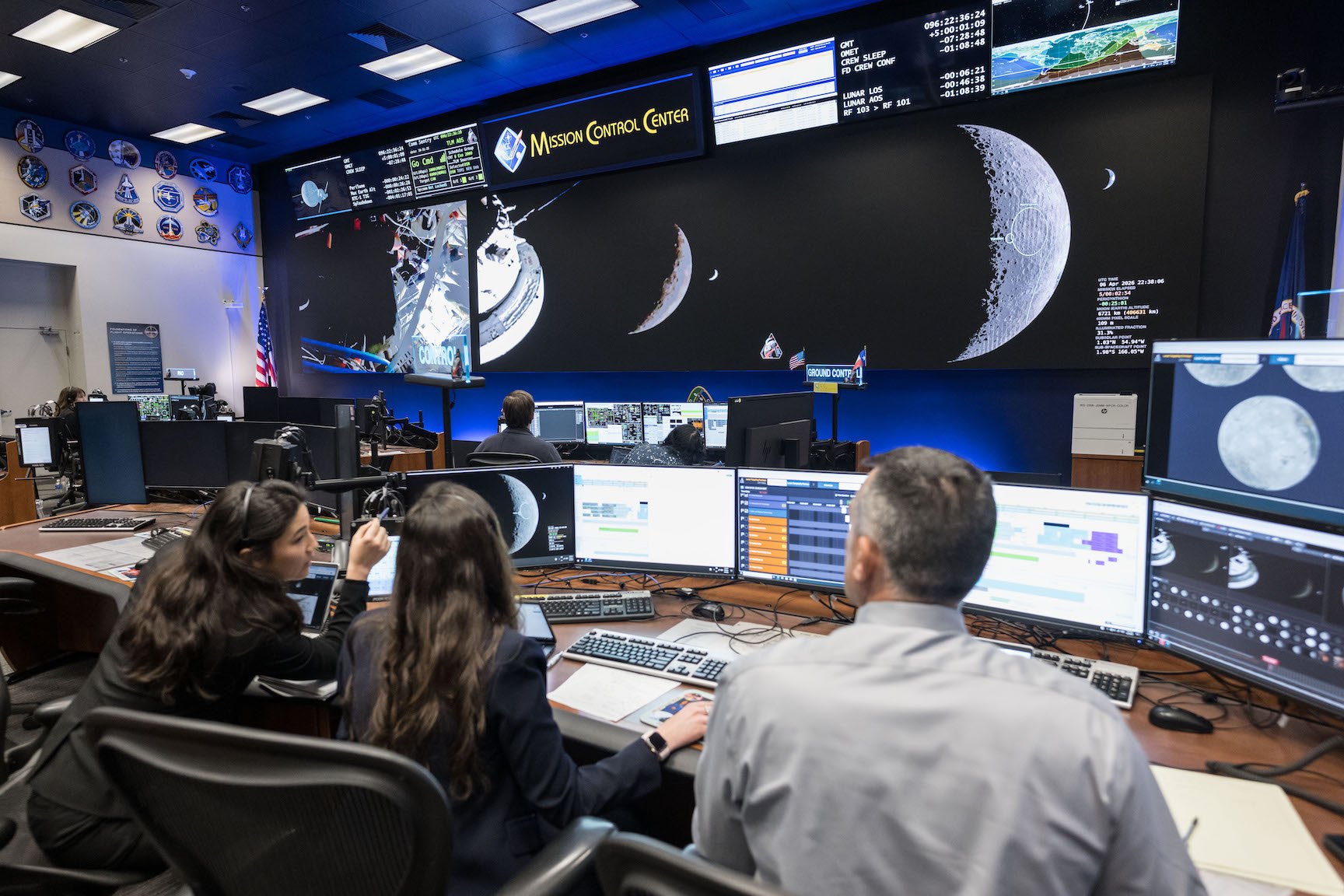
In celebration of all that humanity can do to dream, work together, and explore, the SAM team has been engaged in the Artemis II adventure to the Moon. Thank you NASA, the Canadian Space Agency, the hundreds of contract companies and thousands of individuals who worked for years to make this possible. Thank you for giving us hope at a time when hope and unity are needed more than ever.

By |2026-04-09T00:59:26+00:00April 7th, 2026|Categories: In the news|0 Comments

Three months into 2026 …

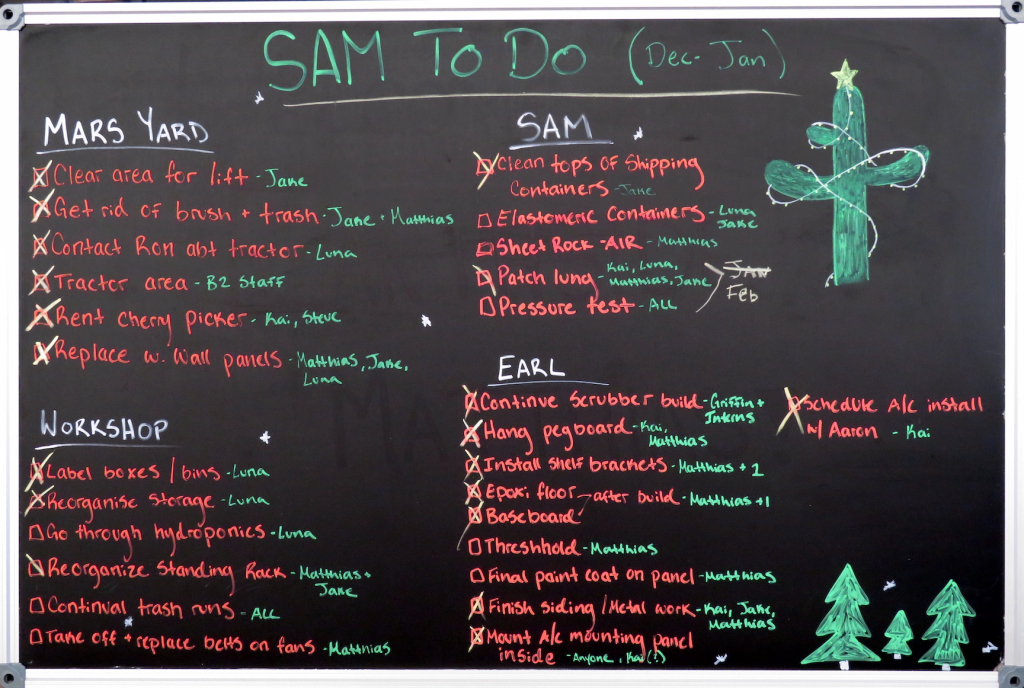
Blackboard TODO list at SAM

The SAM team continues to work non-stop to cross-off a massive list of tasks and action items, while juggling a growing array of visiting researchers, artists, and film crews.

When SAM was getting going, those first few years (2021-2023), Director of Research Kai Staats wrote a weekly summary of the tasks completed and those tasks that remained. This was delivered to the working group via a managed email list. Those items relevant to the work on-site were (and are still today) translated to a blackboard such that each team member is immediately aware of the full scope of projects and priorities for each day. What’s more, when a task is complete, the gratification of crossing it off the list is immediate and well received.

“In the context of so many available software programs for project management, I have found, through more than thirty years project management, that software can cause as many problems as it solves, and generally requires a dedicated manager, as asking each engineer to login and check off items is a waste of their time, not what they want to do, and usually never gets done.

Blackboards, however, require no power or recharging. They can hold a message for hours, days, or weeks without screen burn. And they engage team members in a kinesthetic function, walking, picking up chalk or chalk pens, and moving the entire upper body, not just typing on a two-dimensional screen.

Finally, and this one is difficult to formalize, there are some team members who are adept at the artistic side of communication, and truly enjoy the effort (ie. Luna). The rest of us smile with each refresh of the blackboard through the creative application of color, context, and style.

As such email-to-blackboard is not for everyone, but if you haven’t tried it, maybe you should!

And now, an edited version of my email to the team, sent earlier today …

Greetings SAM Working Group,

*** SCIENCE OBJECTIVES 2026 ***

The #1 objective of 2026 is also the very reason SAM was built—to demonstrate a hybrid bioregenerative / physico-chemical crewed mission in SAM. In the month of November we will host one or two crew members (TBD) for 30 days. The exact design of this mission will be crafted over this summer and fall, determining if we grow the plants to maturity during the mission, or as we did last October start the mission with mature plants and then harvest mid-mission, then relying on the CO2 scrubber running in EARL. There is also a three-phase approach, which mixes things up a bit.

Luna has this week received seeds for the next set of food cultivar experiments and will on Monday work with Jason to plant them in the incubator at Biosphere 2. In two weeks we’ll transplant the seedlings into the TM for 5-6 weeks growth (depending on the species). Luna will provide the plant schedule by the close of this week.

[skipping a half dozen sections]

*** PROJECTS COMPLETED ***

Here are a few tasks completed from the past month or so:
– replace Mars yard west wall panels – DONE
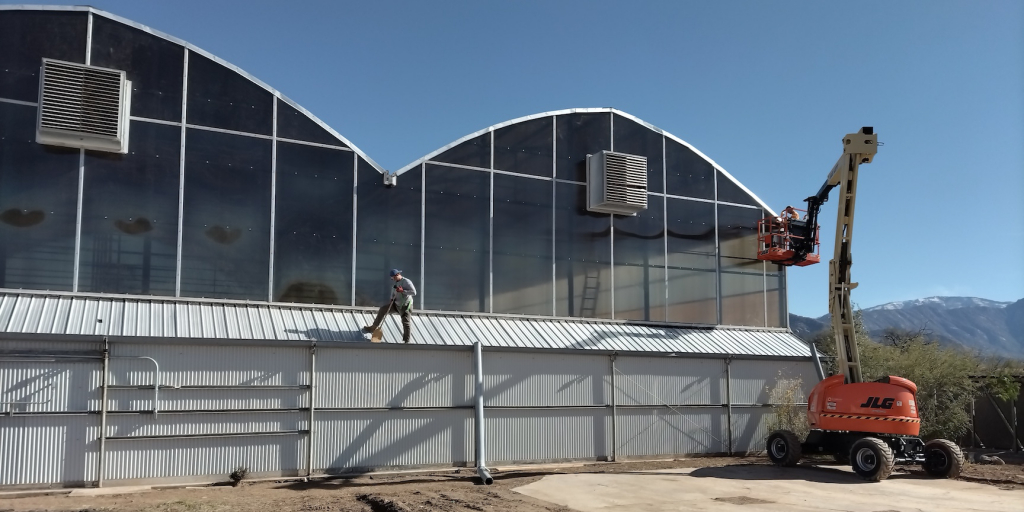
– fix gutters, paint south wall panels – DONE
– pour floor epoxy in EARL – DONE
– install EARL mini-split A/C – DONE
– finish EARL external paneling – DONE
– finish MedBay fabrication – DONE (for now)
– lung patches reinstalled – DONE
– replace lower lung door seal – DONE
– clean upper and lower lung – DONE
– cover Lung with tarp until sealed – DONE

*** PROJECT TODOs ***

SAM AIR
– install air line from EARL
– sheetrock and paint south wall and ceiling

SAM Lung
– repair foam over lung
– further test lower lung door for leaks
– final paint coat of upper lung pan

SAM Test Module
– install new water pumps (see prior email)
– find a way to seal the primary door more easily
– check for / seal any leaks
– test new seal(s) for TM/EB hatch
– fabricate bulkhead pass-through for water, fire detector
– replace potable water tank with stainless steel for Aug team

SAM Engineering Bay
– learn if the floor is a major leak point; and rebuild if necessary
– fabricate bulkhead pass-through for water, fire detector

SAM Crew Quarters
– learn if the floor is a major leak point; and rebuild if necessary
– build recycling shower for August team
– build sleeping pods from 80/20 for August team
– finish MedBay: install bed clip, surgical tools
– apply silicone to exterior roof (?)

SAM EARL and Scrubber
– install door sweep and threshold
– install LCD screen on north wall; install scrubber control computer
– rebuild stacks with new check valve, seal
– replace DC data cables with insulated, twisted pair
– resolve RMI issues that cancel data transmission
– drain chlorinated water; replace with straight water
– install water line cover to reduce algae build-up

And most important of all, tie the SAM Crew Quarters into EARL and the scrubber. This is a BIG project, and will surely take several days, if not two weeks. Matthias and I have explored some ideas, simplifying the effort—we’ll share more once the ideas are solidified.

SAM MedBay
– order surgical tools and supplies
– build 3D computer model
– invite external team members to participate in a mock, medical mission

SAM OPS
– install exterior and interior door (2) trim
– install workshop chem table
– purchase and install cabinets
– hang new artwork in the conference room and den
– install aluminum “T” in slot between countertop sections
– finish kitchen (stove top, microwave, pots & pans)
– replace facia (2×4) along exterior, south edge of roof

Well, that’s it! No more than at any other time in the past five years, but not less. Yet somehow, as we bring Development Phase V to close, it feels good to see all we have accomplished since January 20, 2021.

Cheers,
kai

By |2026-04-09T03:53:00+00:00April 5th, 2026|Categories: Research & Development|0 Comments

Enabling a partial hab test environment

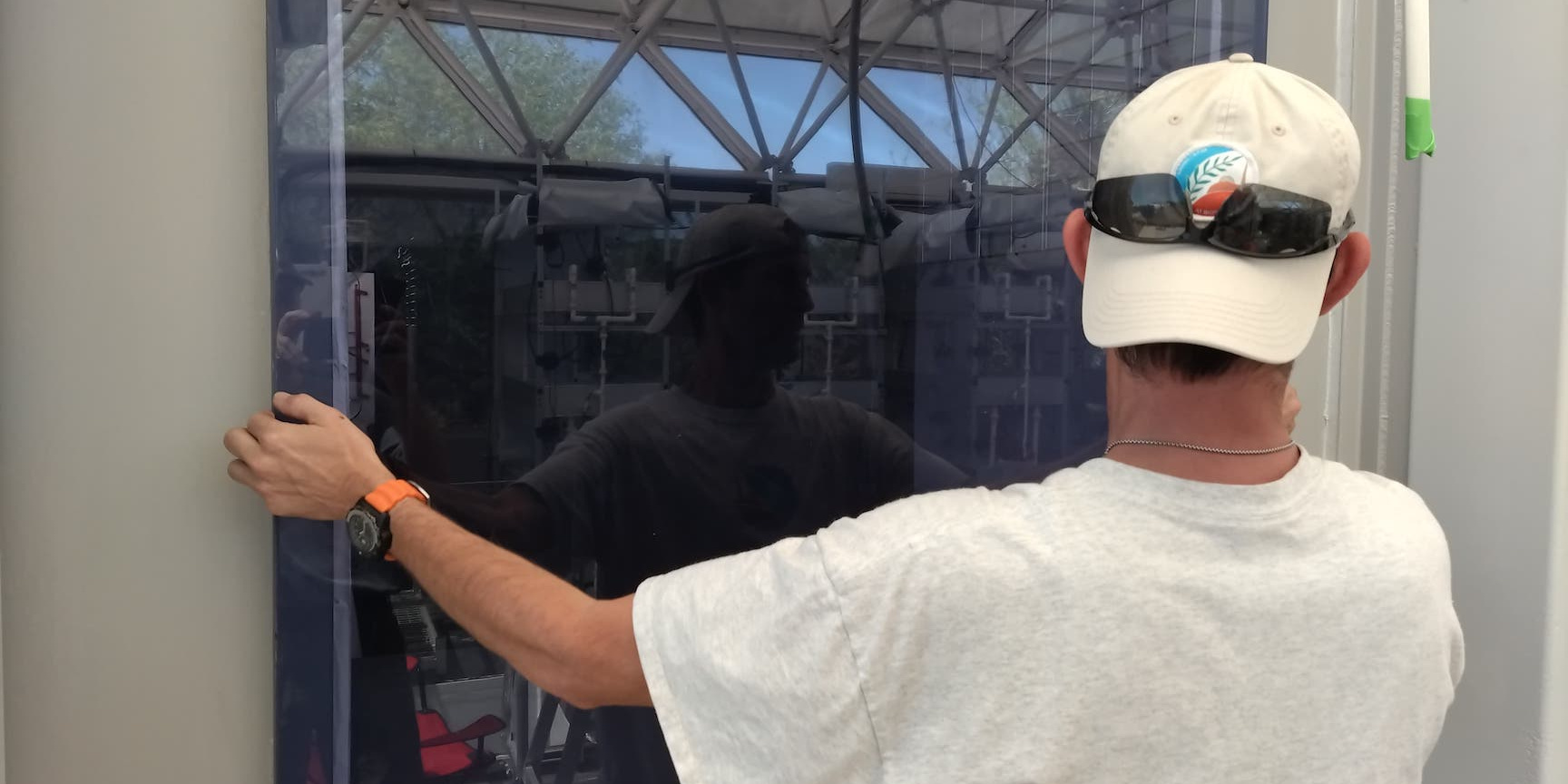
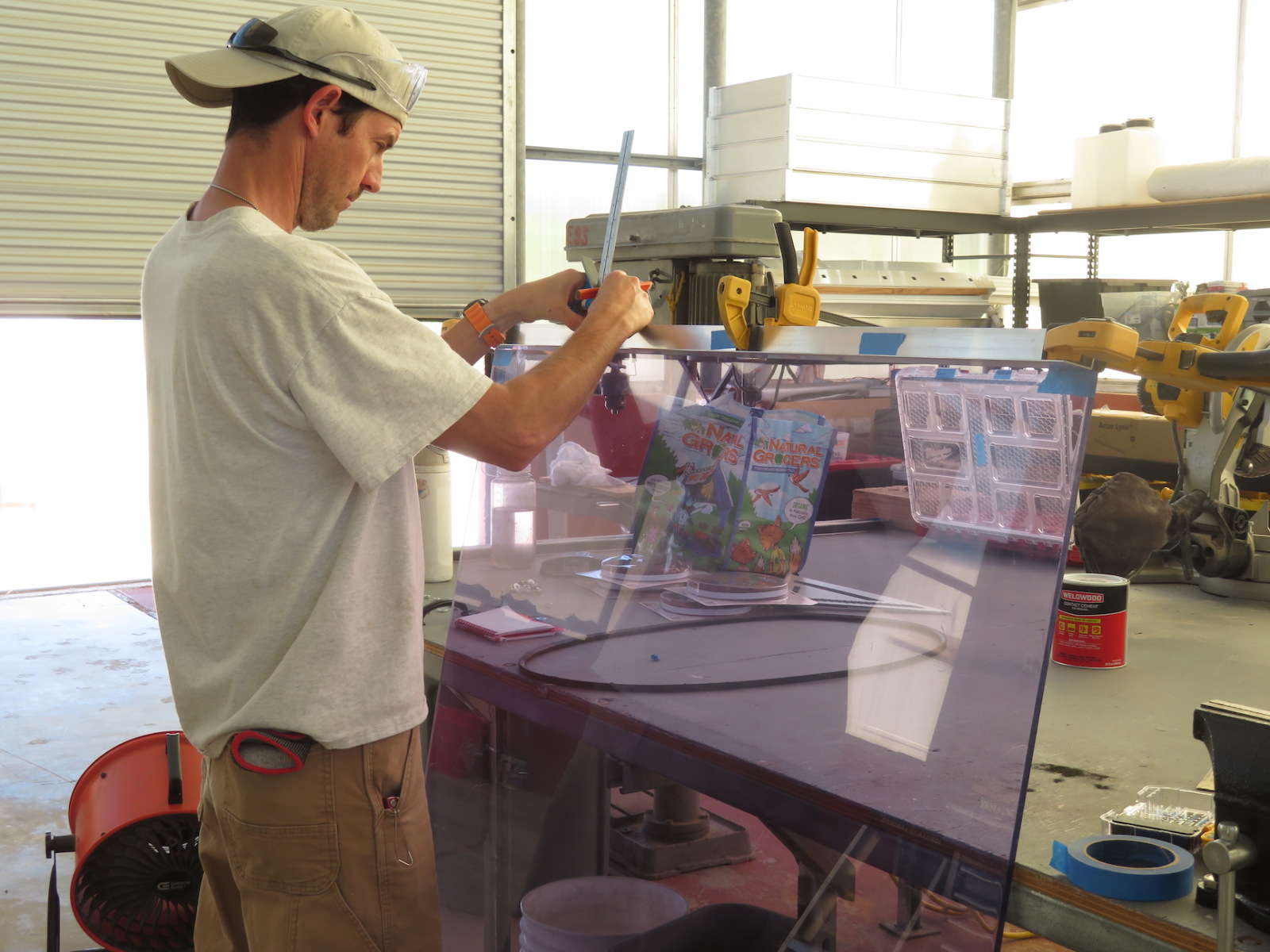
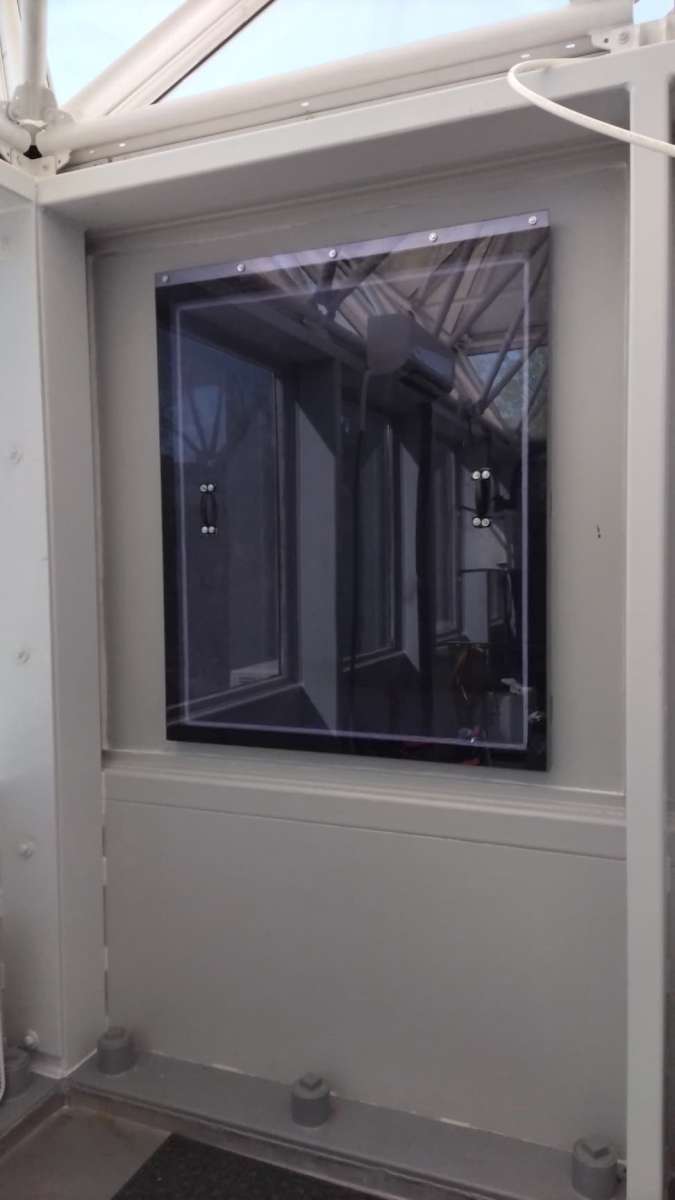
Matthias tests a new hatch between the Test Module and Engineering Bay in SAM at Biosphere 2

A feature of SAM that has been desired for some time, for which the steel framing was designed, is the ability to seal off one or more sections such that we can conduct pressure tests of one section versus the other, and use the Test Module for plant growth studies while continuing to work in the Engineering Bay and Crew Quarters without interrupting the plant experiments.

From March 2025 through the close of the years, UA masters student Atila Meszaros and Luna Powel conducted a half dozen plant growth experiments. During this time they attached a plastic tarp to the steel frame on the TM side of the hatch between the TM and Engineering Bay (EB). While this worked, it was a temporary configuration and not ideal.

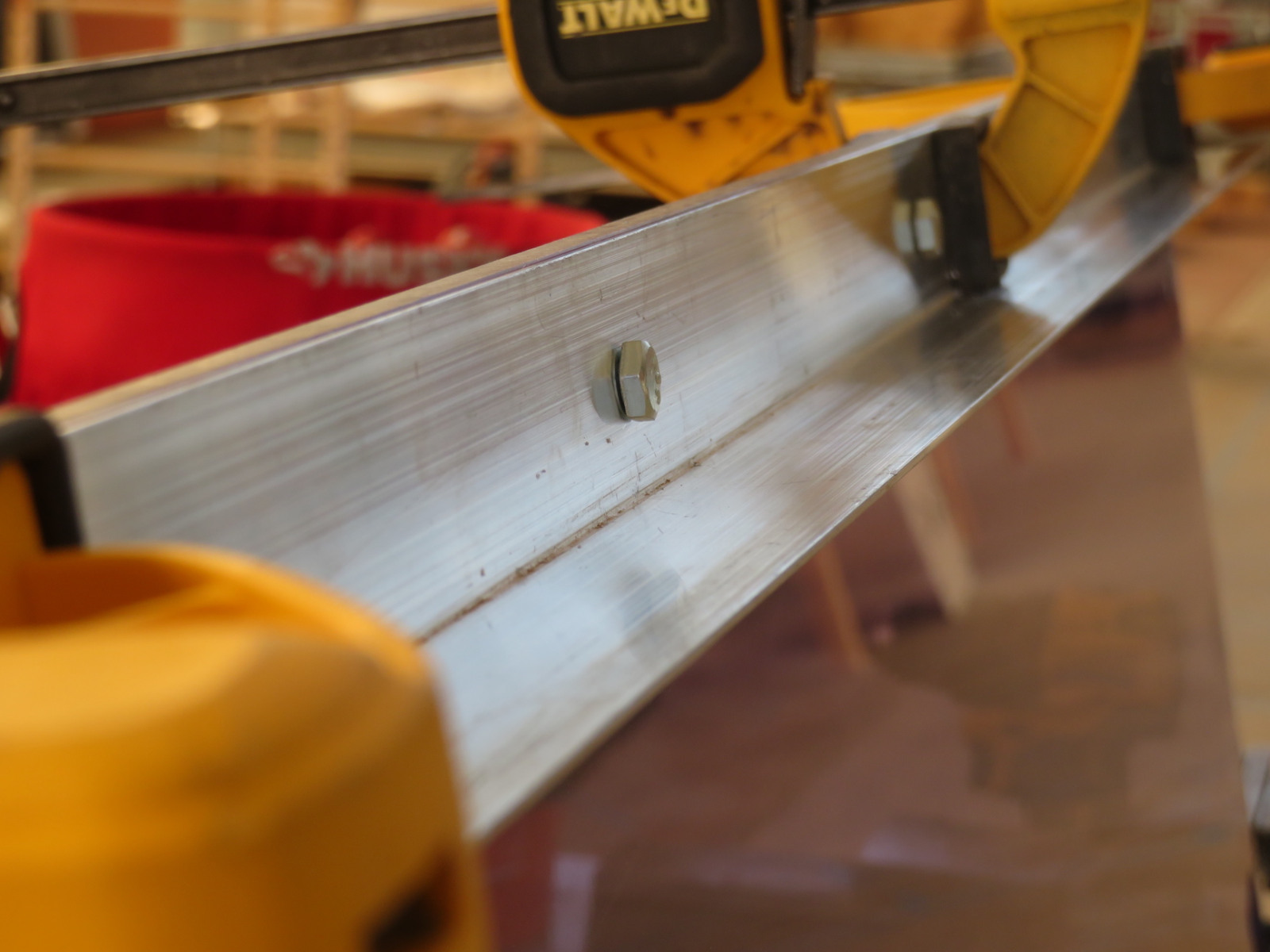
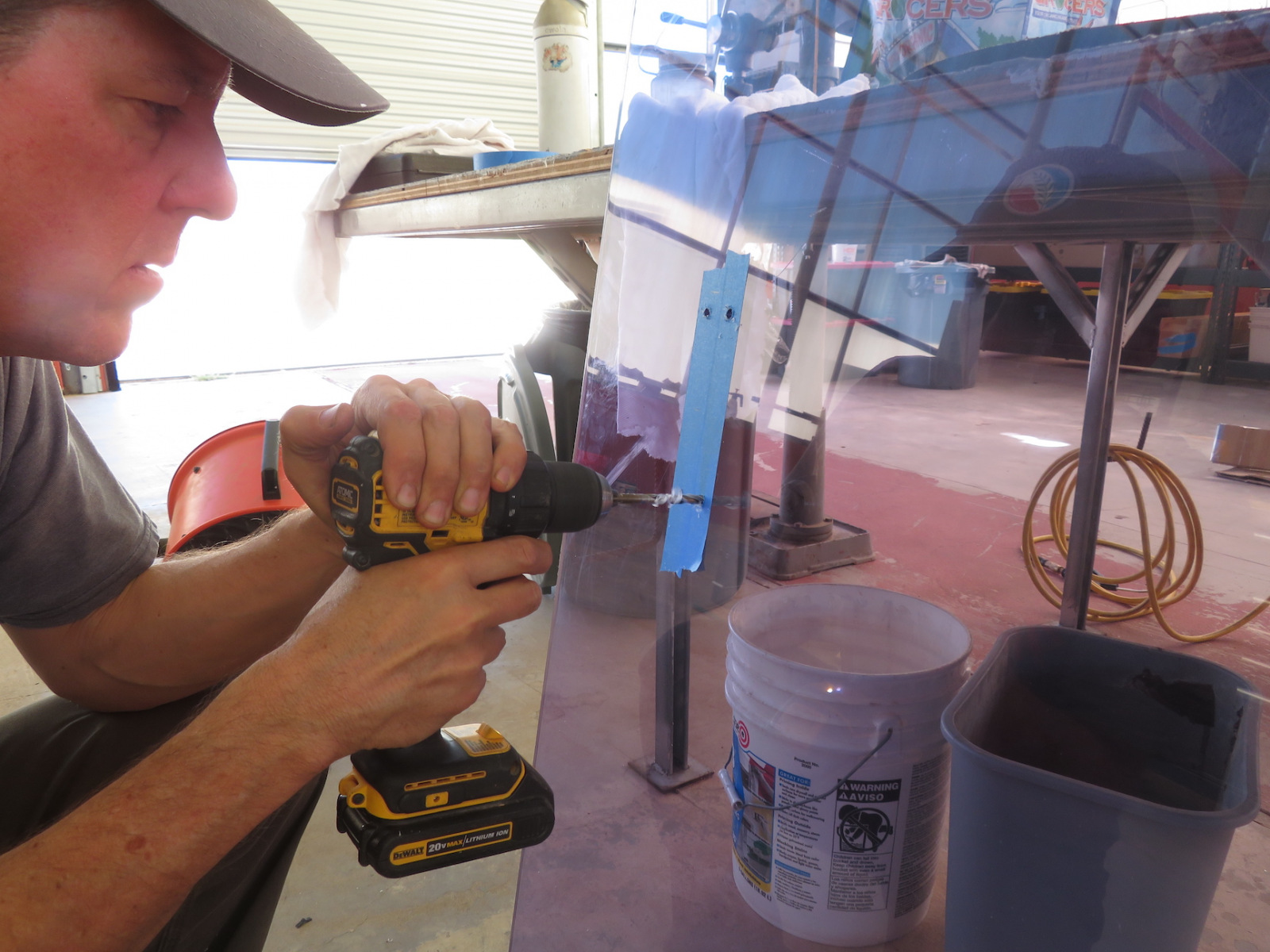
Last week Matthias removed the water line and fire detection wiring (a temporary condition) such that we he and Kai would design, fabricate, and fit a transparent PVC sheet onto the hatch frame. The water and electrical lines will be rerouted through a new bulkhead fitting that bypasses the bridge itself.

In a later pressure test (April 7), it it was determined that a flexible silicon-rubber membrane will be required in place of the close-cell foam that was adhered and tested, to provide the best possible seal in both a neutral pressure and pressure differential environment, and/or inclusion of clasps or magnetic attachment points.

By |2026-04-09T04:37:14+00:00March 23rd, 2026|Categories: Construction|0 Comments

First run of the 4-bed CO2 scrubber at SAM

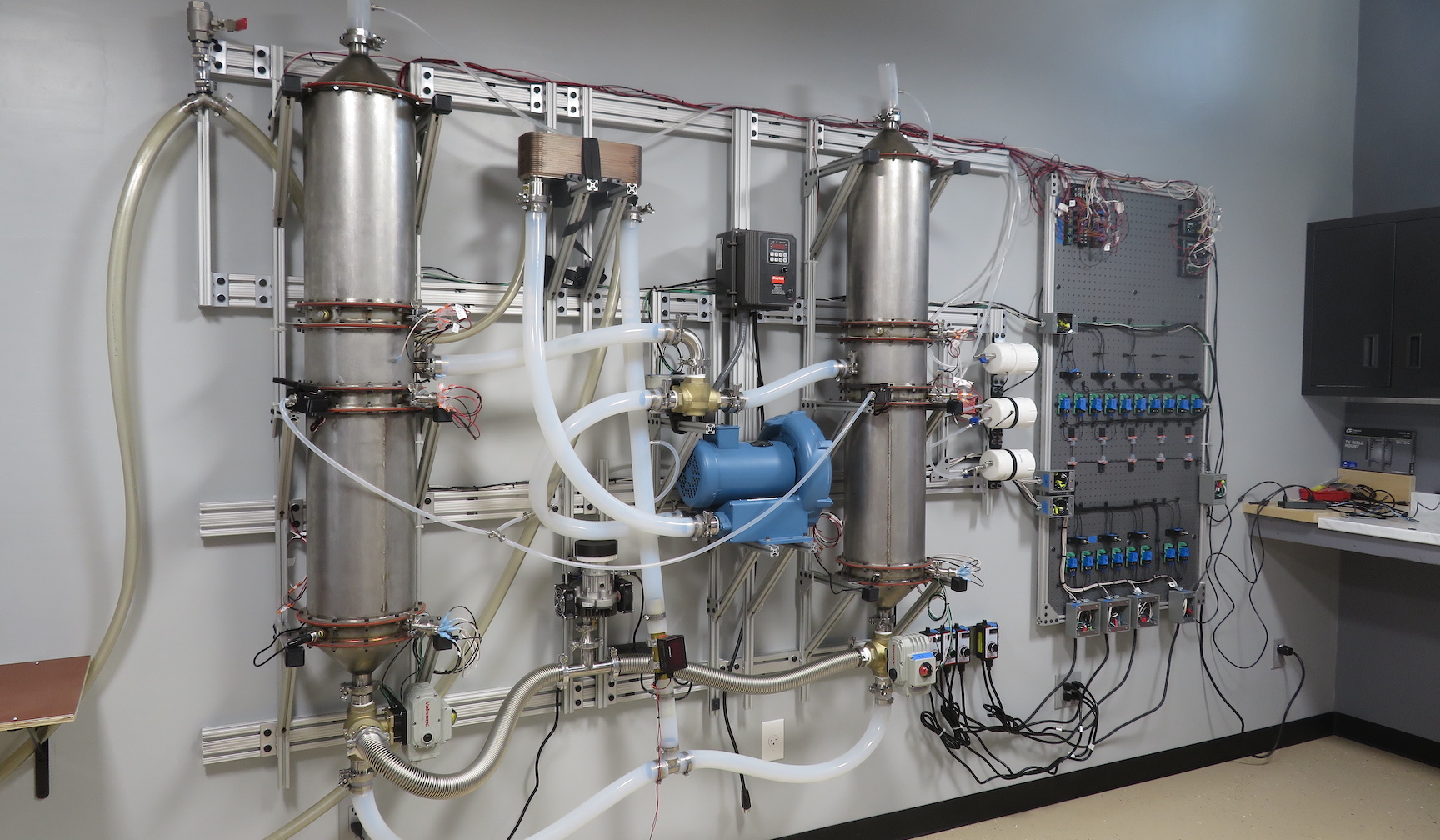
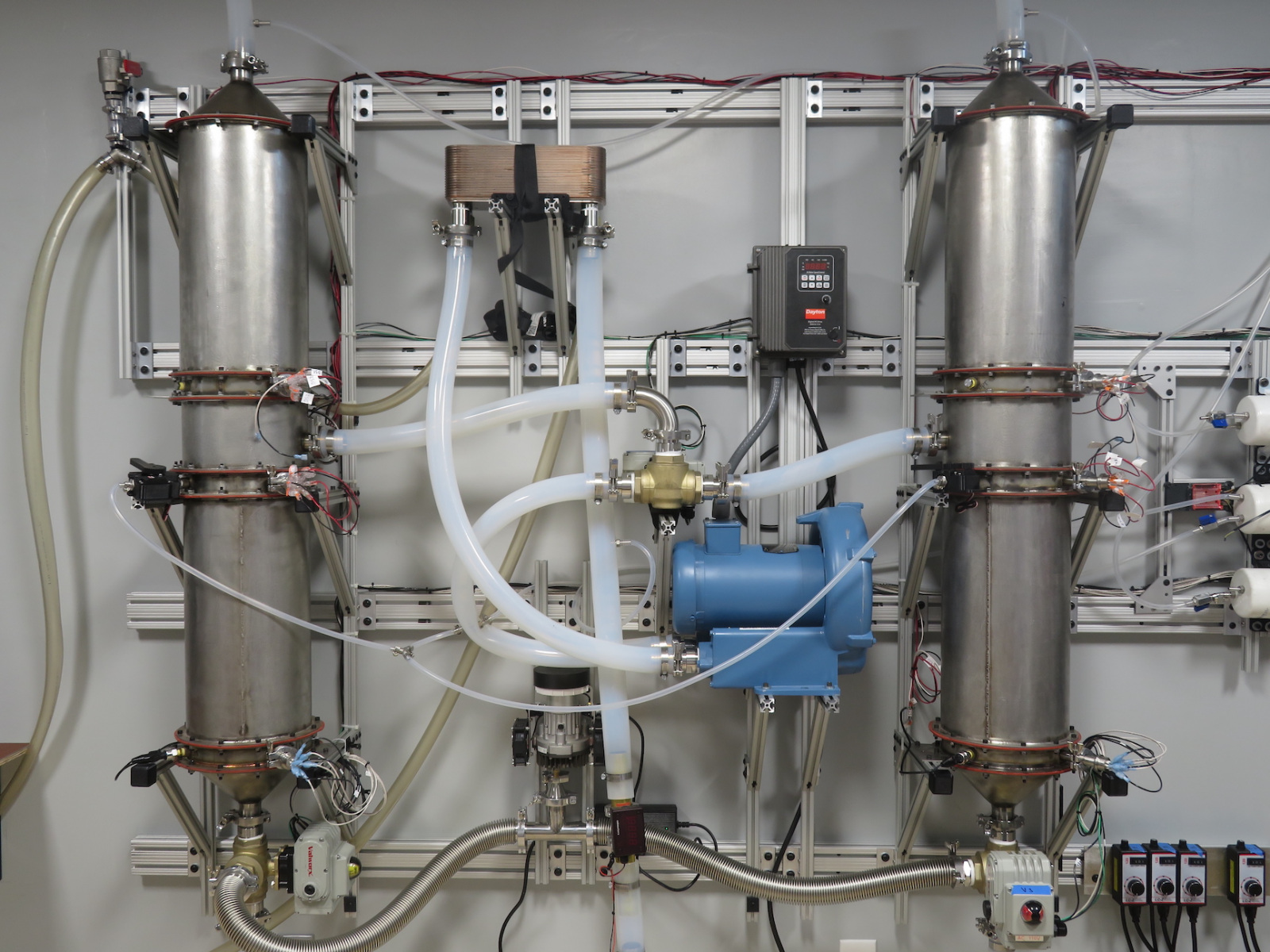
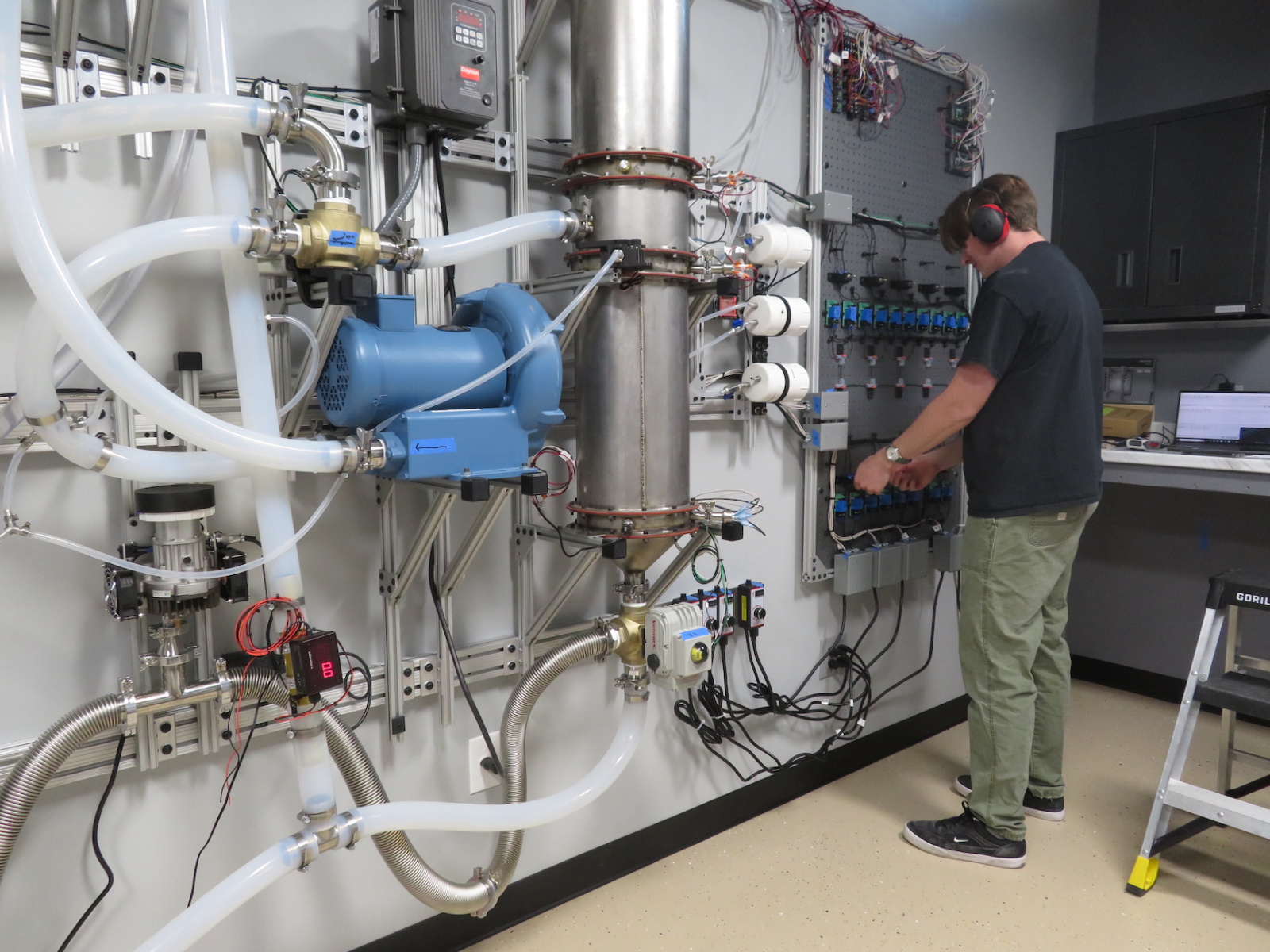
With the close of January, mechanical engineer Griffin Hentzen concluded his one-year work at SAM to design and build the 4-bed CO2 scrubber, licensed from NASA and a work-alike for the scrubber operating on the International Space Station.

University of Arizona undergraduate students Alyssa Ackerman, Brendon Phoebe, and Jeff Buskirk trained under Griffin for the final two months of 2025 and the full month of January. With Griffin’s departure, Director of Research Kai Staats and team member Matthias Beach joined Alyssa, Brendon, and Jeff in a review of the total system.

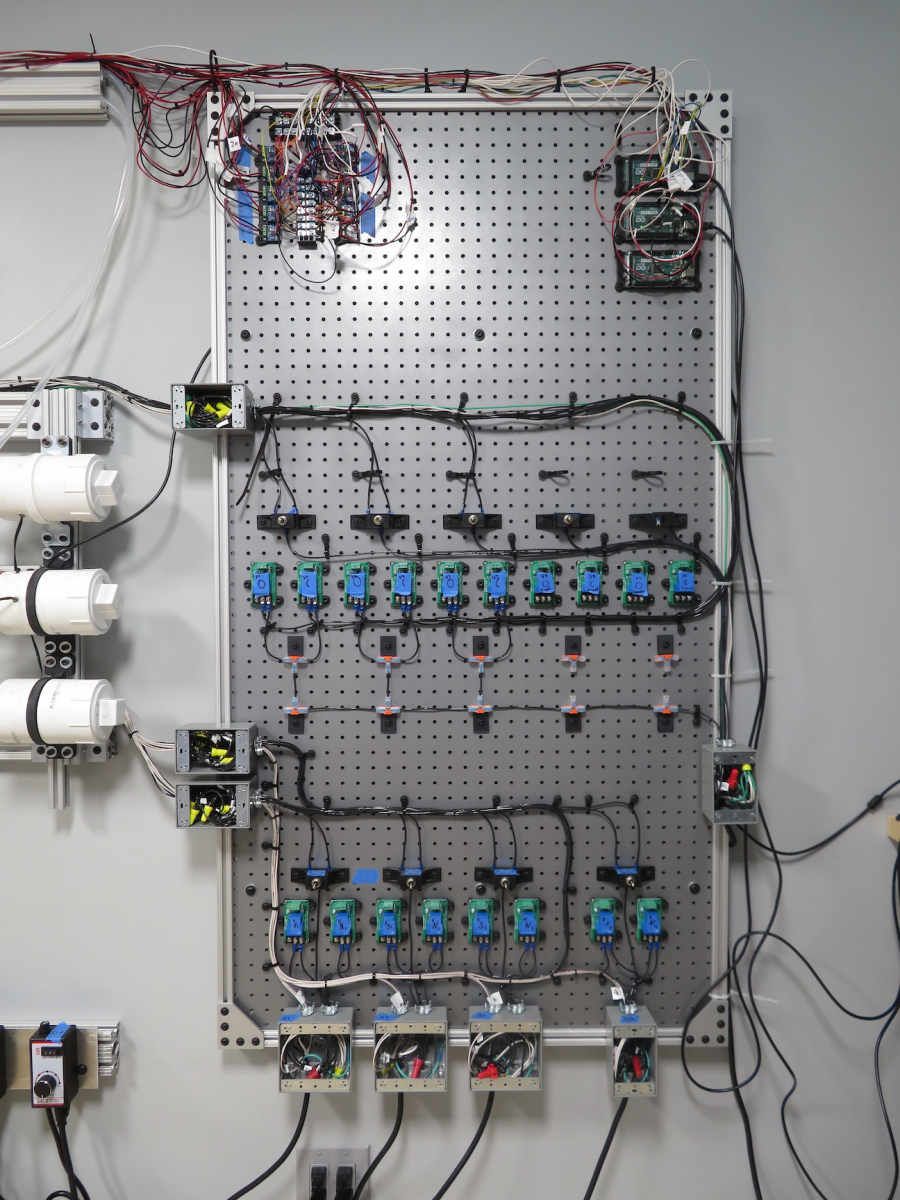
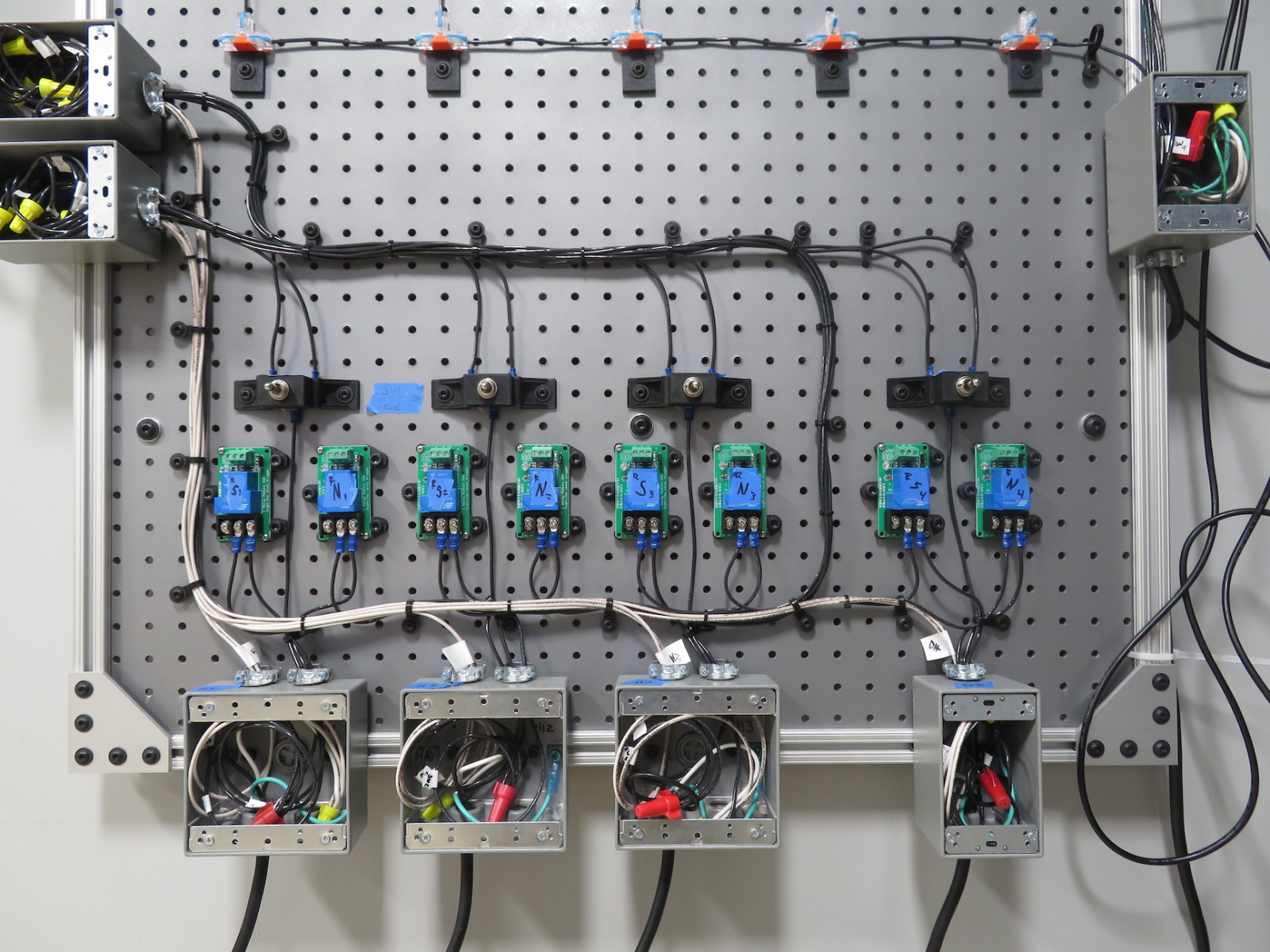
As it was assembled quickly prior to Griffin’s departure, to demonstrate a first-order function. In review of both the A/C wiring for the chamber heaters, and the D/C wiring for the sensors, it was determined best to rewire the entire scrubber. This effort was guided by Kai, and executed by Matthias and our UA student team, for roughly two weeks. We completed the rewire and immediately dove into a full run of the 4-bed CO2 scrubber for our second paper for the International Conference on Environmental Systems.

This experiment was 4-fold:

  1. Demonstrate the effective leak rate of the room
  2. Demonstrate the CO2 generated by one team member sealed inside
  3. Demonstrate the adsorb (capture) function of the CO2 scrubber
  4. Demonstrate the desorb (release) function of the CO2 scrubber

While the Experimental Air Revitalization Laboratory (EARL) was not designed to serve as sealed facility, nor to hold pressure, because the 4-bed CO2 scrubber in EARL is not yet configured to work with SAM, for this experiment we treated EARL as a sealed facility. To accomplish this, we wrapped the front door in a plastic tarp, using aluminum tape to seal against the door frame and floor. As the room would not be pressurized, there was no pressure differential from inside to outside, therefore the leak rate would be minimal.

Brendon Phoebe volunteered to be our test subject for all three human-in-the-loop runs. While the scrubber is designed to be computer controlled, and the Arduino-based systems are operational, we have not yet completed sufficient tests with the redundant, parallel manually operated system nor completed the programming.

As such, Brendon served as the operator for each of runs 2-4 (above).

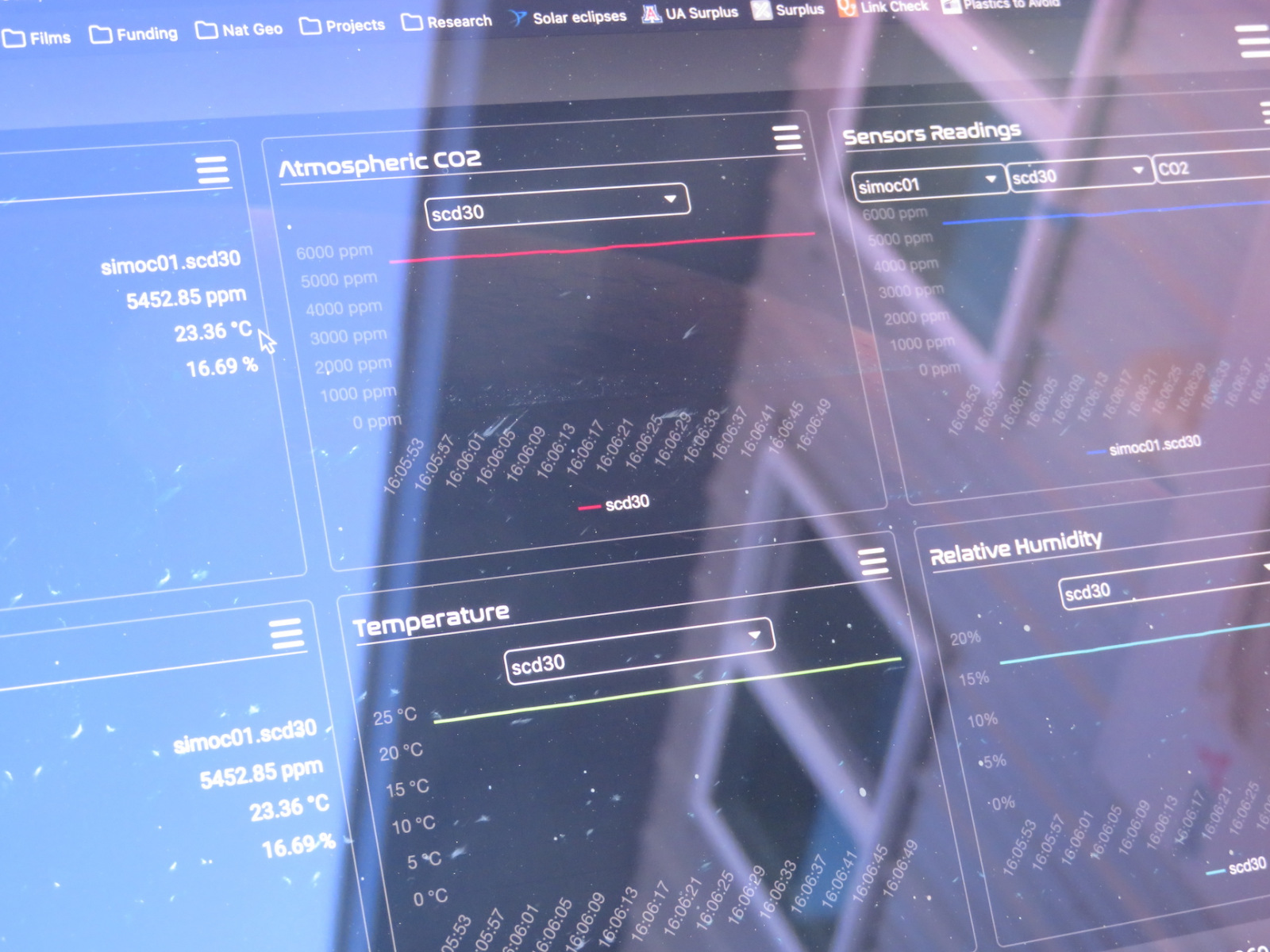
Carbon dioxide was injected from the cryogenic chamber we use for plant experiments in the Test Module, elevating the CO2 in EARL to roughly 5,000 parts per million. In run 1 we simply monitored the CO2 level for 30 minutes following injection. In run 2 we monitored the CO2 level with Brendon inside, where his breathing added CO2 to the total volume of the EARL room. In run 3 the scrubber adsorbed CO2, thereby reducing the total mass of CO2 in EARL over the 30 minutes period. And in run 4 the chamber that held the zeolites was heated which causes the CO2 to be released. This causes the CO2 level to rise again.

During the runs, Kai and Matthias were station in the Test Module with radio communication with Brendon for coordination, timing, and confirmation of data collection start and stop times. Kai’s laptop held a remote viewing of the data collected by SIMOC Live for CO2, relative humidity, and temperature.

The experiment was, overall, a success and generated ample data for the ICES 2026 paper. The full results will be available with publication of the paper, and a link will be provided here with the release of the conference proceeds.

By |2026-04-09T03:39:17+00:00March 4th, 2026|Categories: Research & Development|0 Comments

SAM to become testing ground for next-generation space habitats

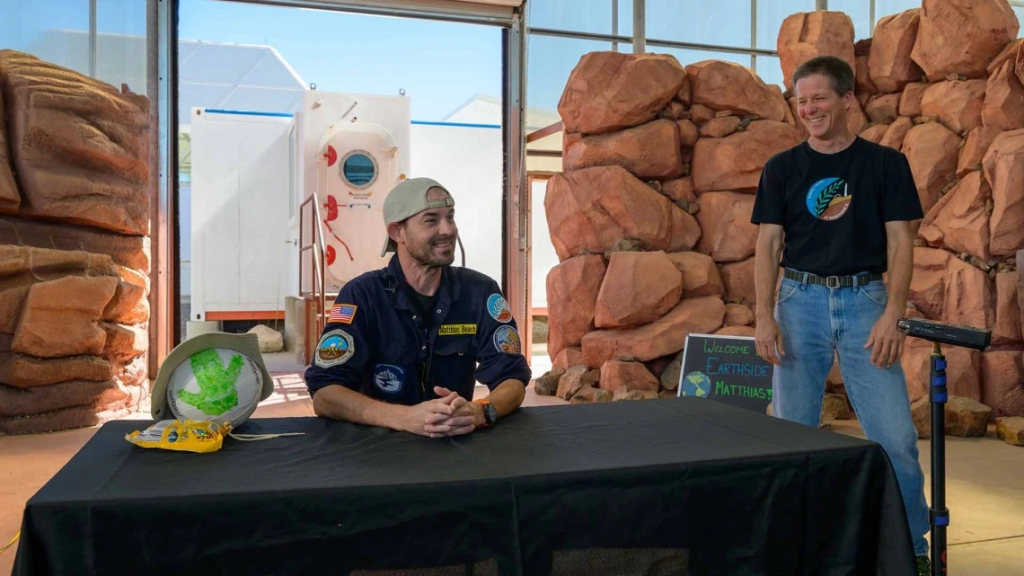
Matthias Beach and Kai Staats at SAM following a 2-weeks solo mission, October, 2025

Biosphere 2’s SAM to become testing ground for next-generation space habitats

By Laine Kowalski, U of A Office of Research and Partnerships

At the University of Arizona’s Biosphere 2, the Space Analog for the Moon and Mars, better known as SAM, operates as a sealed habitat where air, water and food are measured and recycled as if it were far from Earth’s croplands and life-sustaining atmosphere.

SAM’s research informs the future of astronaut life-support systems while advancing a broader goal: positioning the facility as a critical testing ground for next-generation space habitats.

Read the full article …

By |2026-02-23T20:01:49+00:00February 23rd, 2026|Categories: In the news|0 Comments

Happy Birthday to SAM!

Five years ago today, SAM was born.

If we had known that half a decade later we’d still be building, well, we might not have had the courage to dive in. This is how entrepreneurs get things done — naive to the labor ahead (no matter how many projects have been engaged before) and full of energy, you take the first step and then start running.

By |2026-02-07T07:19:24+00:00January 20th, 2026|Categories: Construction|0 Comments

National Space Society Design Competition returns to Biosphere 2 and SAM

National Space Society annual design competition students at SAM

by Luna Powell

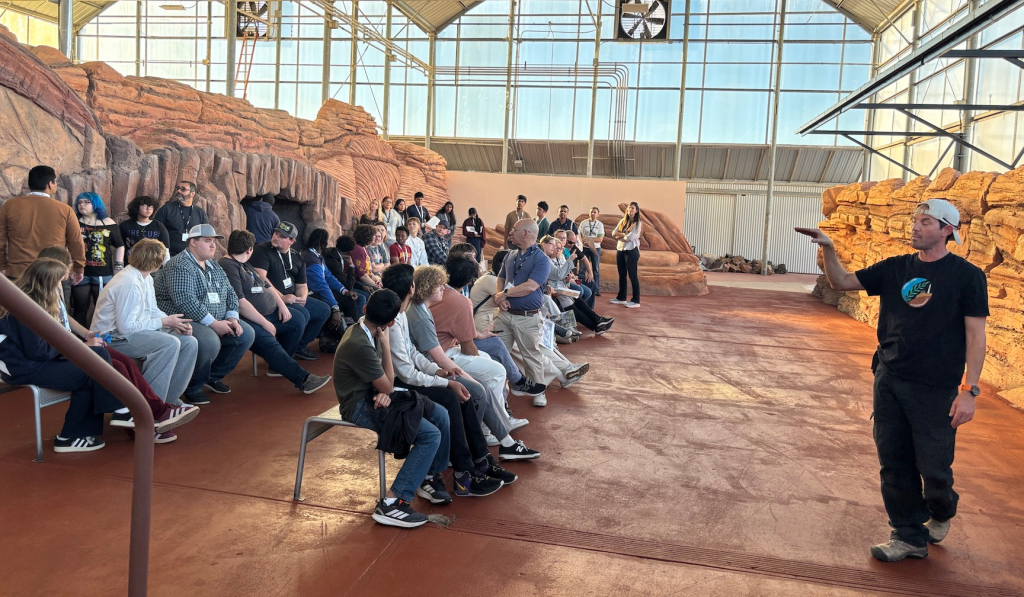
For the 4th year, the National Space Society took around 80 middle school students on an overnight weekend trip to Biosphere 2 for their annual space design competition. The students had the opportunity to visit SAM for a tour with Luna and Matthias. Together, they put 20 students on the Reduced Gravity Simulator, provided an educational, geological tour of the SAM Mars Yard, and provided an external tour of SAM. Many of the students said that the knowledge they learned during the tour will help them during the competition! Thanks to Ty White who helped organize and set up the tour for his students.

By |2026-02-16T20:57:24+00:00January 17th, 2026|Categories: Visitors to SAM|0 Comments

Mars yard west wall rebuild

Mars yard west wall panel replacement

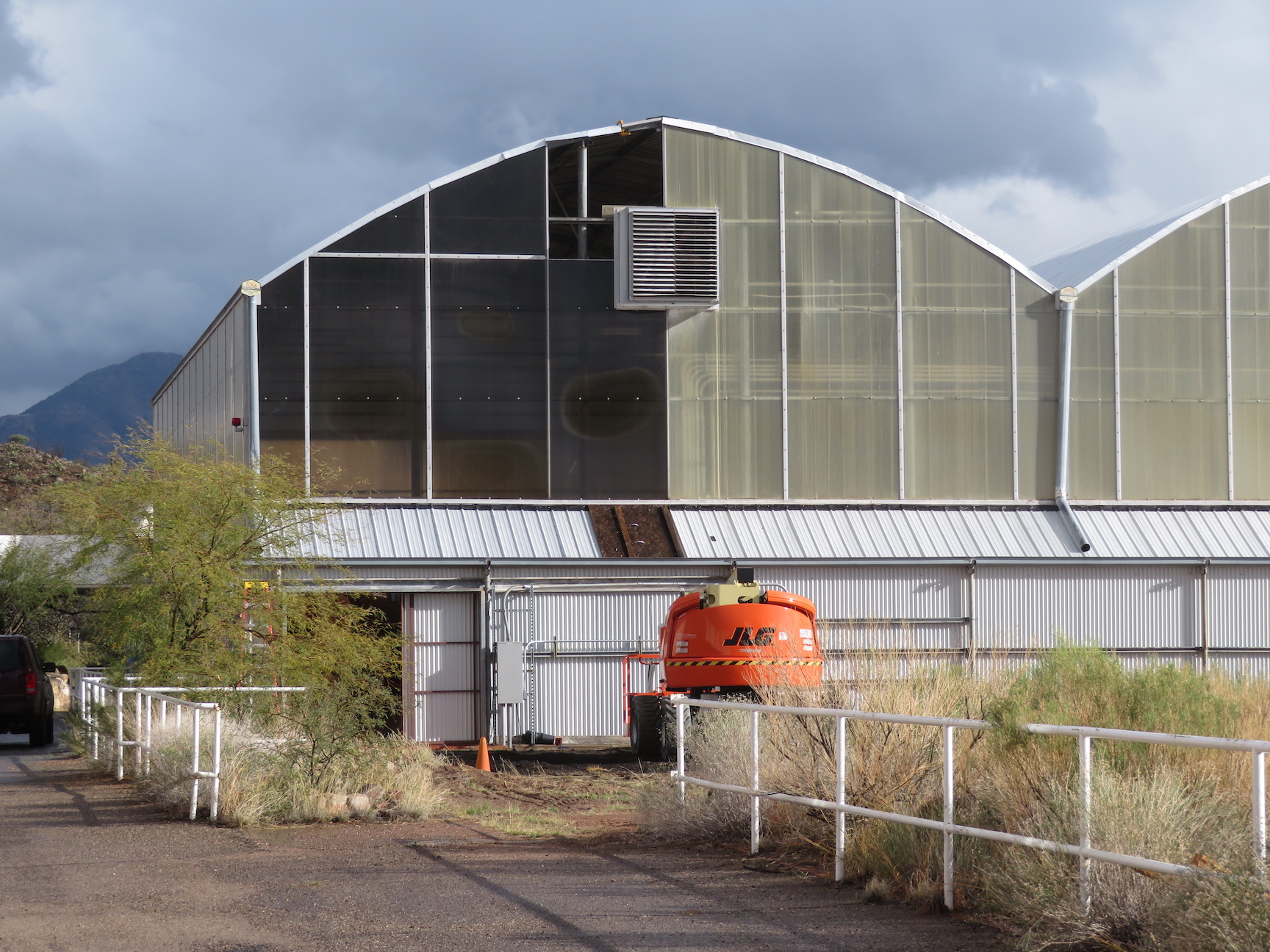
Mars yard west wall panel replacement, comparison from old to new Once again, Matthias has dedicated himself to an arduous task. With the help of SAM team member Jacob Ball they have replaced every single panel of the west wall of the Mars yard structure, a 1980s greenhouse that was part of the botanical garden walk-through when Biosphere 2 was active.

By |2026-04-09T00:56:40+00:00January 15th, 2026|Categories: Construction|0 Comments

First prototype of the MedBay at SAM

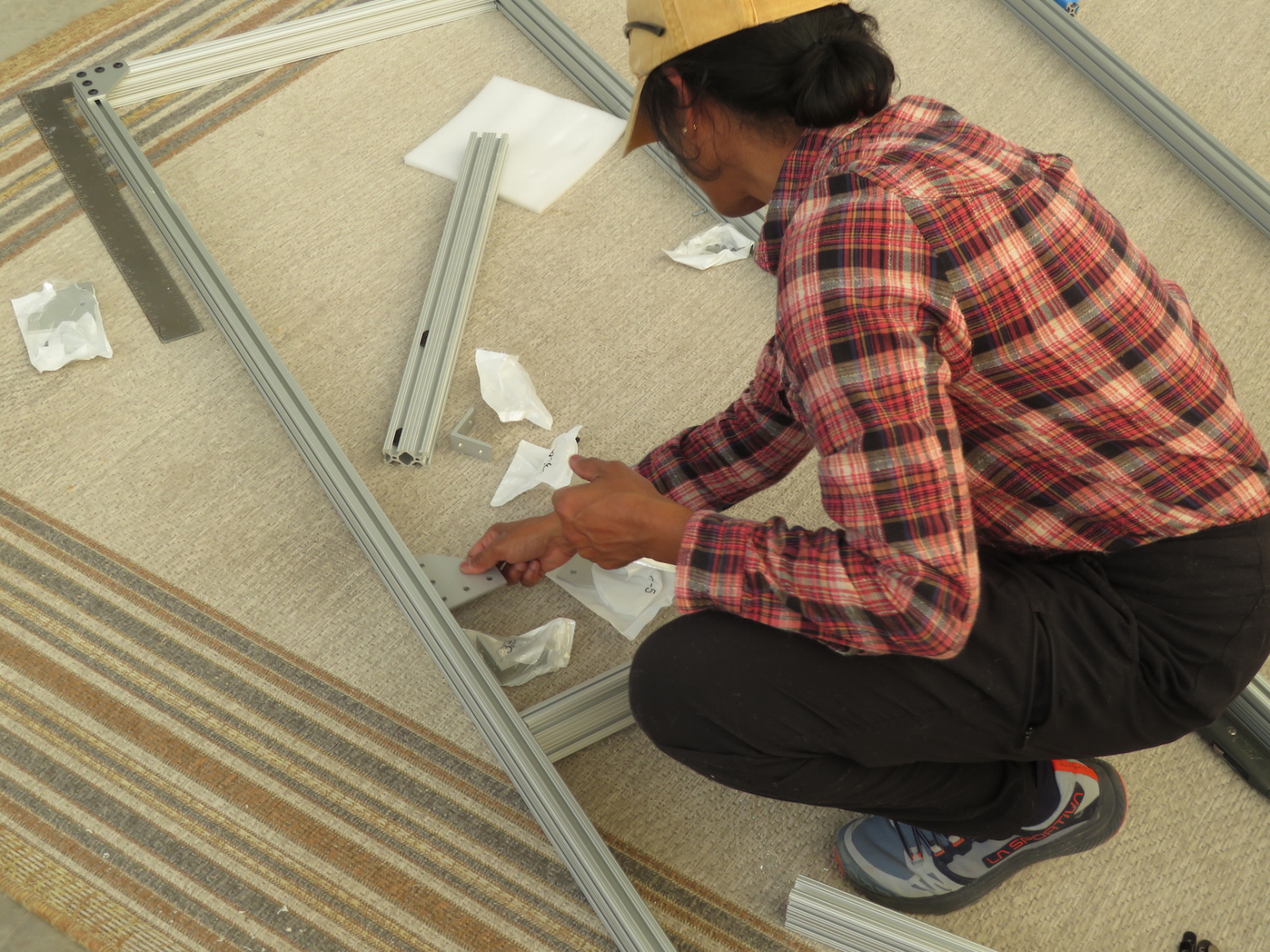
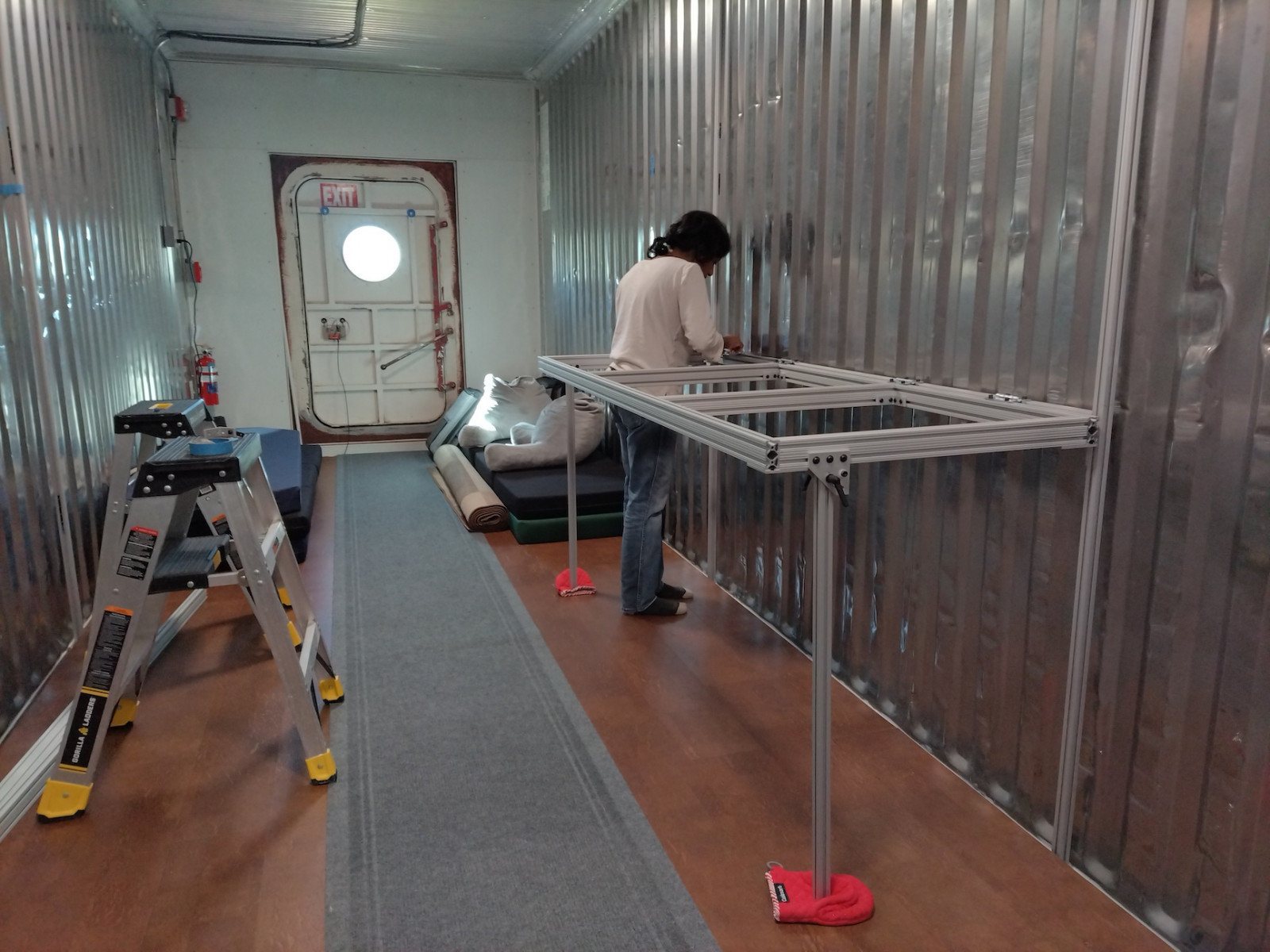
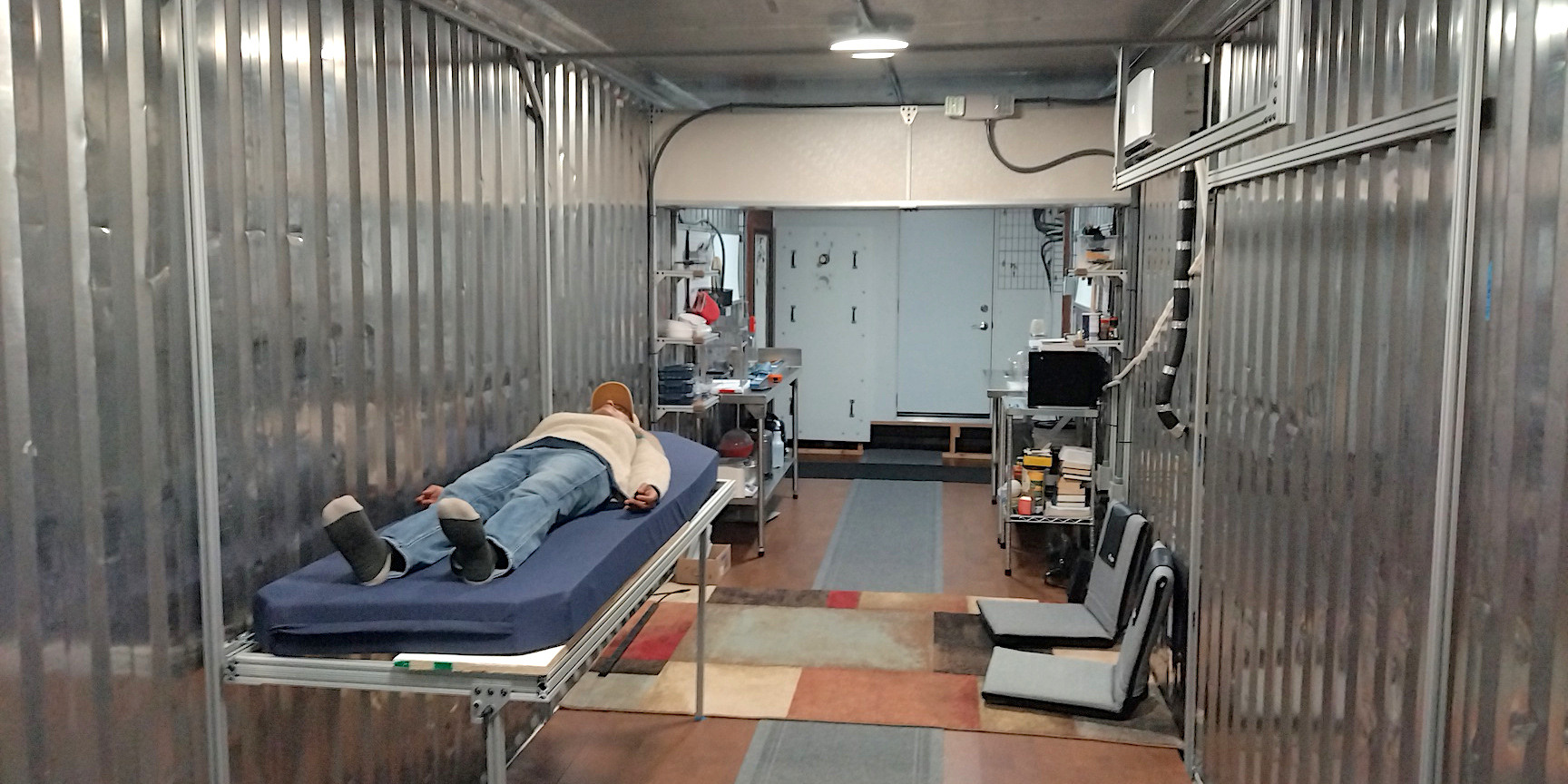
Practicing surgeon and member of the core team at SAM, Bindhu Oommen, MD, worked with Matthias to fabricate a first prototype of a multi-use table installed in the Crew Quarters of the SAM research facility and habitat. This table constructed of 80-20 aluminum will serve as a crew dining table, workstation for laptops, and medical bay table for surgery training and scenarios in conjunction with SAM missions.

By |2026-04-09T05:24:04+00:00January 15th, 2026|Categories: Construction|0 Comments

How Plants Could Keep Humans Alive on the Moon and Mars

by UofA Research & Partnerships

How do we breathe, eat and recycle on the Moon or Mars without relying entirely on machines?

Inside Biosphere 2’s SAM habitat, U of A researchers completed the first human-involved bioregenerative life-support trial at the facility since 1994. For two weeks, researcher Matthias Beach lived sealed inside the Space Analog for the Moon and Mars, or SAM to test whether crops, not machines, can maintain breathable air in a closed system.

The experiment ran in coordination with the World’s Biggest Analog mission, linking 16 space habitat simulations worldwide. Inside SAM, 144 dwarf pea plants sequestered CO₂ through photosynthesis for the first week. After harvesting the plants mid-mission, CO₂ levels rose, offering a clear, measurable comparison of plant-based carbon drawdown in space-like conditions.

This work will feed into a 22-crop database to help NASA and future mission planners determine how plants it might take to sustain people on the Moon or Mars.

By |2025-12-22T20:48:35+00:00December 19th, 2025|Categories: In the news, Videos|0 Comments
Go to Top