
Monthly Archives: March 2026

Enabling a partial hab test environment
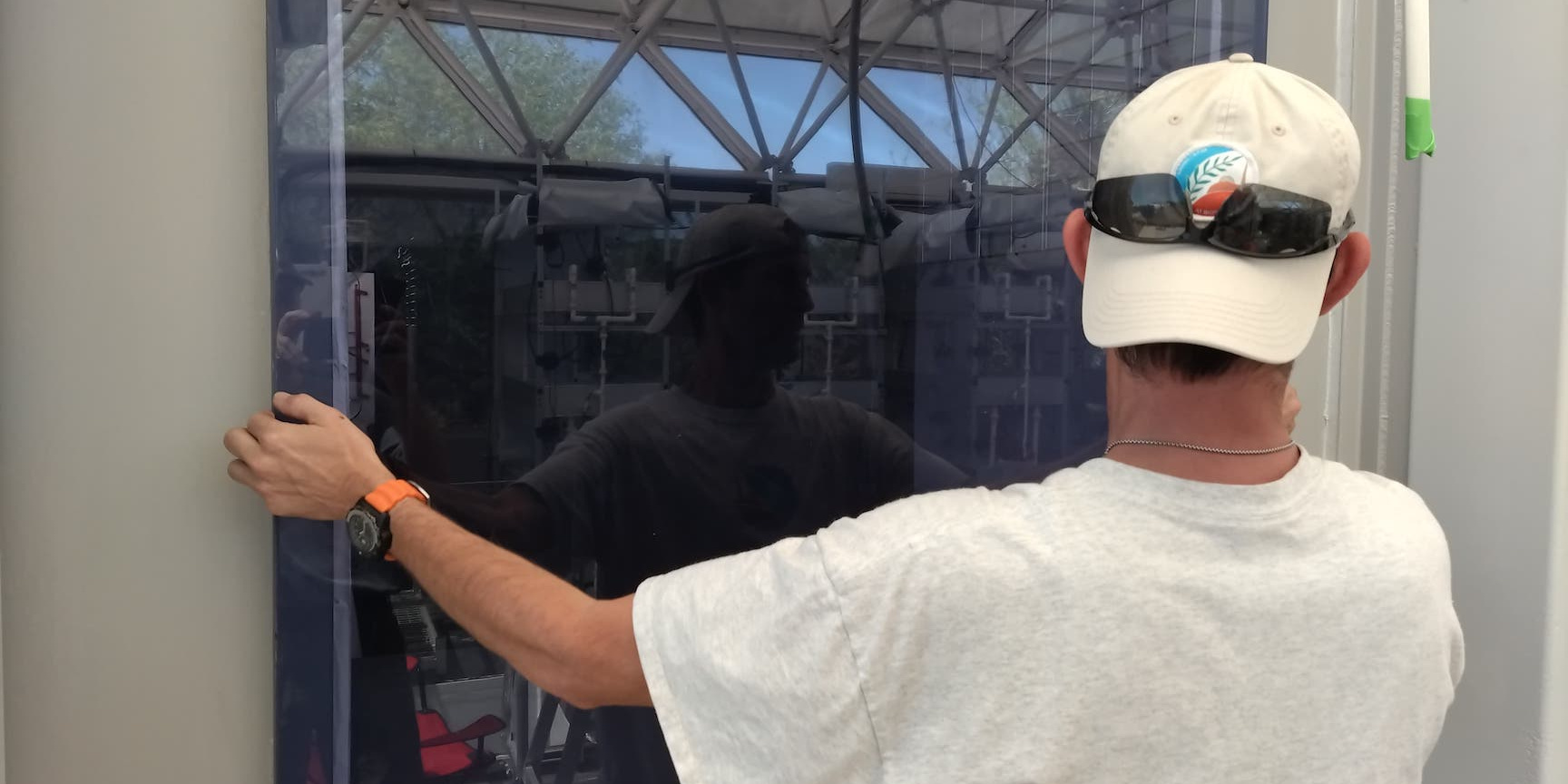
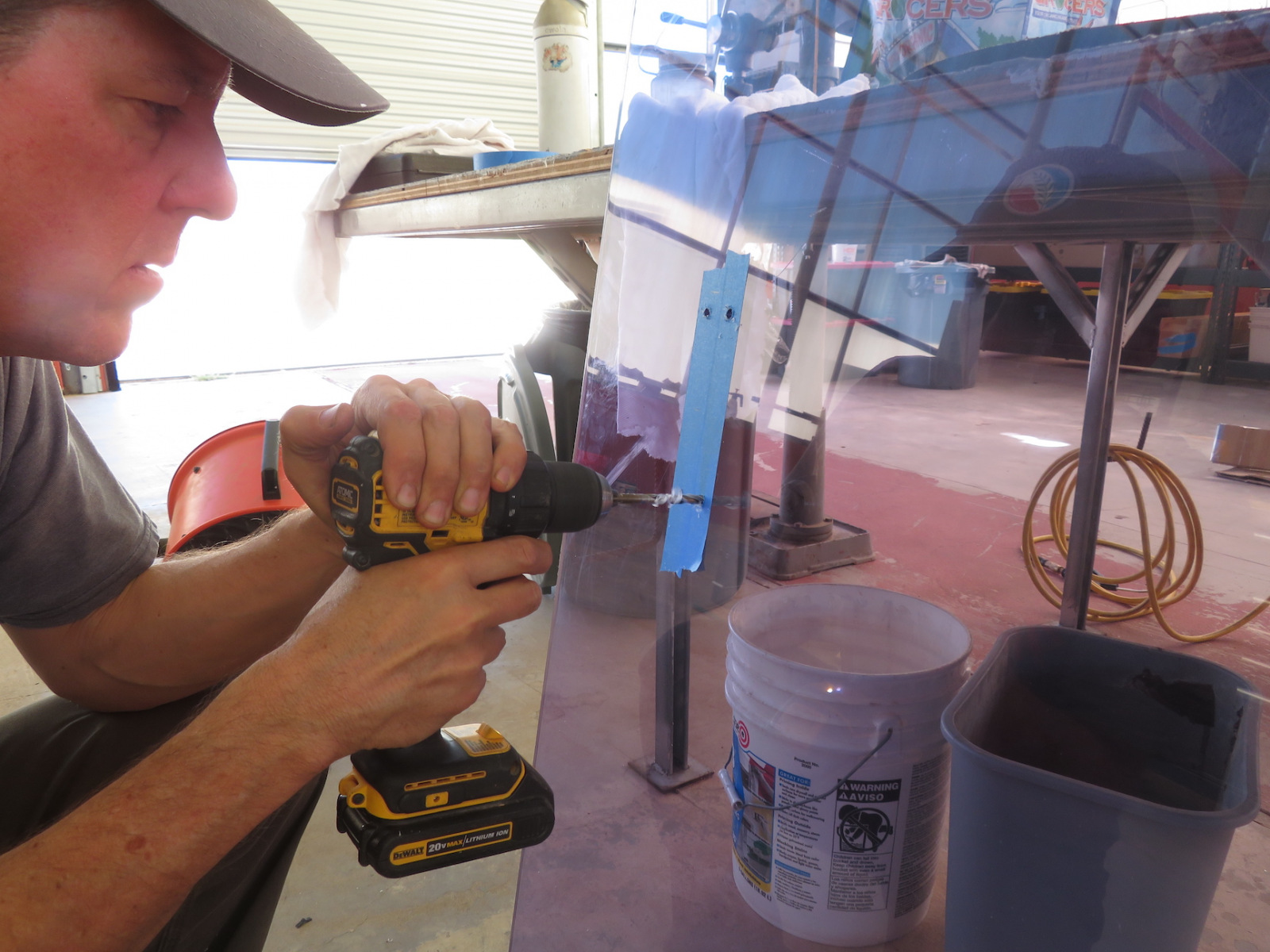
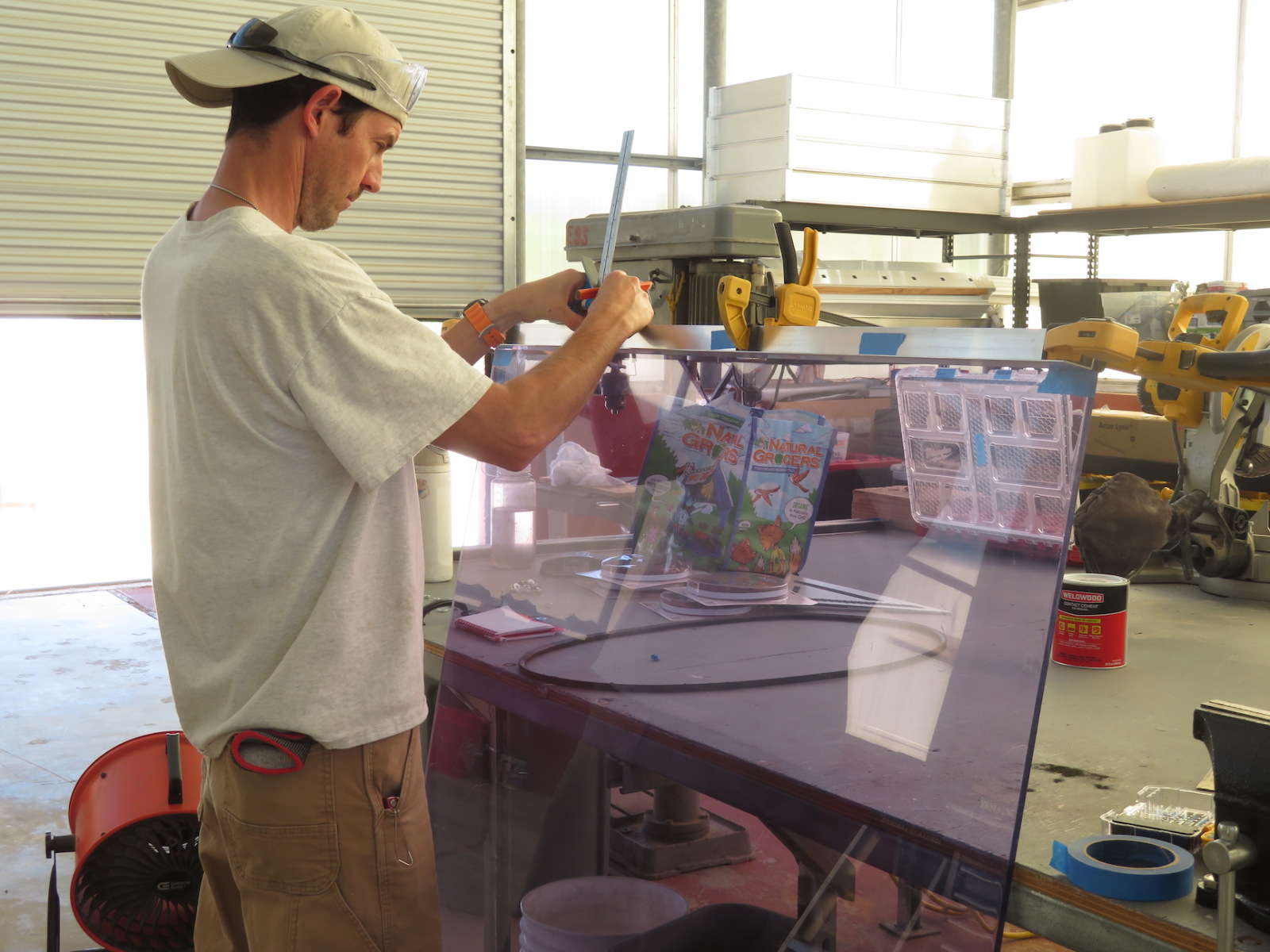
Matthias tests a new hatch between the Test Module and Engineering Bay in SAM at Biosphere 2

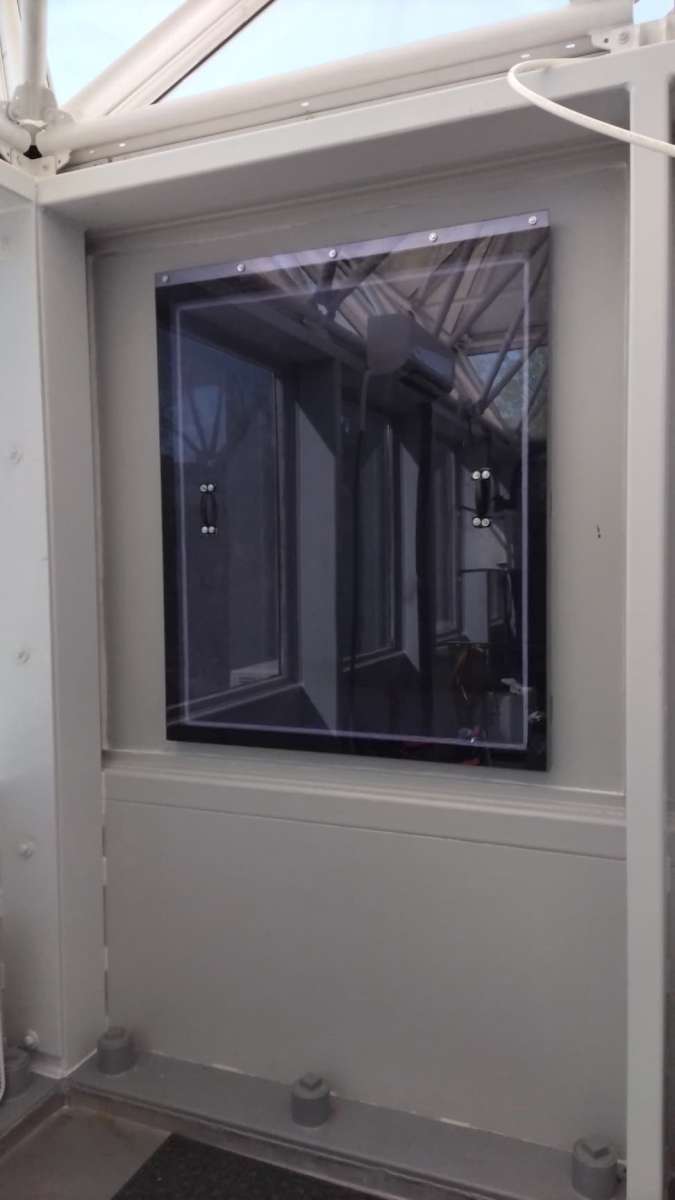
A feature of SAM that has been desired for some time, for which the steel framing was designed, is the ability to seal off one or more sections such that we can conduct pressure tests of one section versus the other, and use the Test Module for plant growth studies while continuing to work in the Engineering Bay and Crew Quarters without interrupting the plant experiments.

From March 2025 through the close of the years, UA masters student Atila Meszaros and Luna Powel conducted a half dozen plant growth experiments. During this time they attached a plastic tarp to the steel frame on the TM side of the hatch between the TM and Engineering Bay (EB). While this worked, it was a temporary configuration and not ideal.

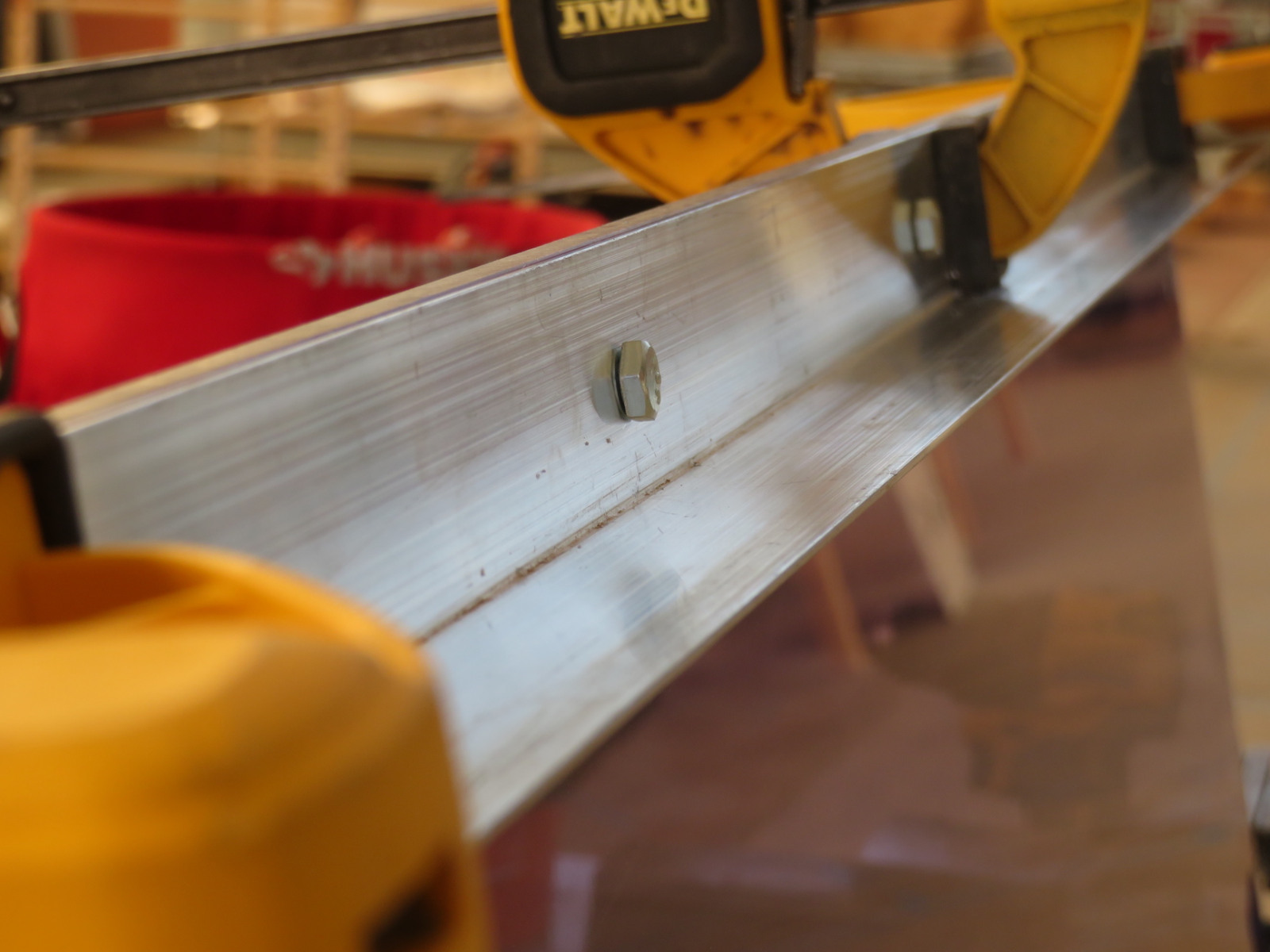
Last week Matthias removed the water line and fire detection wiring (a temporary condition) such that we he and Kai would design, fabricate, and fit a transparent PVC sheet onto the hatch frame. The water and electrical lines will be rerouted through a new bulkhead fitting that bypasses the bridge itself.

In a later pressure test (April 7), it it was determined that a flexible silicon-rubber membrane will be required in place of the close-cell foam that was adhered and tested, to provide the best possible seal in both a neutral pressure and pressure differential environment, and/or inclusion of clasps or magnetic attachment points.
By |2026-04-09T04:37:14+00:00March 23rd, 2026|Categories: Construction|0 Comments

First run of the 4-bed CO2 scrubber at SAM

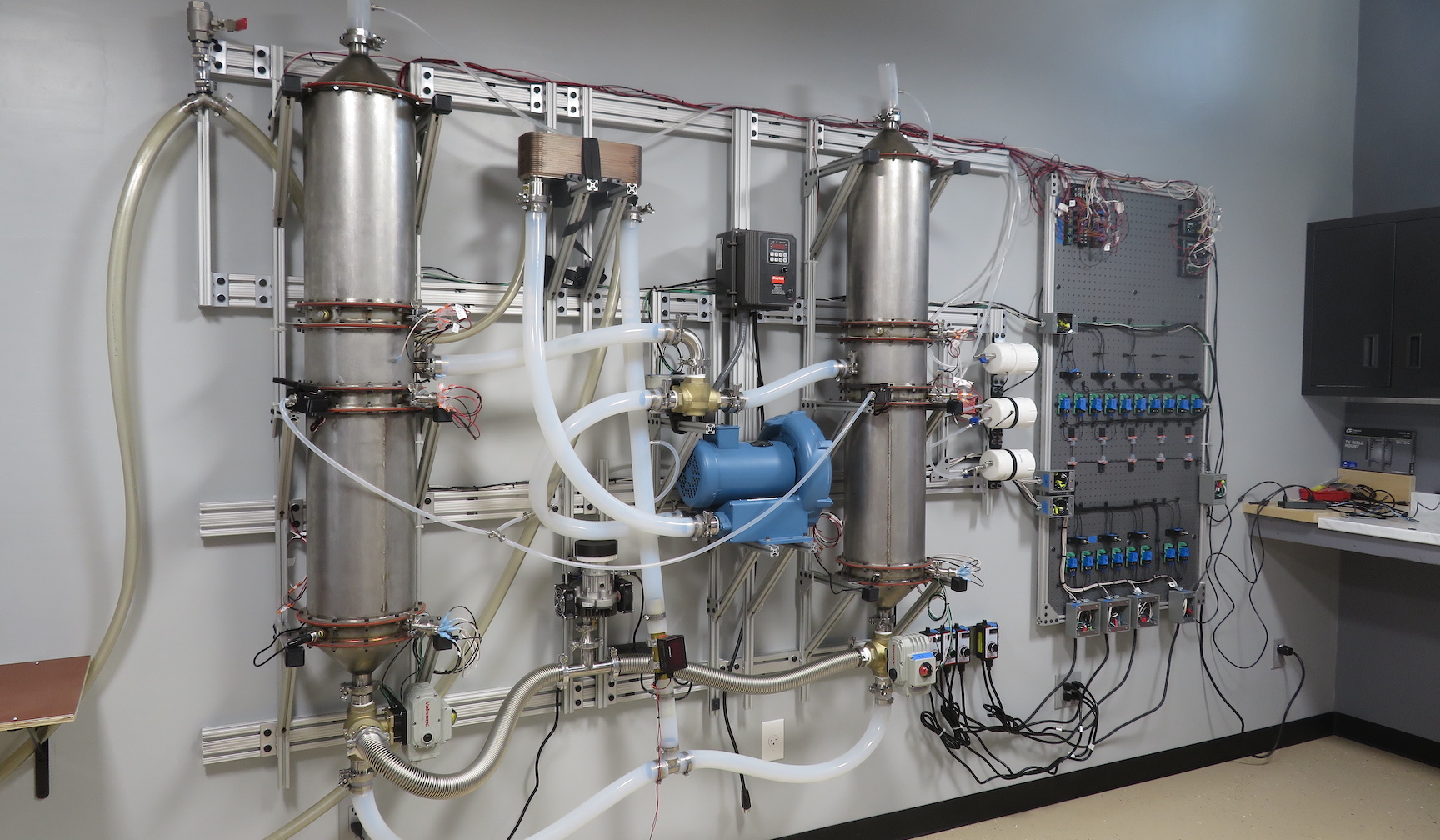
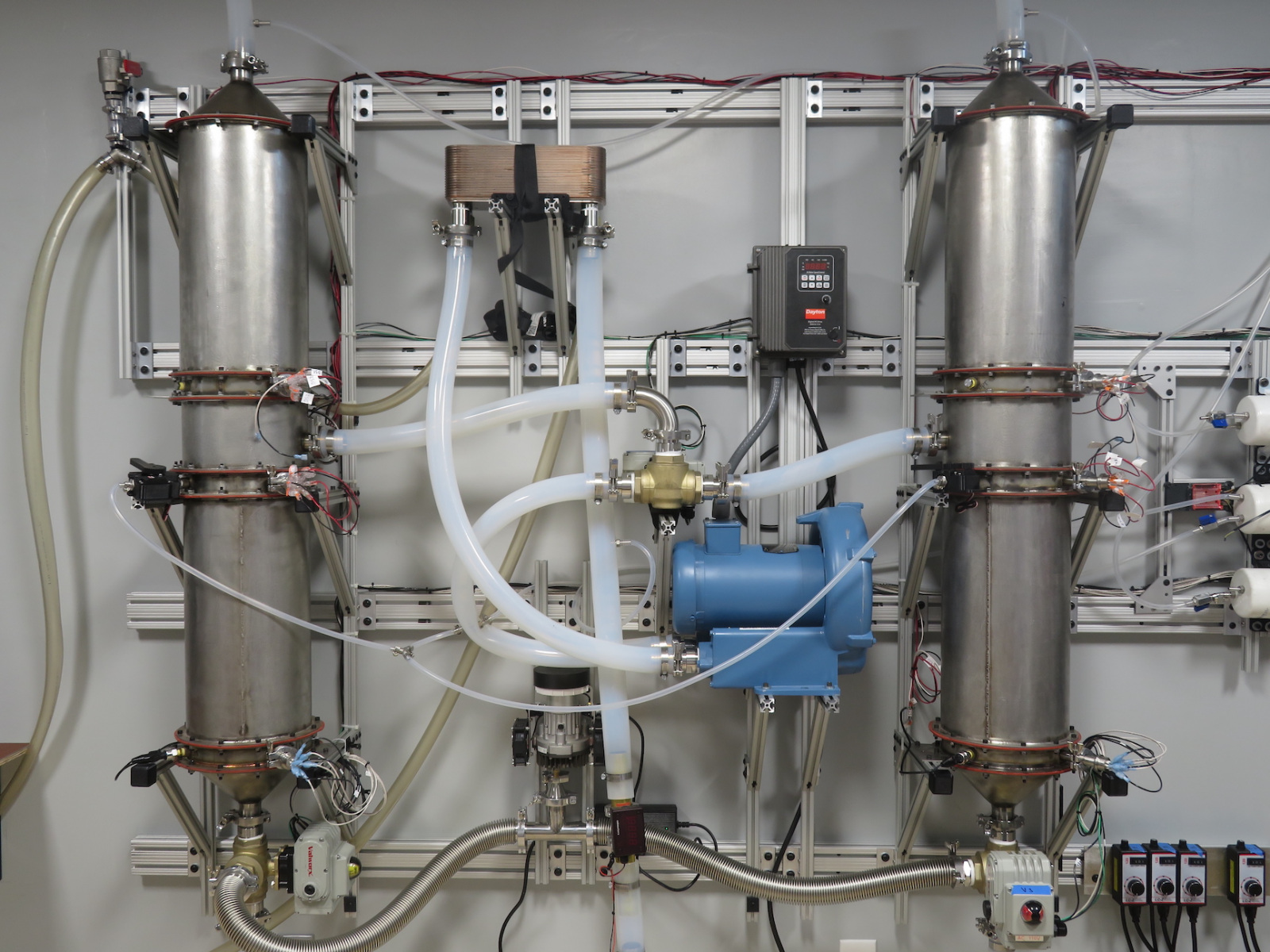
With the close of January, mechanical engineer Griffin Hentzen concluded his one-year work at SAM to design and build the 4-bed CO2 scrubber, licensed from NASA and a work-alike for the scrubber operating on the International Space Station.

University of Arizona undergraduate students Alyssa Ackerman, Brendon Phoebe, and Jeff Buskirk trained under Griffin for the final two months of 2025 and the full month of January. With Griffin’s departure, Director of Research Kai Staats and team member Matthias Beach joined Alyssa, Brendon, and Jeff in a review of the total system.

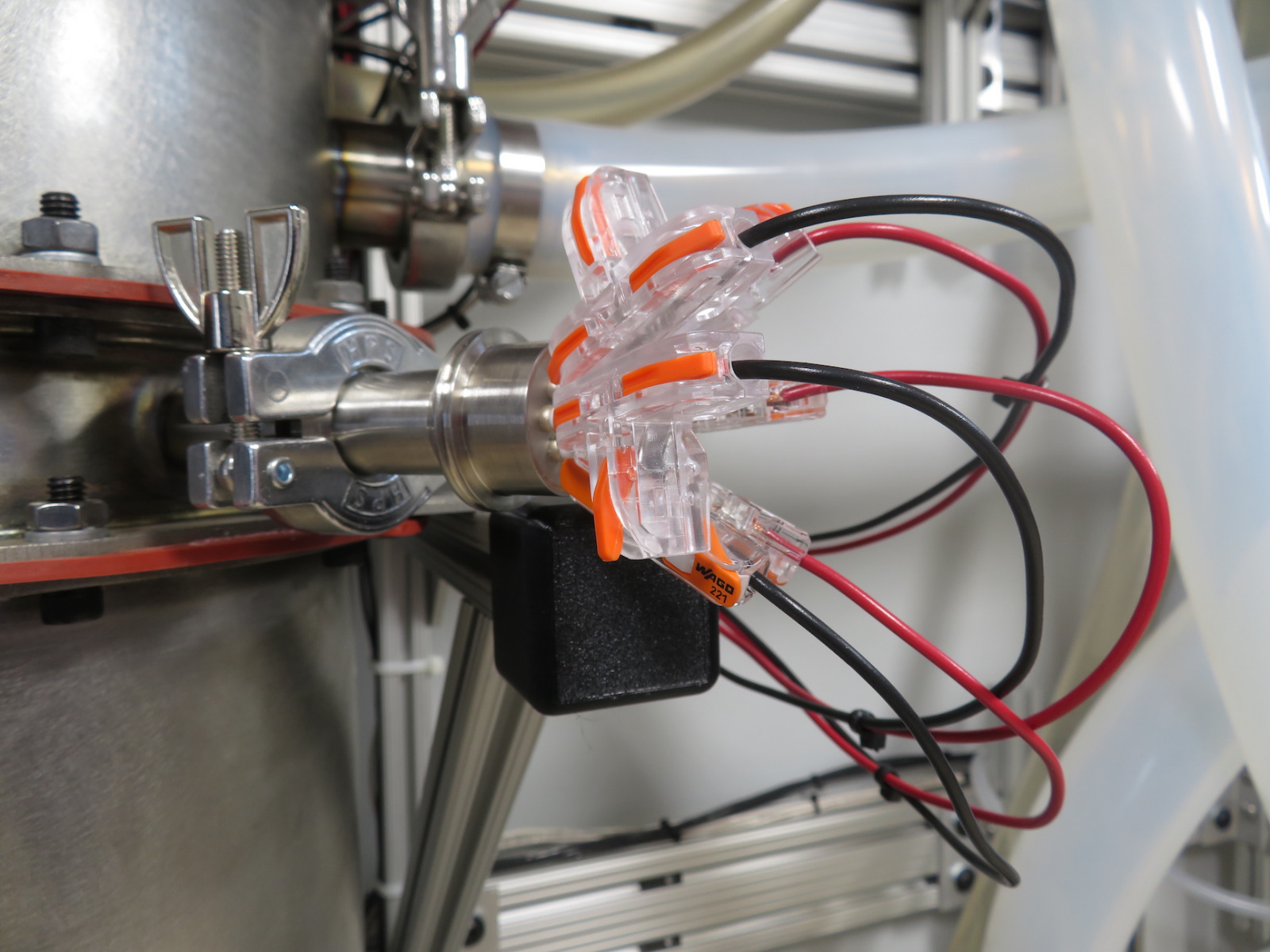
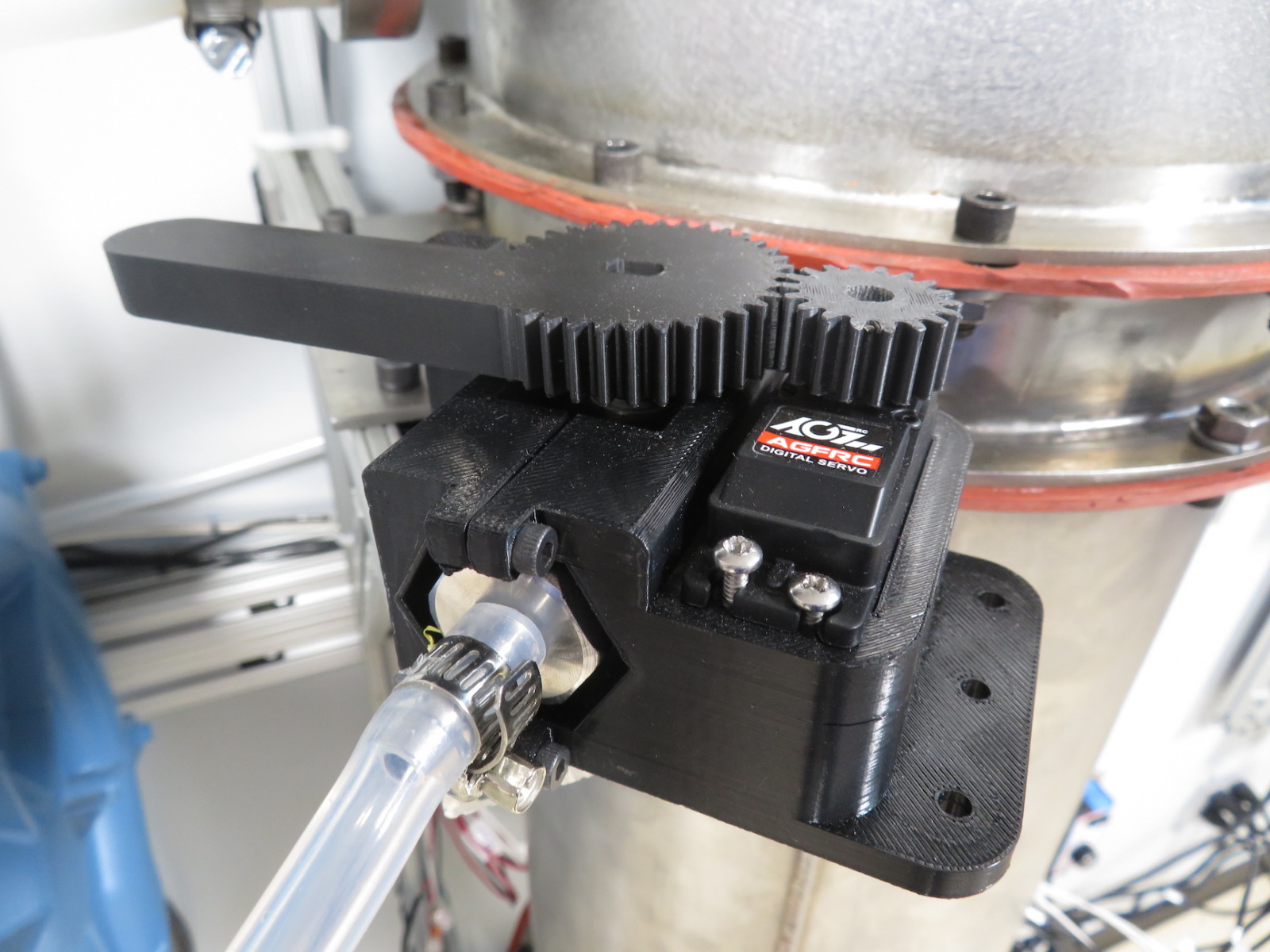
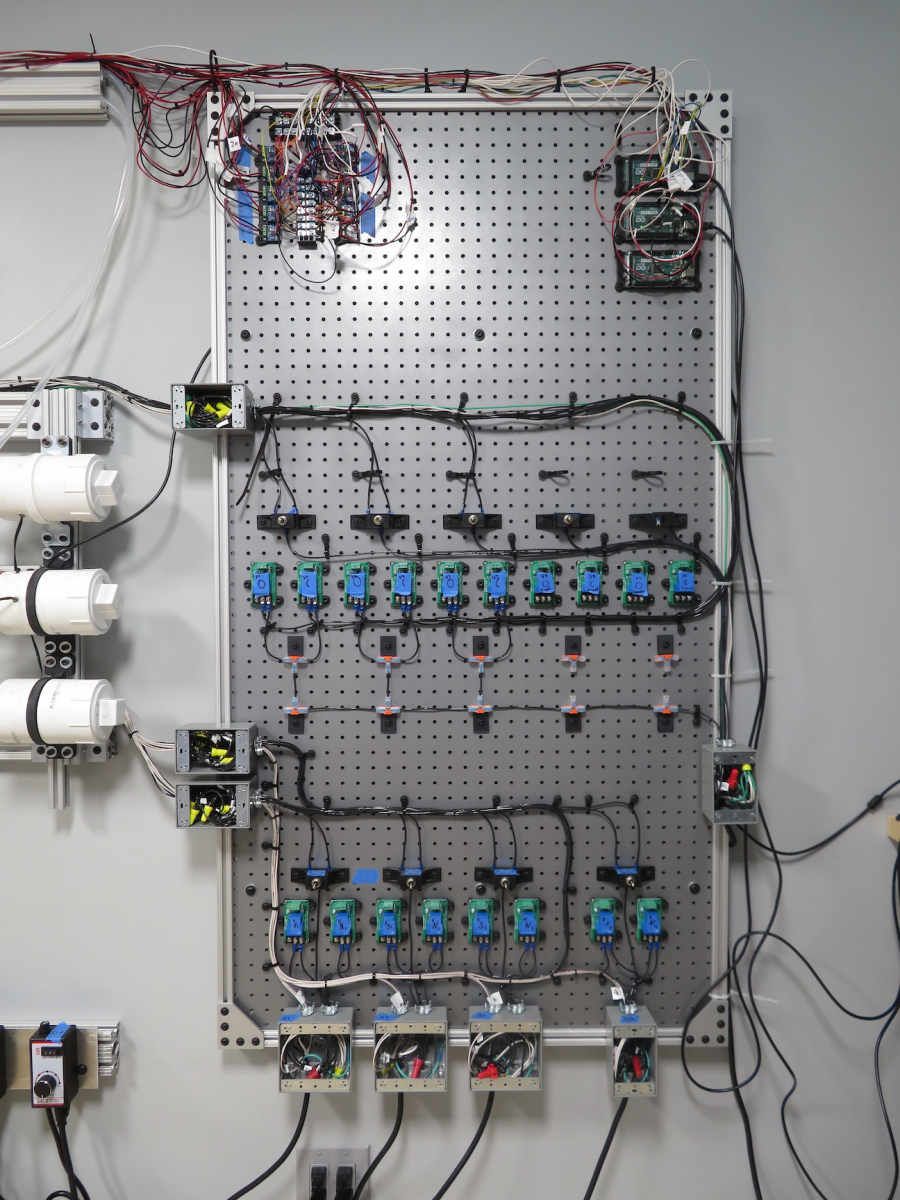
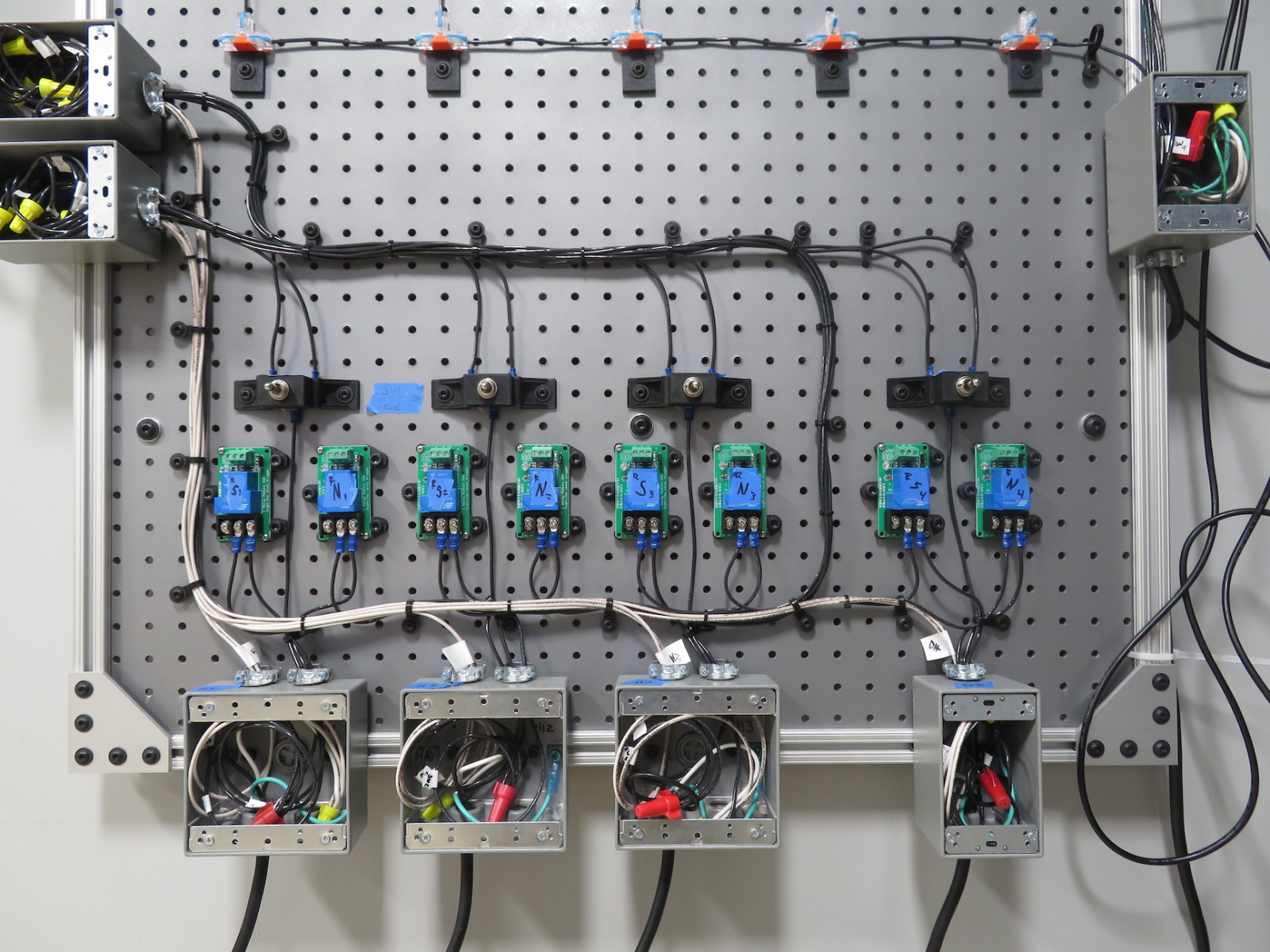
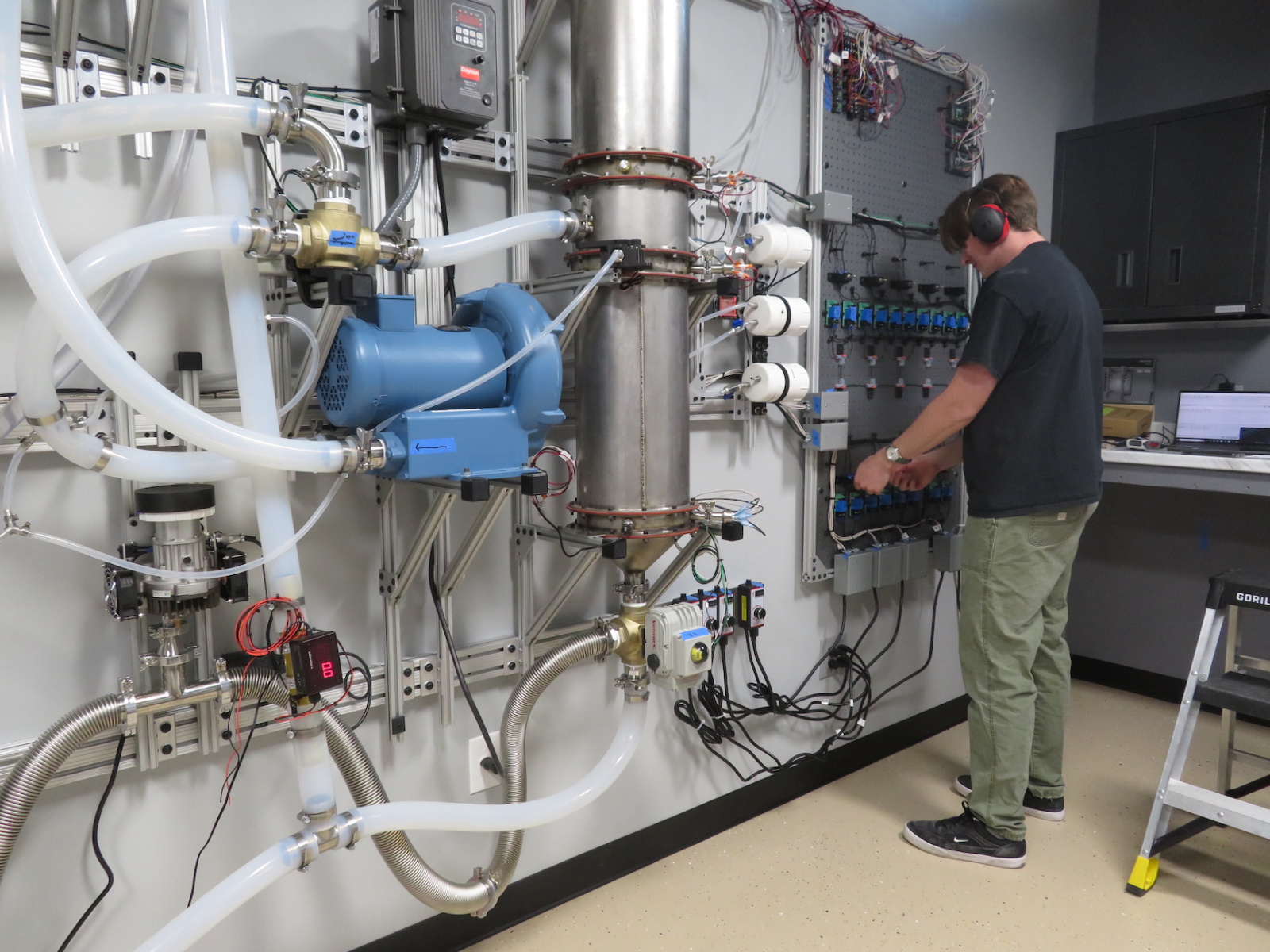
As it was assembled quickly prior to Griffin’s departure, to demonstrate a first-order function. In review of both the A/C wiring for the chamber heaters, and the D/C wiring for the sensors, it was determined best to rewire the entire scrubber. This effort was guided by Kai, and executed by Matthias and our UA student team, for roughly two weeks. We completed the rewire and immediately dove into a full run of the 4-bed CO2 scrubber for our second paper for the International Conference on Environmental Systems.

This experiment was 4-fold:

  1. Demonstrate the effective leak rate of the room
  2. Demonstrate the CO2 generated by one team member sealed inside
  3. Demonstrate the adsorb (capture) function of the CO2 scrubber
  4. Demonstrate the desorb (release) function of the CO2 scrubber

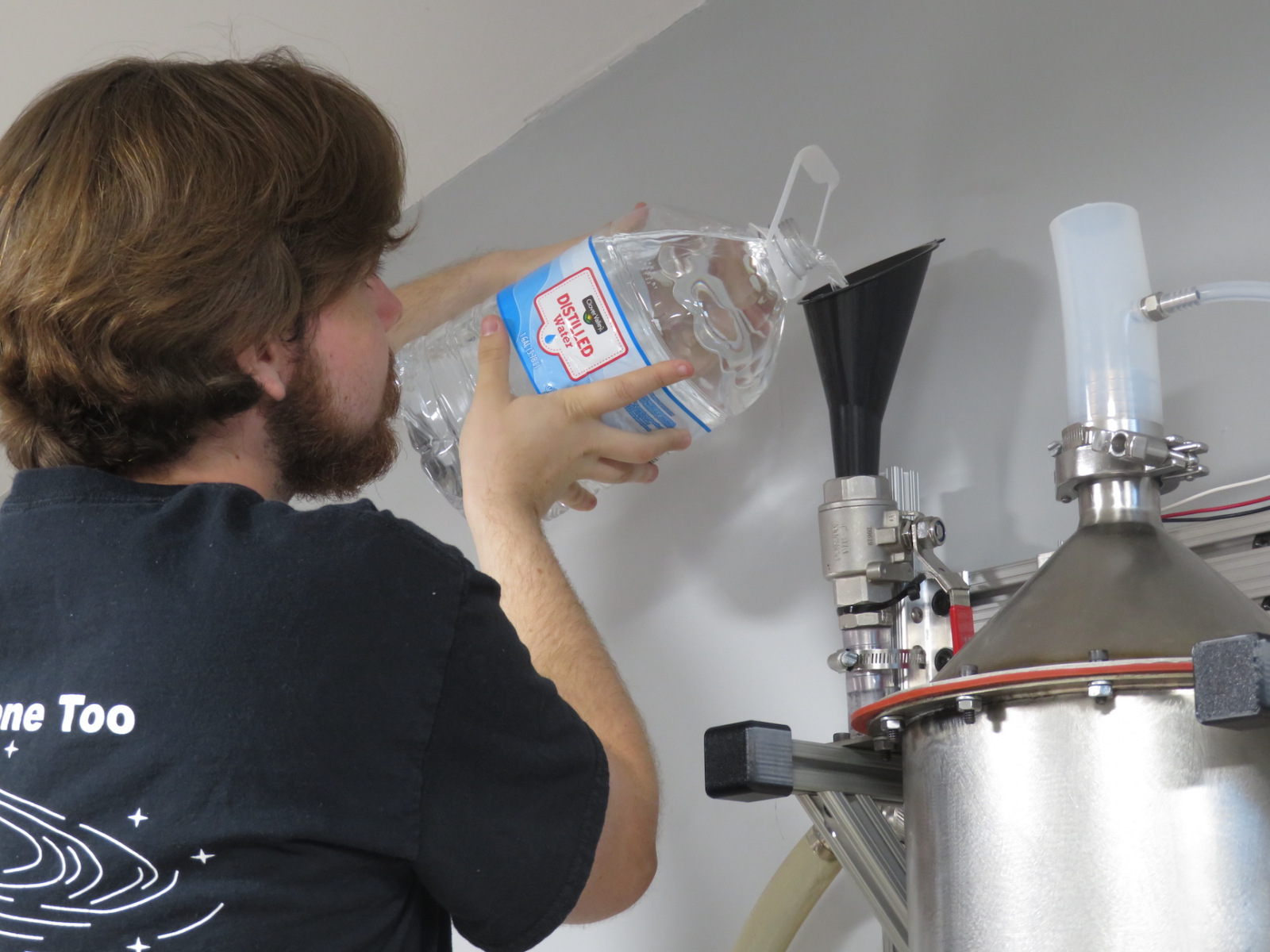
While the Experimental Air Revitalization Laboratory (EARL) was not designed to serve as sealed facility, nor to hold pressure, because the 4-bed CO2 scrubber in EARL is not yet configured to work with SAM, for this experiment we treated EARL as a sealed facility. To accomplish this, we wrapped the front door in a plastic tarp, using aluminum tape to seal against the door frame and floor. As the room would not be pressurized, there was no pressure differential from inside to outside, therefore the leak rate would be minimal.

Brendon Phoebe volunteered to be our test subject for all three human-in-the-loop runs. While the scrubber is designed to be computer controlled, and the Arduino-based systems are operational, we have not yet completed sufficient tests with the redundant, parallel manually operated system nor completed the programming.

As such, Brendon served as the operator for each of runs 2-4 (above).

Carbon dioxide was injected from the cryogenic chamber we use for plant experiments in the Test Module, elevating the CO2 in EARL to roughly 5,000 parts per million. In run 1 we simply monitored the CO2 level for 30 minutes following injection. In run 2 we monitored the CO2 level with Brendon inside, where his breathing added CO2 to the total volume of the EARL room. In run 3 the scrubber adsorbed CO2, thereby reducing the total mass of CO2 in EARL over the 30 minutes period. And in run 4 the chamber that held the zeolites was heated which causes the CO2 to be released. This causes the CO2 level to rise again.

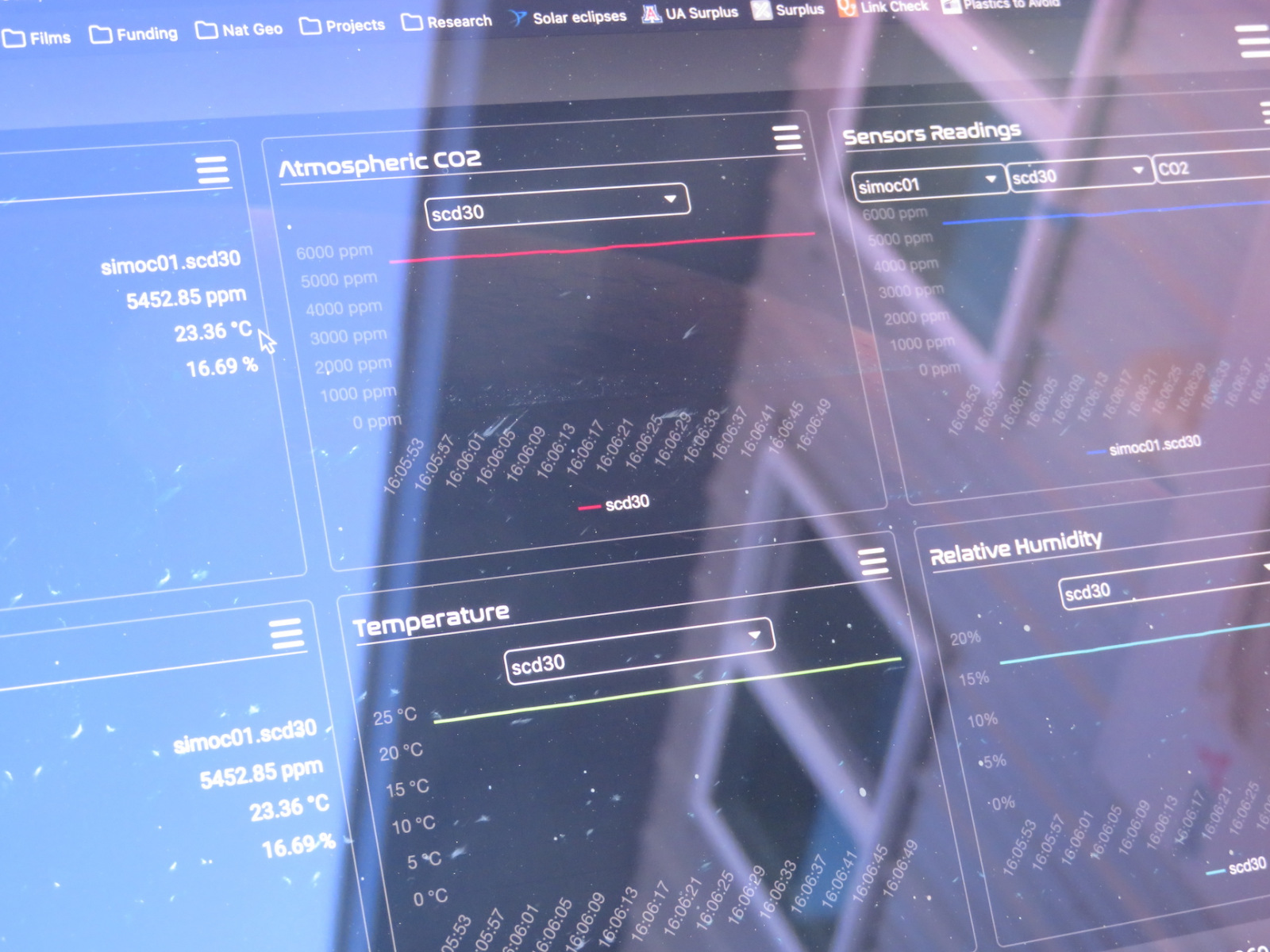
During the runs, Kai and Matthias were station in the Test Module with radio communication with Brendon for coordination, timing, and confirmation of data collection start and stop times. Kai’s laptop held a remote viewing of the data collected by SIMOC Live for CO2, relative humidity, and temperature.

The experiment was, overall, a success and generated ample data for the ICES 2026 paper. The full results will be available with publication of the paper, and a link will be provided here with the release of the conference proceeds.

Introduction | Design | Experiment | Components | Assemble | Fabrication | First Run

By |2026-04-10T22:15:49+00:00March 4th, 2026|Categories: Research & Development|0 Comments
Go to Top