
Yearly Archives: 2024

Red Hen delivers SAM’s first Mars yard construct
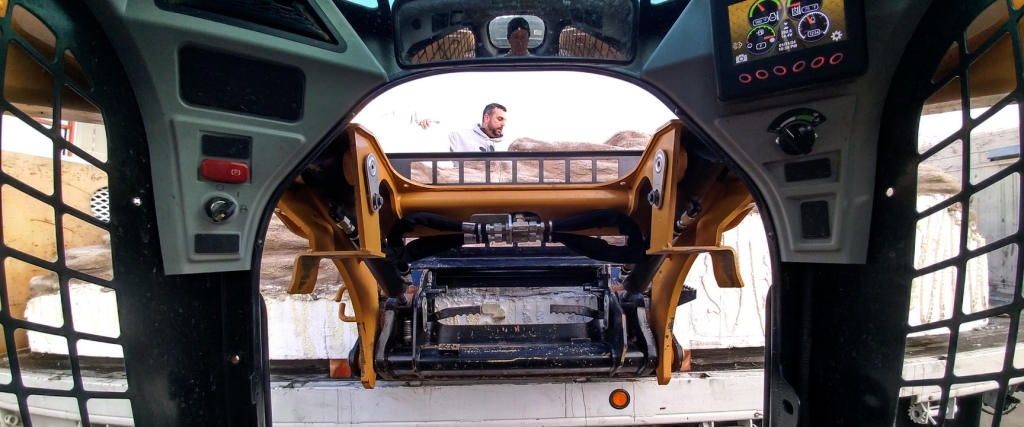
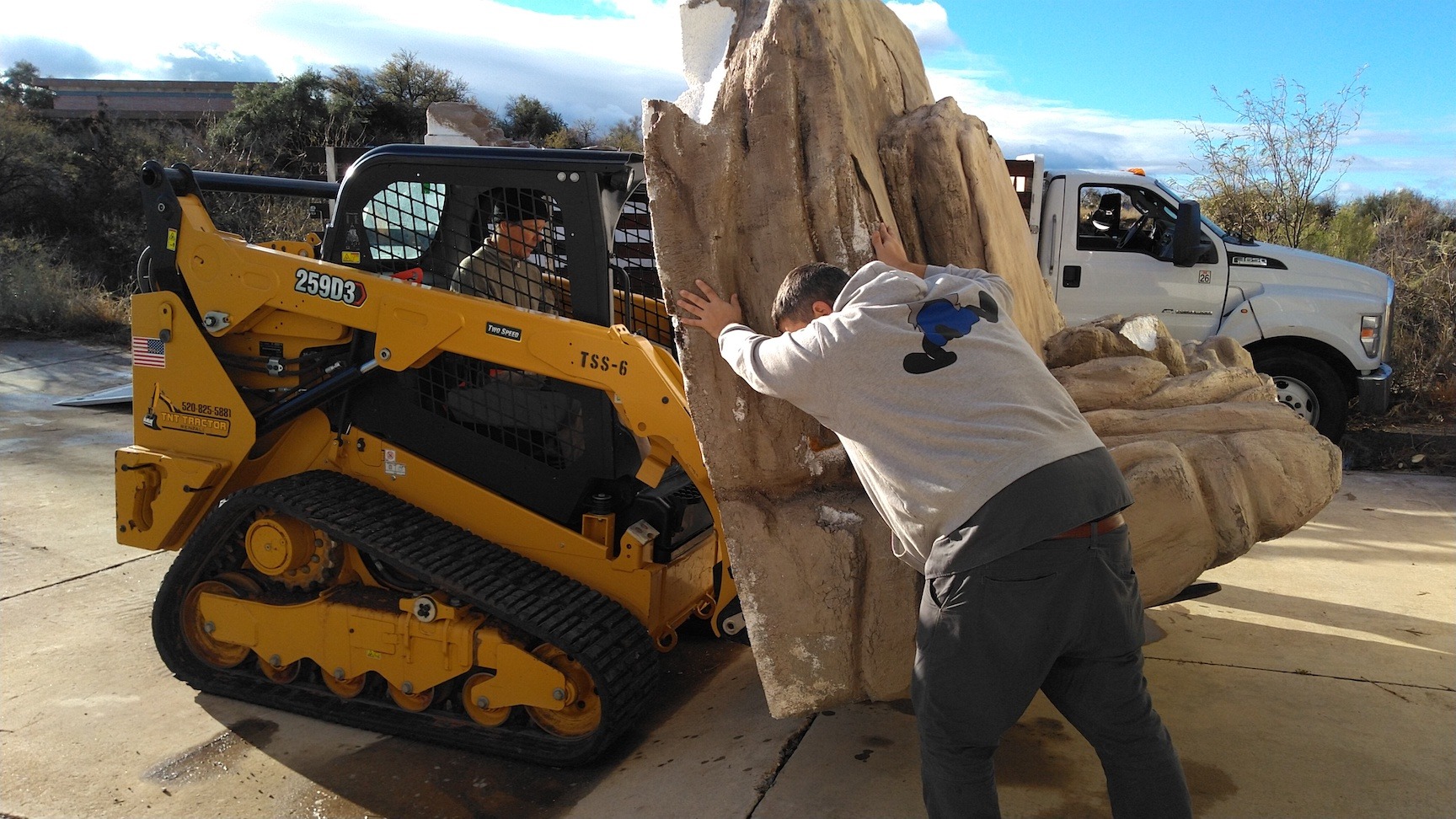
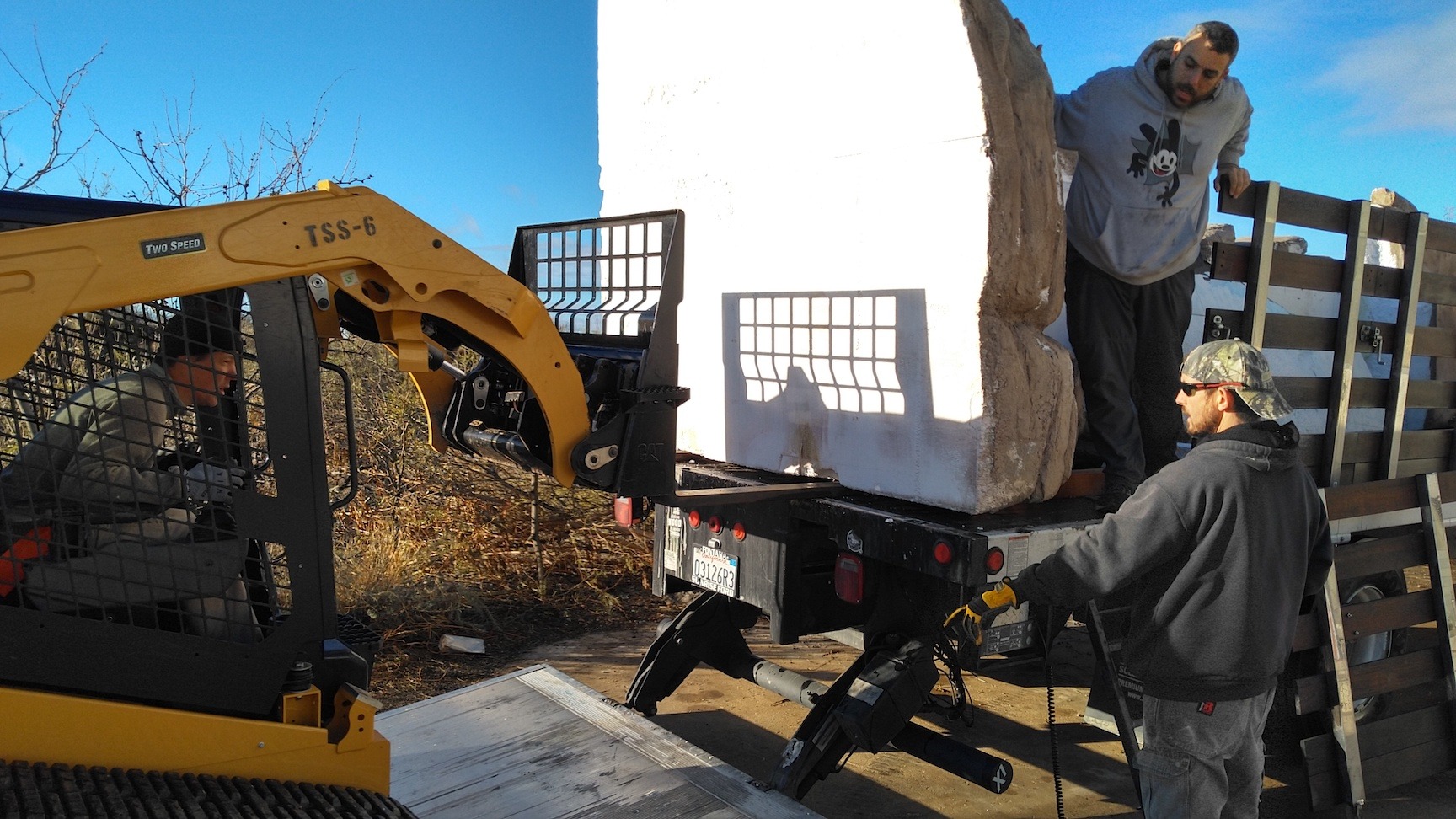
Kai Staats maneuvers forklift to unload a section of a Hollywood set

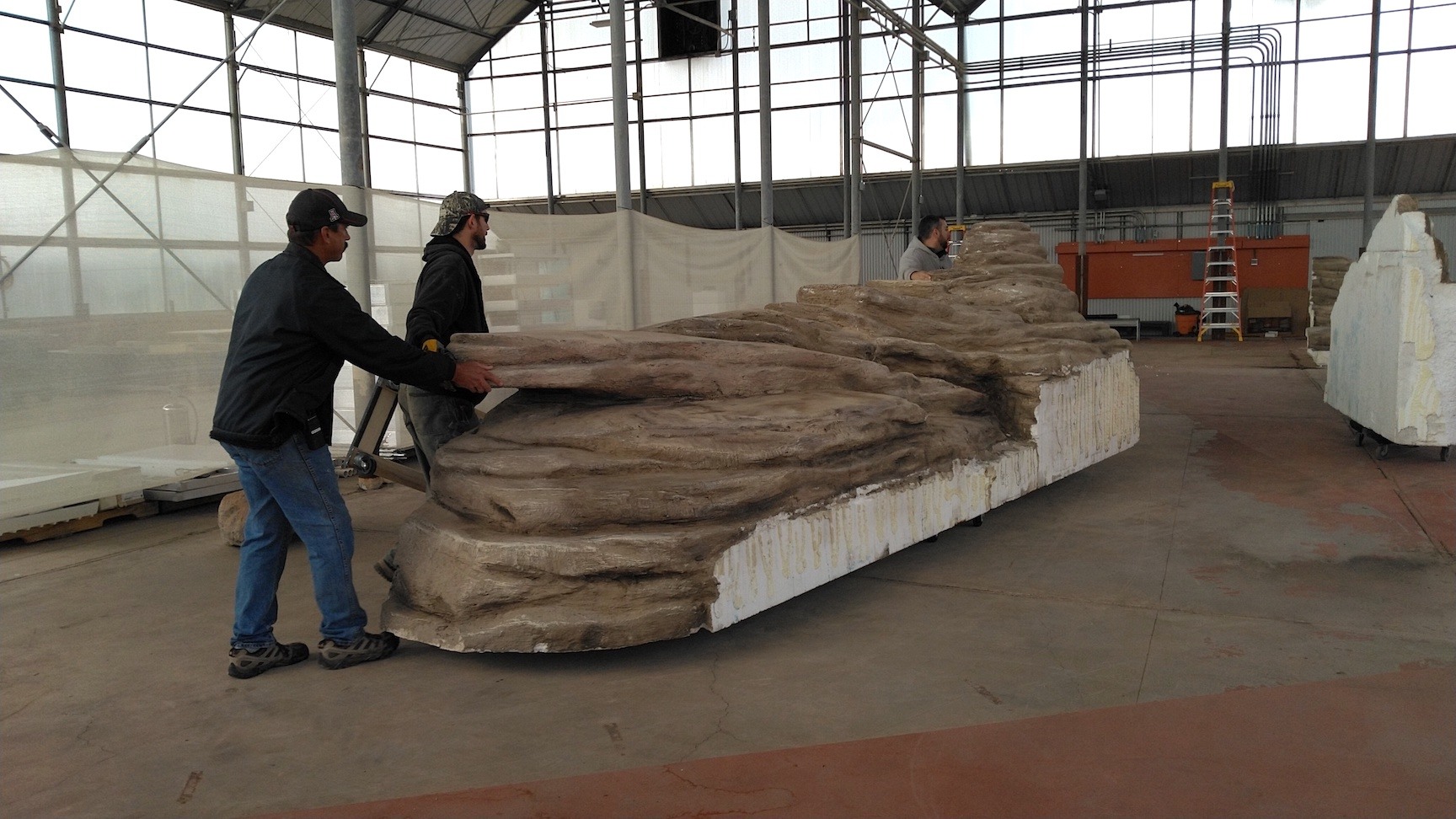
Demian Vallone awoke at some ungodly hour only to stand outside the high bay doors of a Hollywood sound stage in the middle of a massive downpour while riggers and stage hands debated how, exactly, to load a massive Utah desert set onto the rented stick truck. He then drove from Los Angeles, California to Biosphere 2 fueled by little more than energy drinks, a journey that took more than ten hours. Late Thursday evening Demian arrived to SAM. Friday morning the forklift was delivered, then Demian, Kai, Matthias, and Ron Wood of the Biosphere 2 staff unloaded the multiple sections, one of which was quite tricky at 16 feet long.

Red Hen Industries is a full-service design and fabrication house with experiential designers, builders, inventors, and producers. Red Hen is contracted to design and build the SAM Mars yard and terrain park, what will be a world-class facility for experiential education and research.

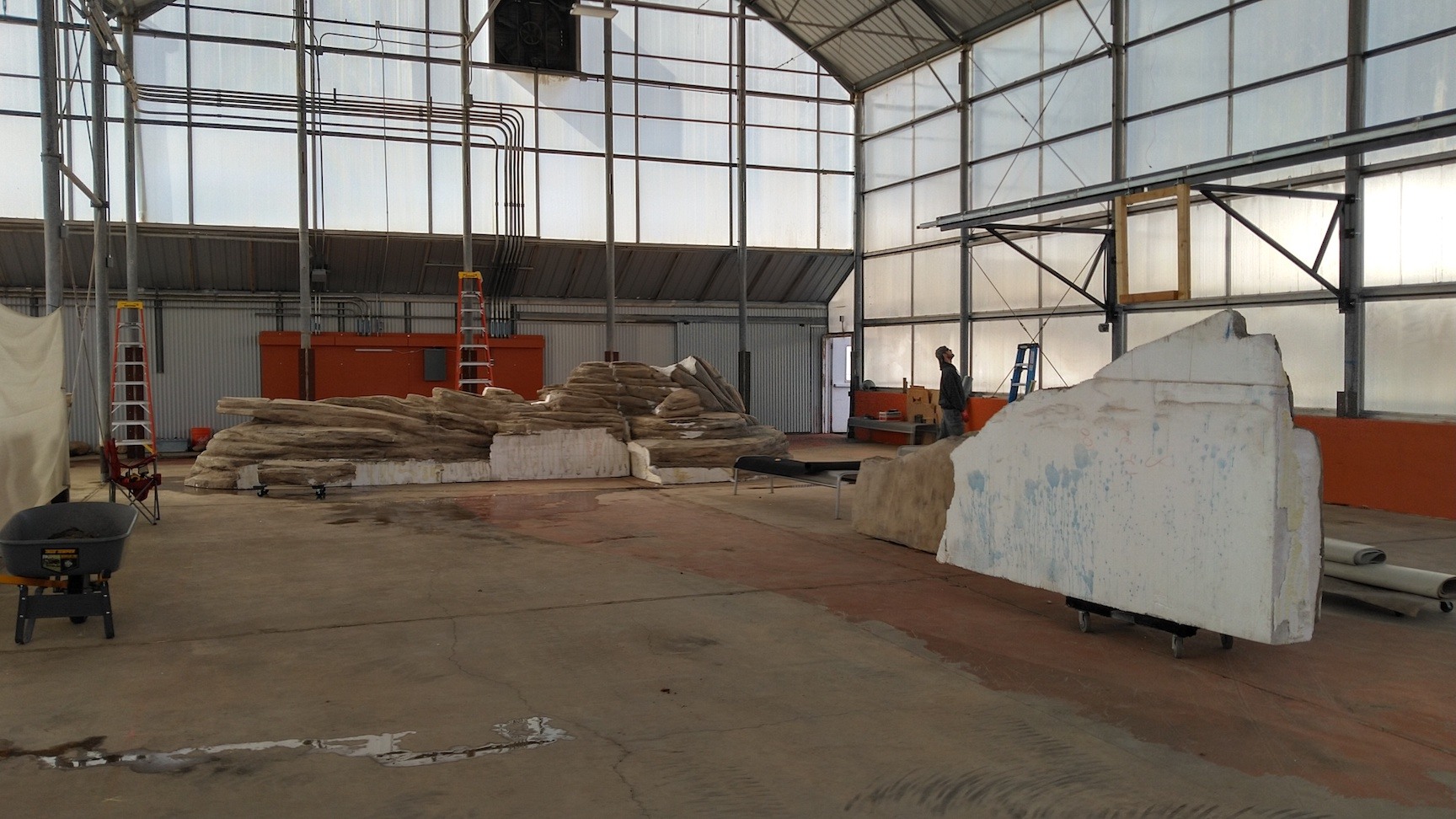
This first piece of the SAM Mars yard was not part of the original design. This synthetic Utah landscape was built for a short-lived photo shoot, then found its way to SAM via Red Hen founder Danica Vallone who saw a unique opportunity to keep it out of the landfill, and at the same time, provide SAM with a good starting point.

Red Hen is a leader in reuse and recycle, and part of a group featured in this recent NPR story.
By |2024-04-29T13:34:42+00:00February 2nd, 2024|Categories: Construction|0 Comments

Reduced Gravity Simulator Reinstalled

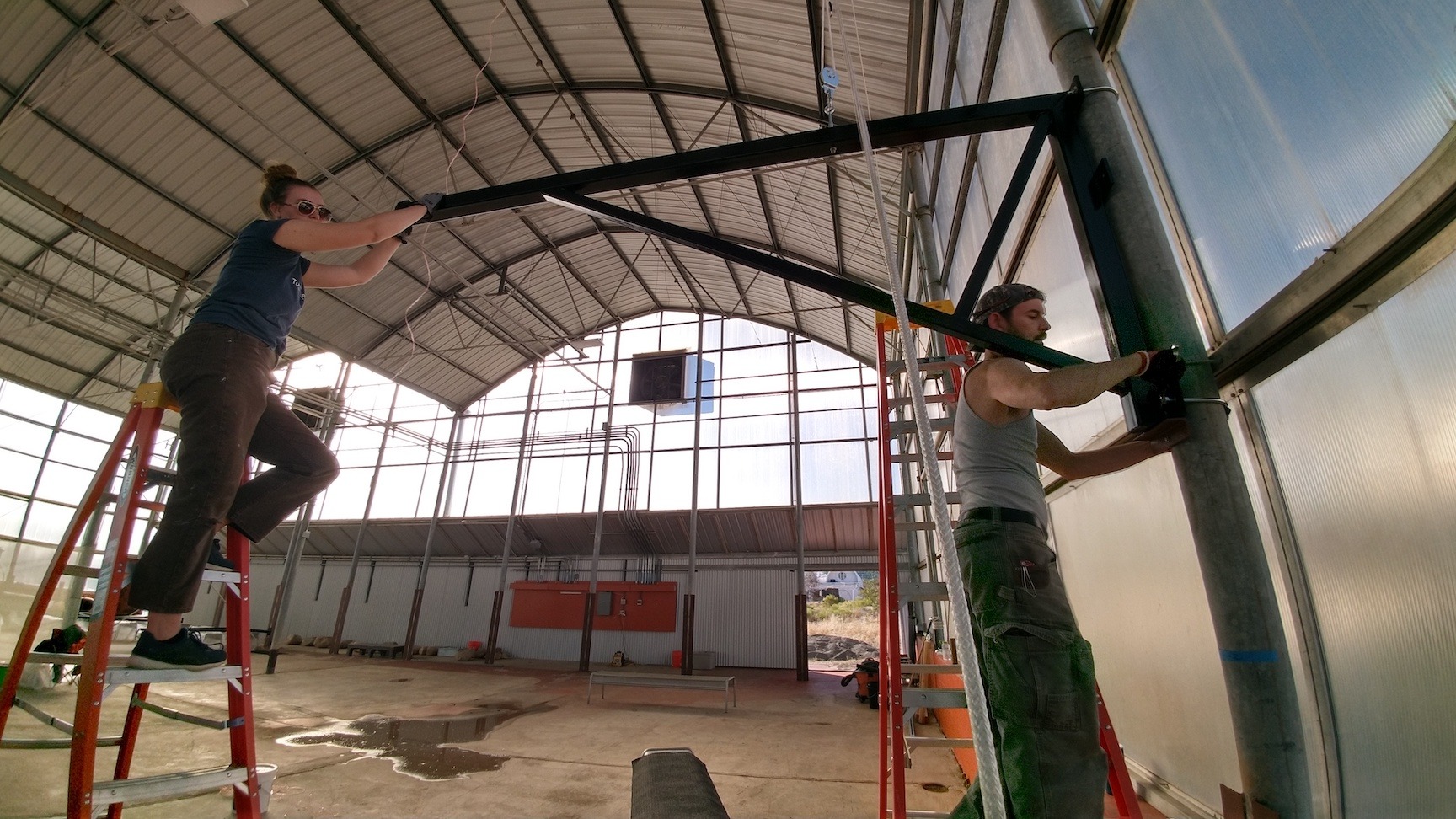
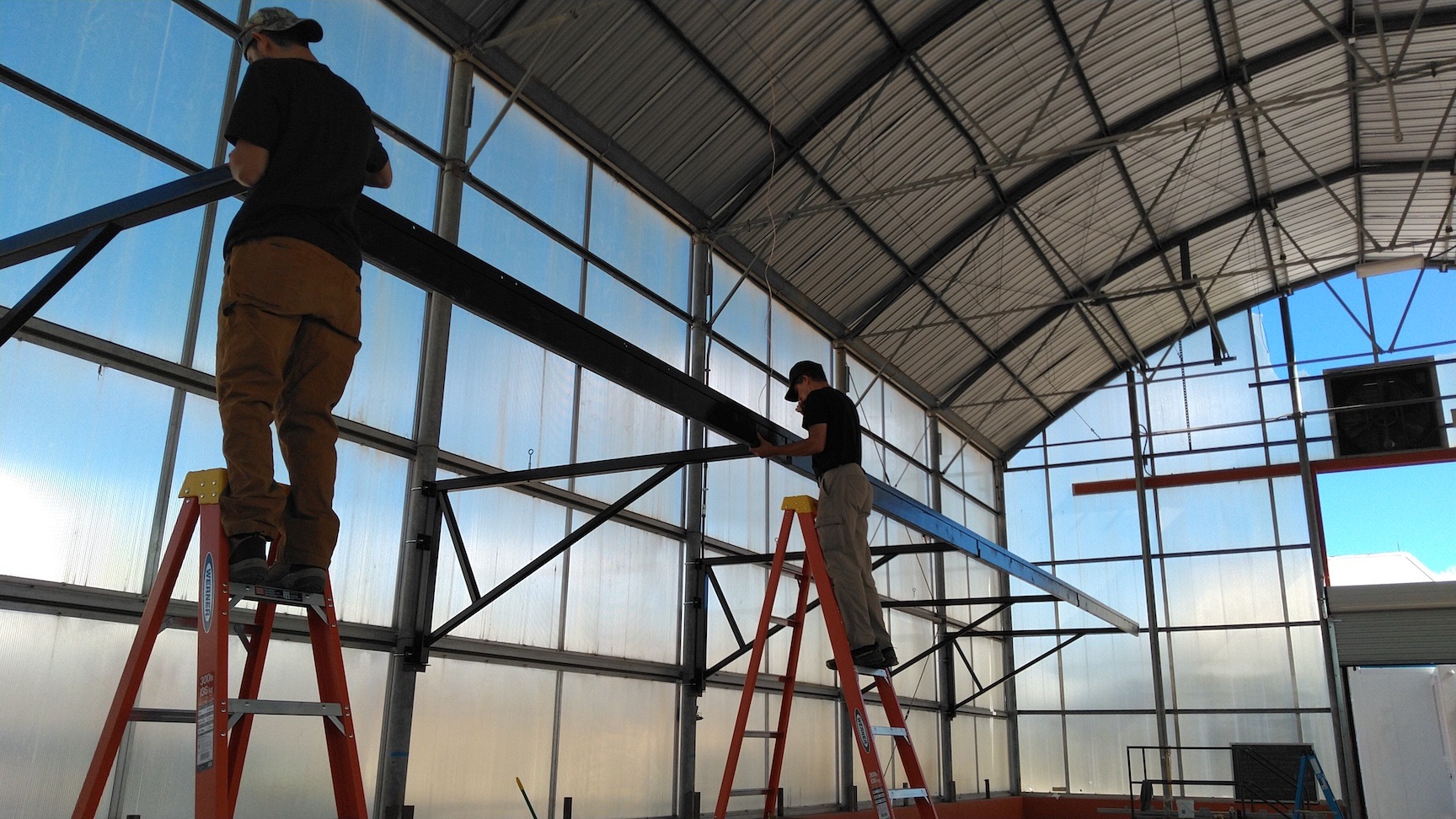
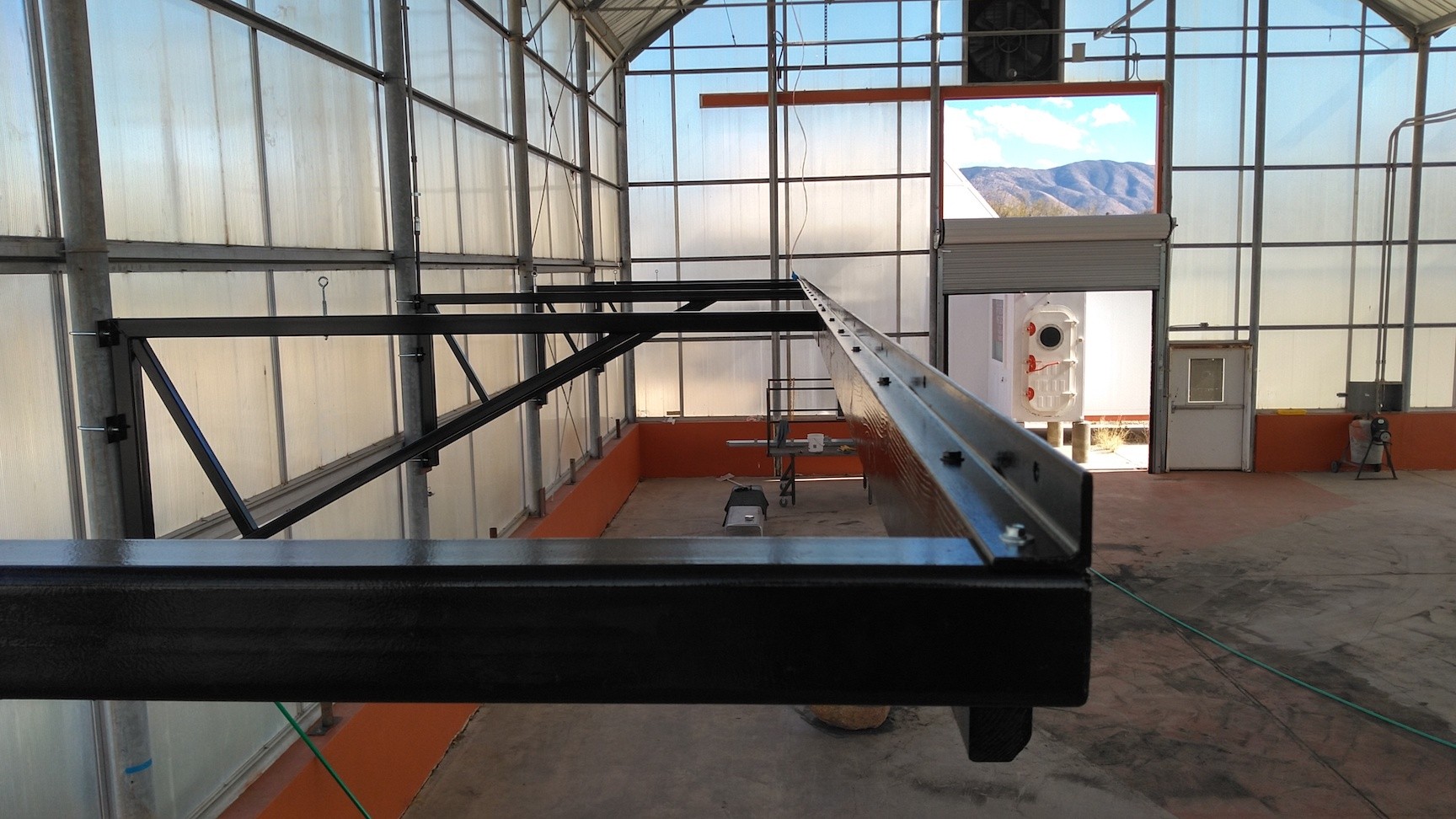
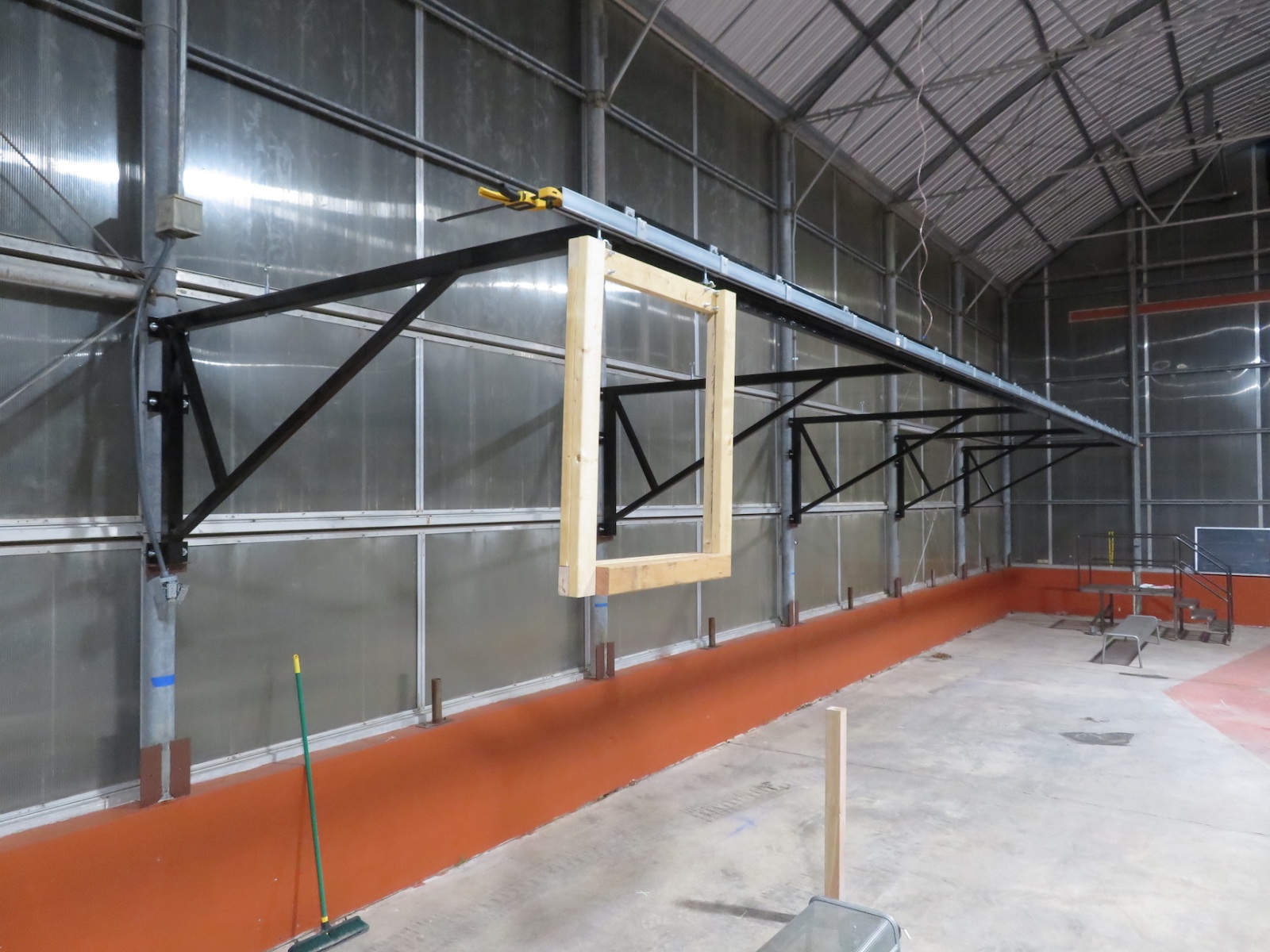
SAM Reduced Gravity Simulator being installed at its final position.

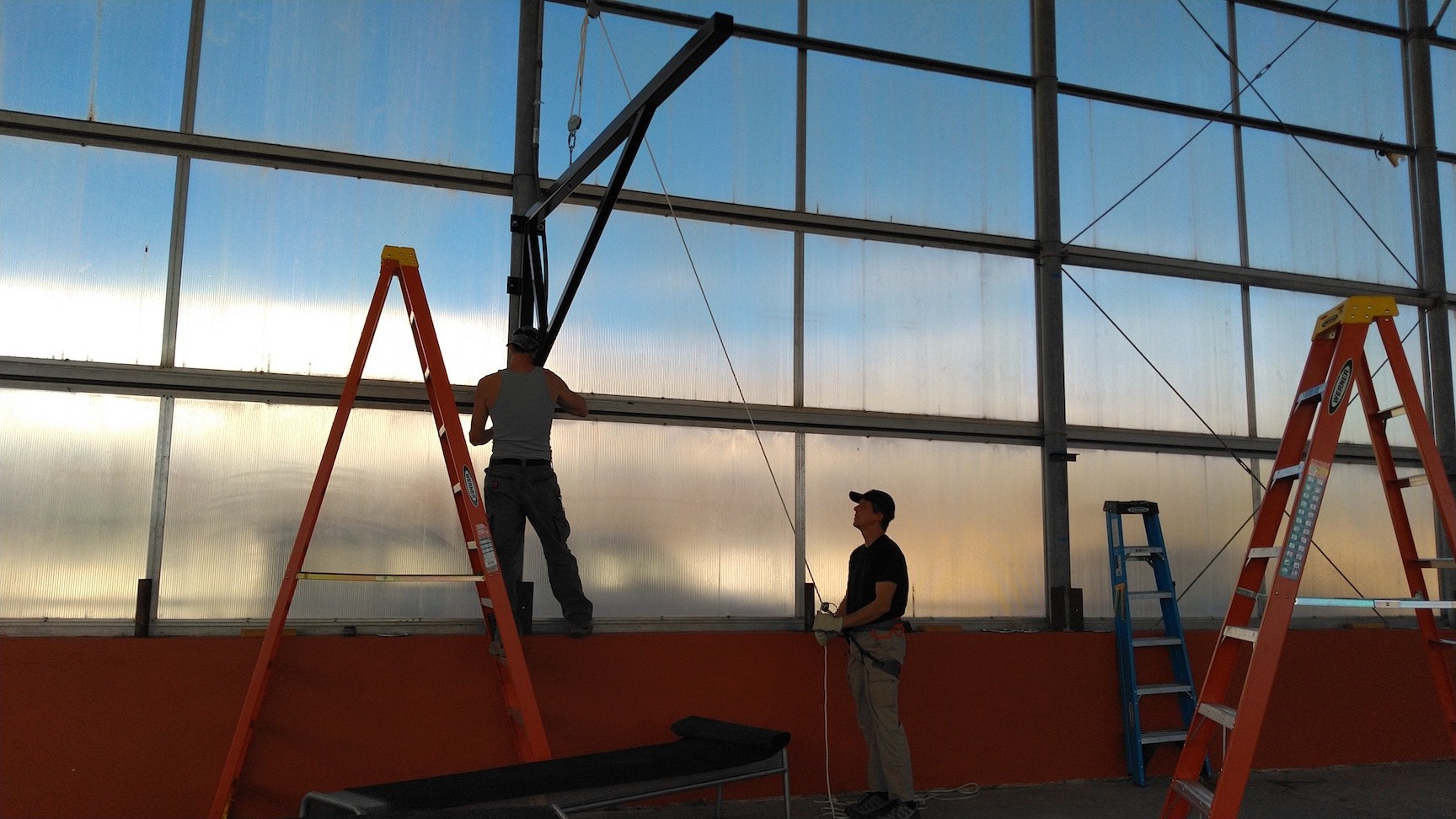
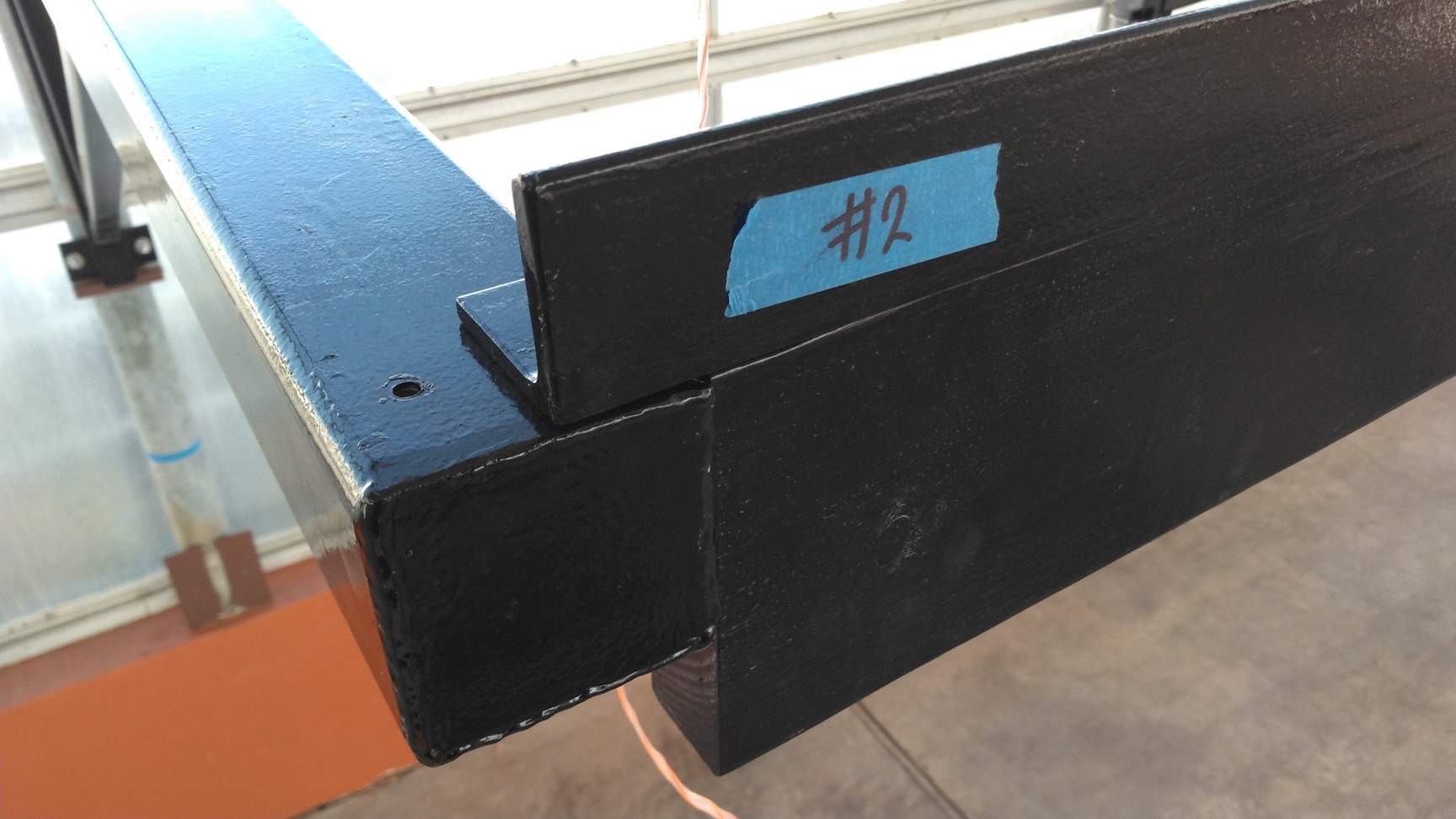
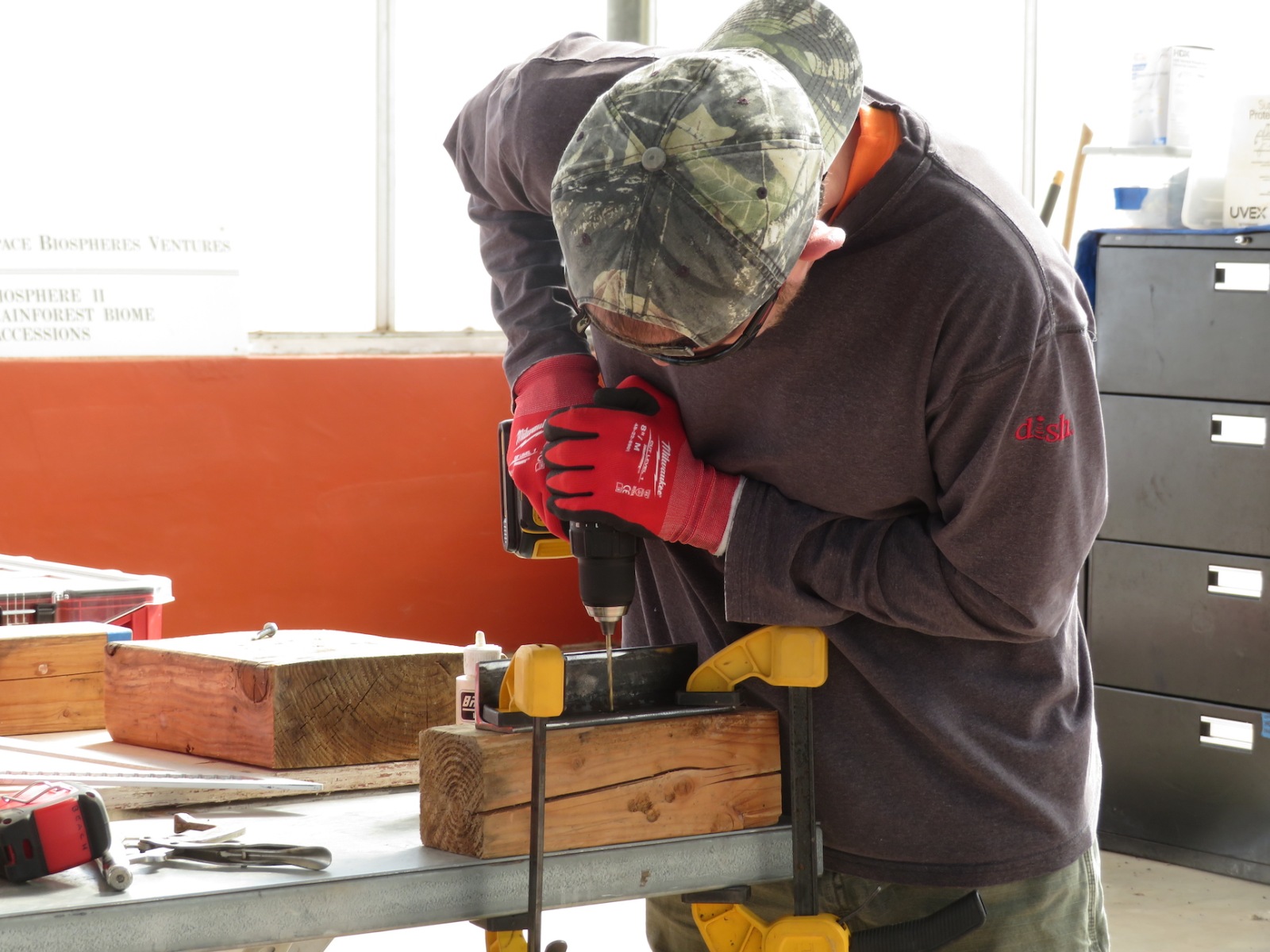
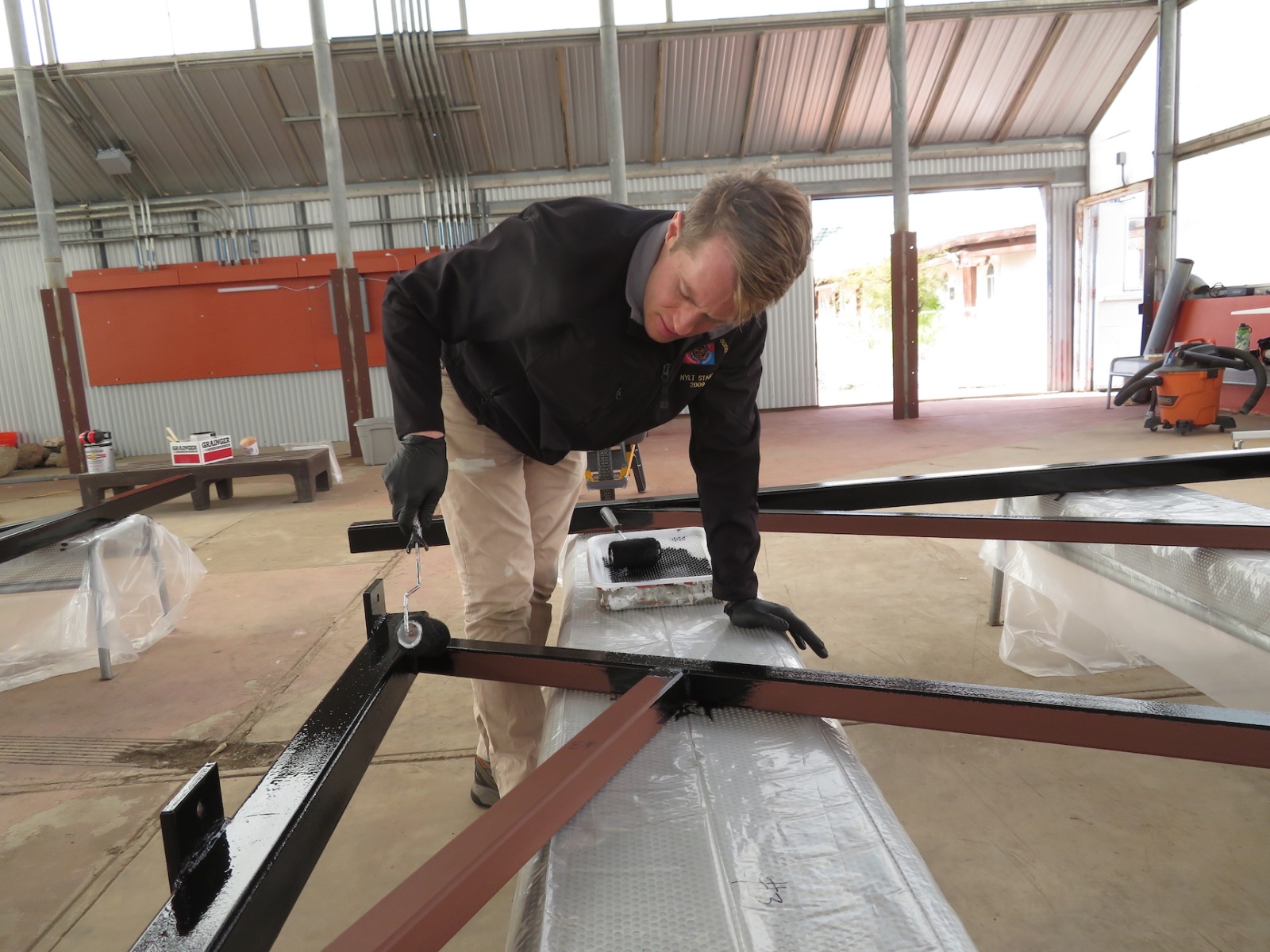
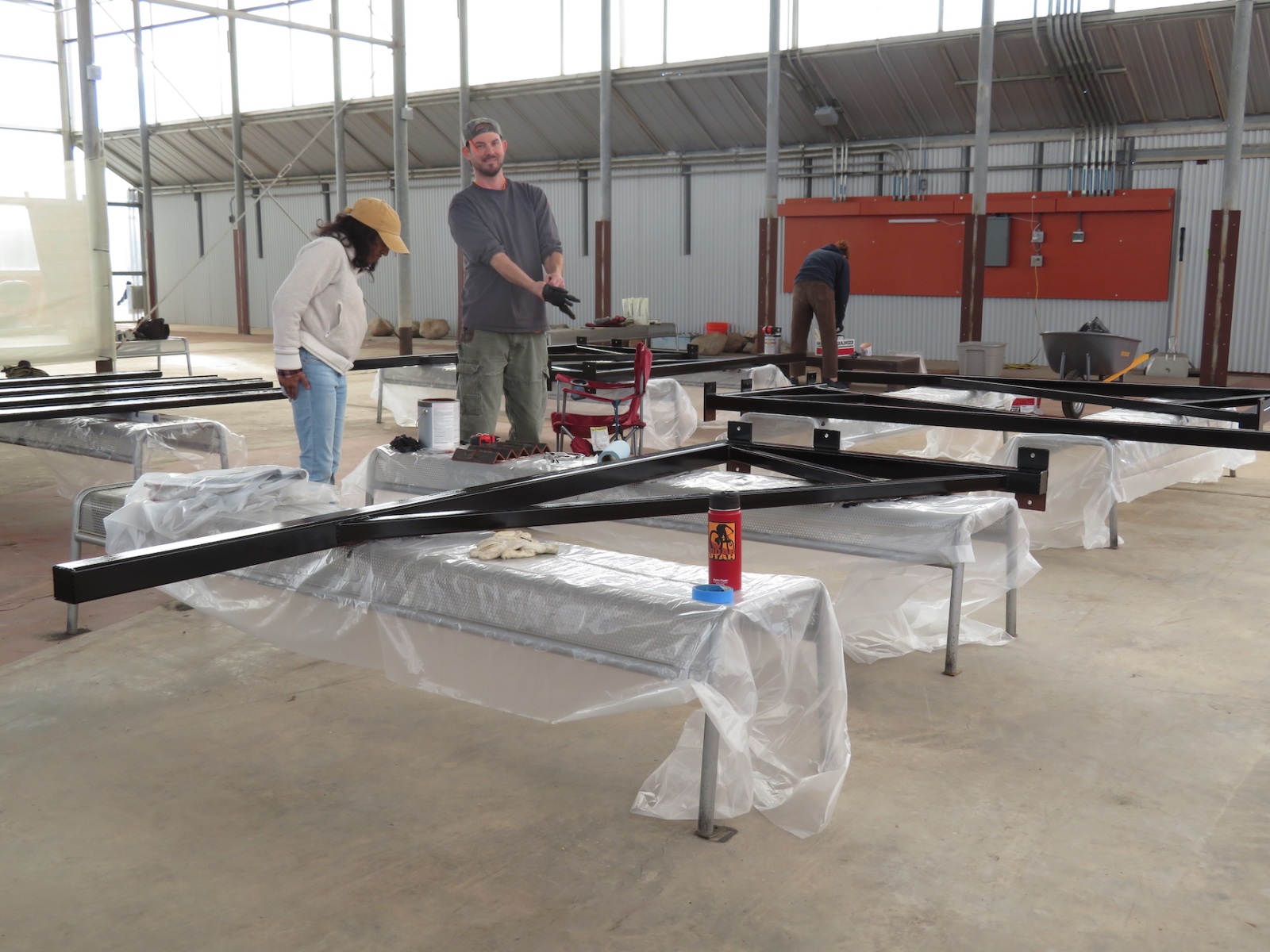
Following the test trolley runs, the Reduced Gravity Simulator was disassembled and taken down for a final coat of paint. Each component was labelled, cleaned, and painted. With the cooler temperatures the paint needed two full days to dry. Matthias, Luna, and Kai developed a system to lift the massive armatures to their higher, final position.

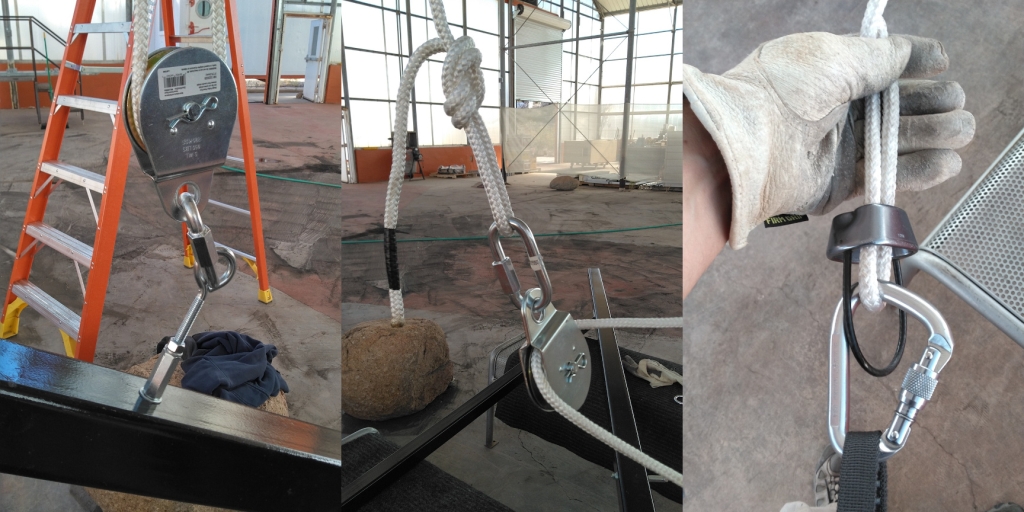
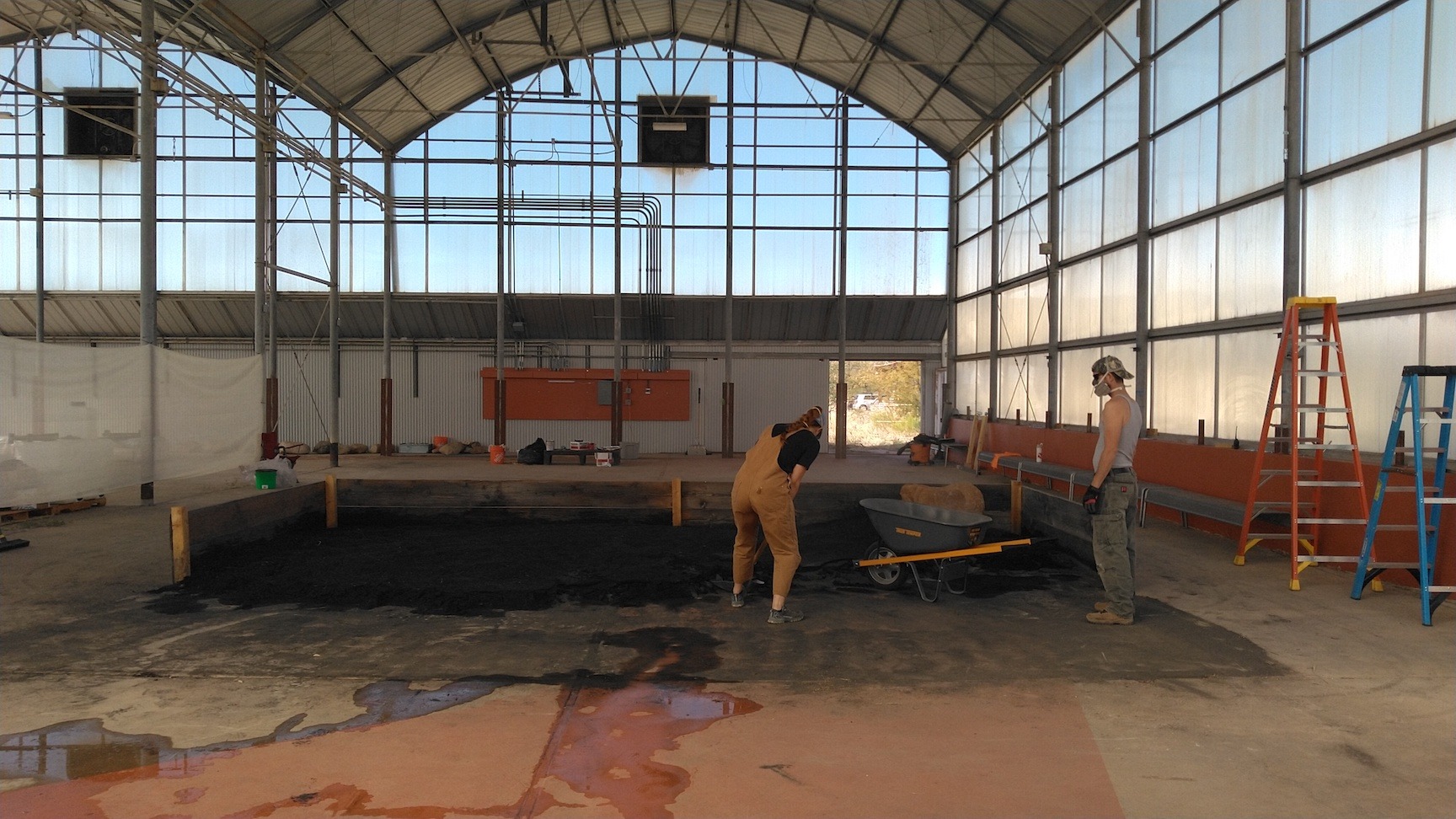
Following a full day of removing the basalt (simulated Mars regolith) by Matthias and Luna, each took turns tossing a pull line over the Mars yard roof support structure (we won’t mention the number of tosses required), then pulling a 600lbs nylon line over. With two pulleys for a 2:1 block and tackle lift, Kai used his climbing harness and belay device to hold the armatures steady between lifts by Matthias and Luna.

Once at the height of the small angle iron shelf already secured to the building support beams, the top and bottom U bolts were fastened. As with the first, lower position, aligning the ends of the armatures was relatively simple. Using the nuts on the U bolts themselves, the armatures were moved with a high degree of accuracy, to within 1/8th of an inch tip to tip.

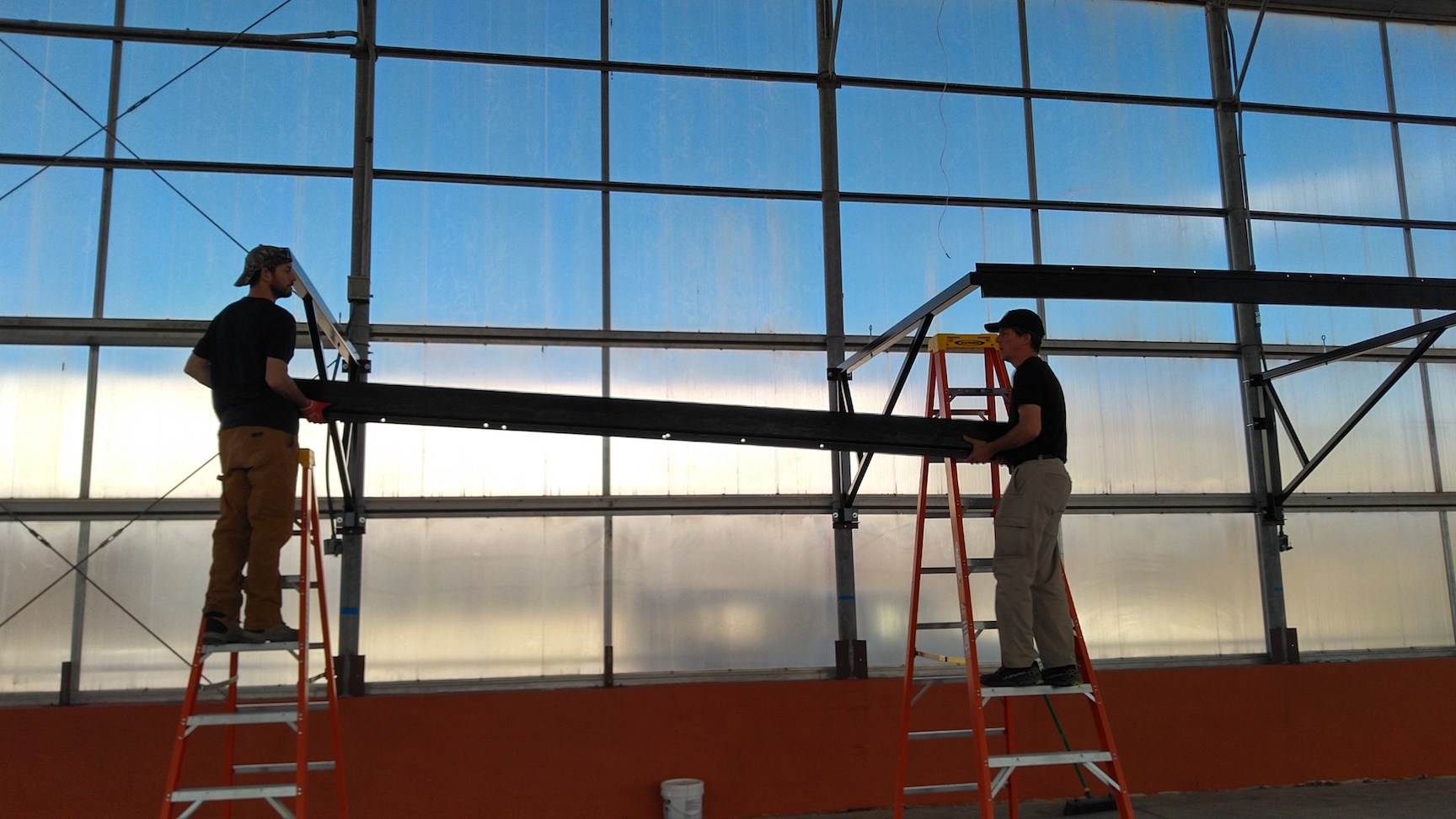
The four sections of track were replaced, the machine screw holes aligning perfectly.
In this new, higher position, the original test trolley is a bit awkward to sit upon, but remains functional as an overhead system. The first gravity-offload will be built and tested soon.
By |2024-03-02T06:51:21+00:00February 1st, 2024|Categories: Construction|0 Comments

Leak detection

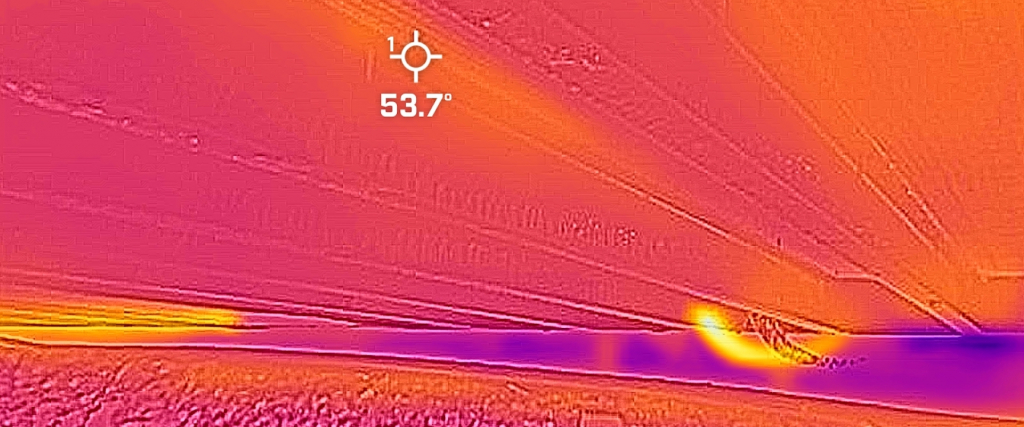
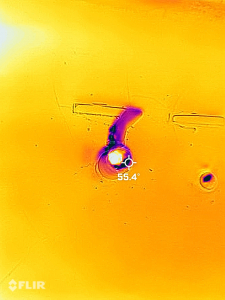
Thermal image of the underside of the SAM Engineering Bay, by FLIR

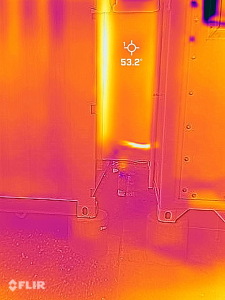
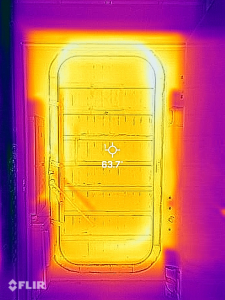
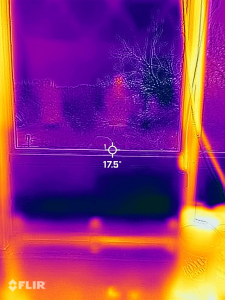
Thermal image of SAM, by FLIR Thermal image of SAM, by FLIR Thermal image of SAM, by FLIR

In October of 2023 the SAM team conducted an extensive, module-by-module test of the pressurized SAM to determine where the primary leaks were occurring. This process has been implemented several times, primarily after each major renovation or expansion of the facility.

There are five approaches.

LISTEN
If you can hear the leak, that means it’s big. But that does not mean it is easy to fix. While have often walked toward and in a matter of minutes isolated the internal leak point, the convolution of the walls, seams, and junctions might find the air escaping behind a panel or fixture, thus requiring a considerable effort to apply a patch.

INCENSE – LOOK
If the leak cannot be heard, we use incense. This trick was handed down to us from the original Biospherians who used incense to find the smallest of leaks. It works like this—wear a carpenter’s mask, the kind without a vent, so that your breathing does not stir the air. Light an incense stick and walk slowly through the habitat, stopping for minutes, sometimes, at places where you believe there might be a leak. Stand still. Let the smoke rise and look for the smoke being sucked into a seem, behind a patch, or out a corner. It will do a right-angle turn that makes it clear you’ve got a problem.

INCENSE – SMELL
Using the incense again, this time have someone on the outside such that they can sniff for the incense. While the human nose may not compare with that of a canine, it remains highly sensitive and can detect incredibly minute traces of that distinct incense smell. Trace the exit back to the origin (which can be challenging), patch, and try again.

ULTRASOUND
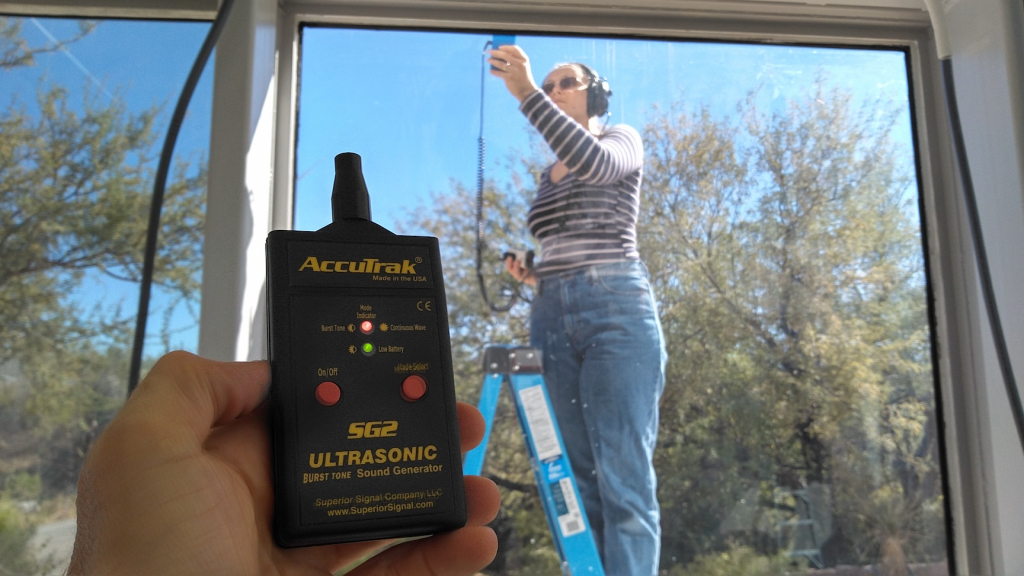
We purchased an ultrasound generated and detector. This proved remarkably valuable, as the generated is held inside of SAM while another team member is outside. We use this much as we do the incense, where the sound can travel around corners and through tubes. It is complimentary to the incense, and used in tandem.

THERMAL IMAGING
It would seem that a thermal imaging camera would be a top-pick, but in fact it is the least effective. This is in part due to the fact that you must have a fairly high degree of temperature differentiation and a high volume of air escaping to “see” a leak directly. If this is the case, it would likely be heard (#1 above). Rather, we look at the materials (aluminum, glass, caulking) with intent to locate reduced or increased temperature of structural elements due to the passing air. This has proved difficult, and less than valuable.

Luna Powell using an ultrasonic leak detector at SAM

By |2026-02-14T01:41:09+00:00January 30th, 2024|Categories: Construction|0 Comments

SAM Operations Center is operational

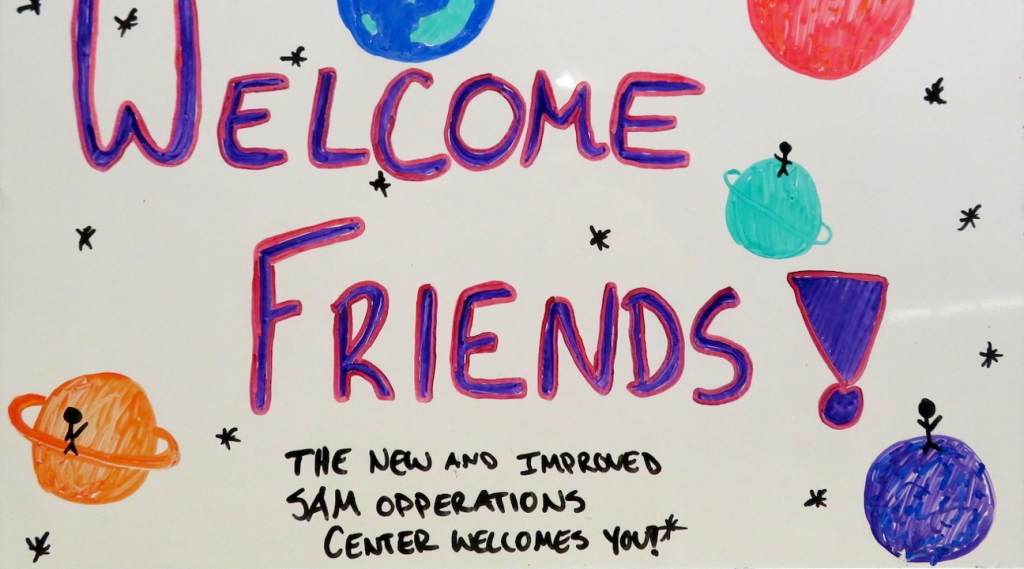
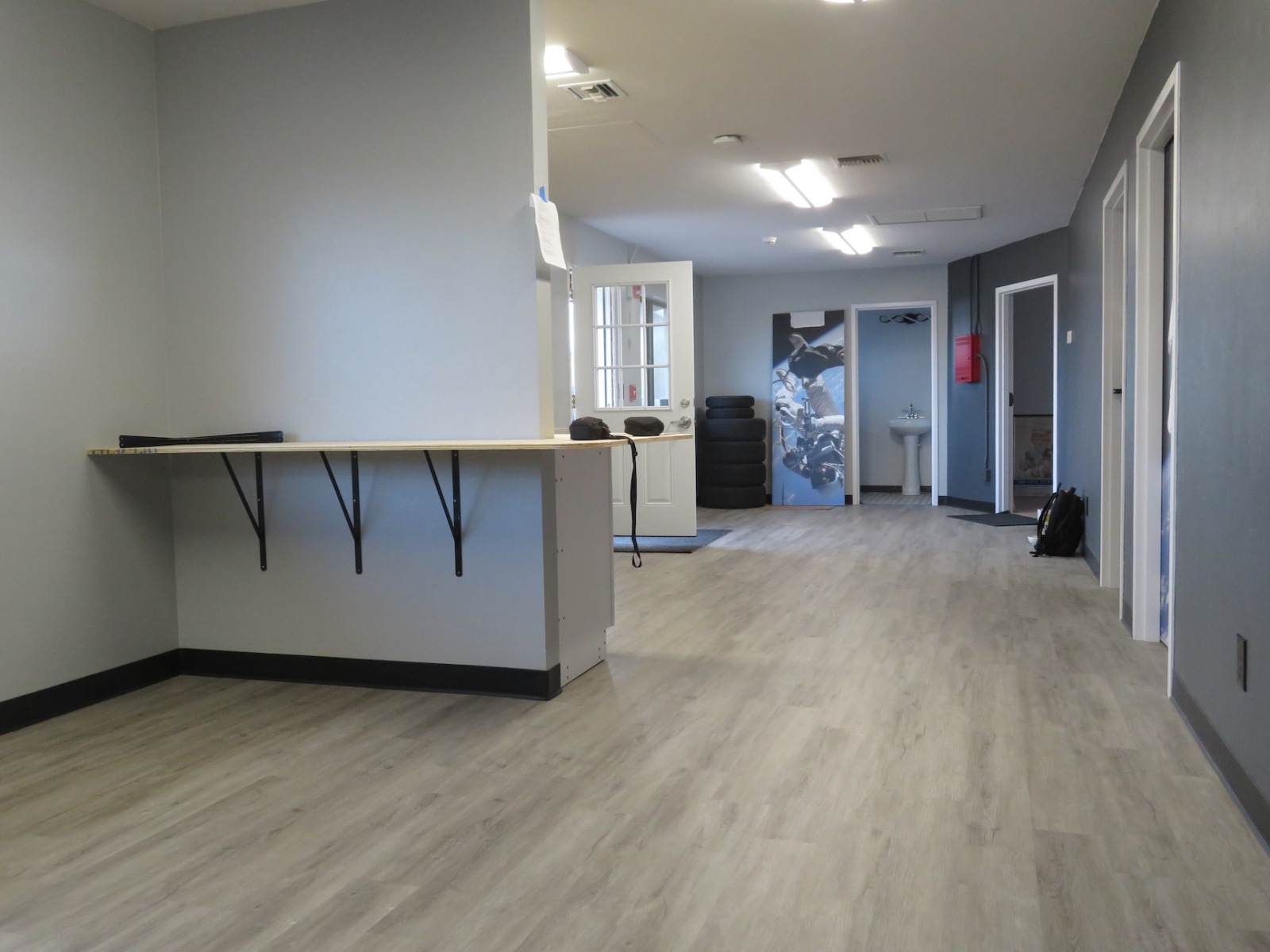
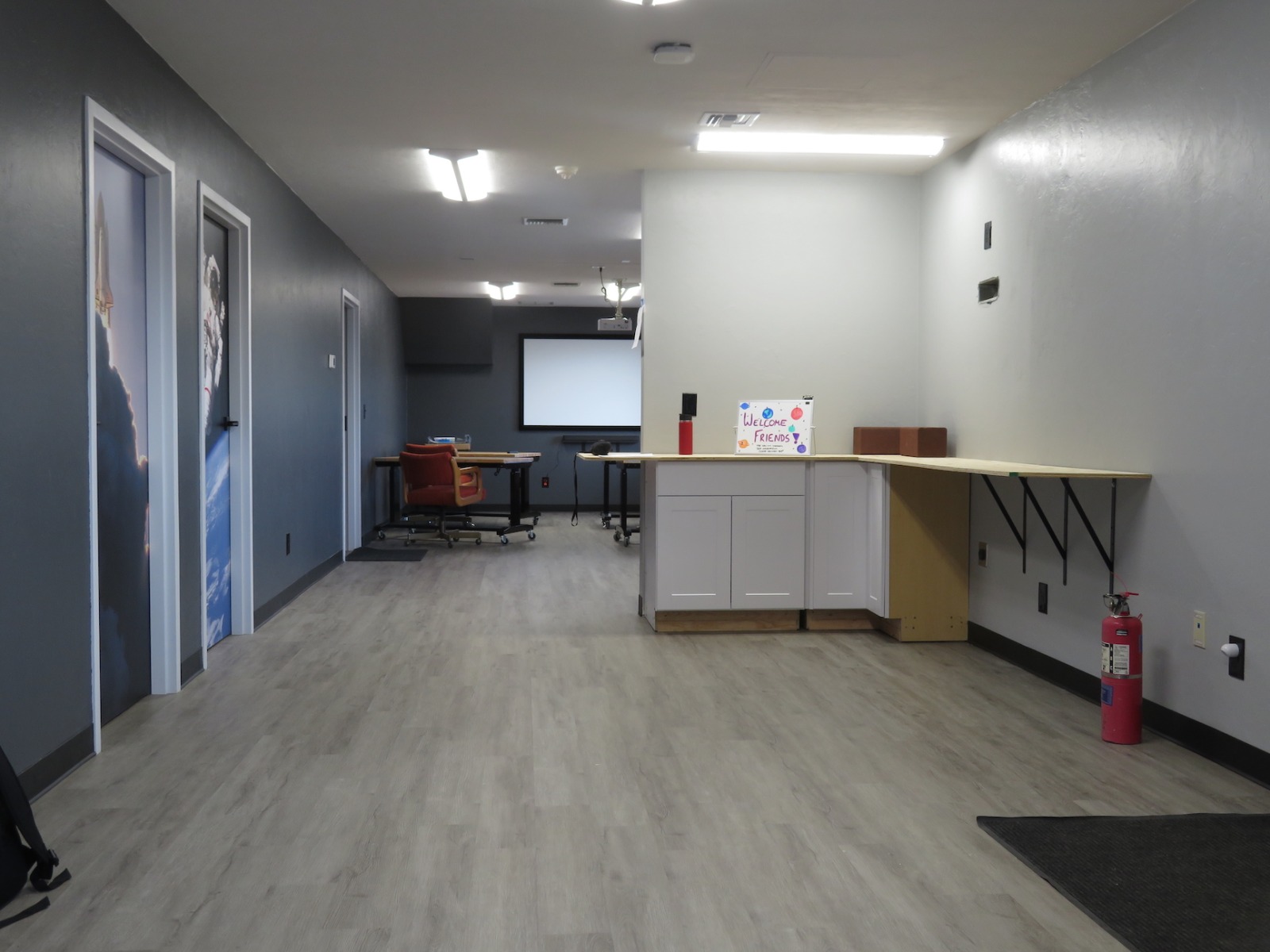
Welcome to the fully refurbished SAM Operations Center at Biosphere 2

The SAM team enjoyed an incredible work week, an all-hands-on-deck, sunrise to sunset (and beyond) engagement with Matthias, Luna, Sean, Bindhu, and Kai engaged in a non-stop effort to complete the SAM Operations Center and Mission Control, as well as advance the Mars yard into its next stage of development.

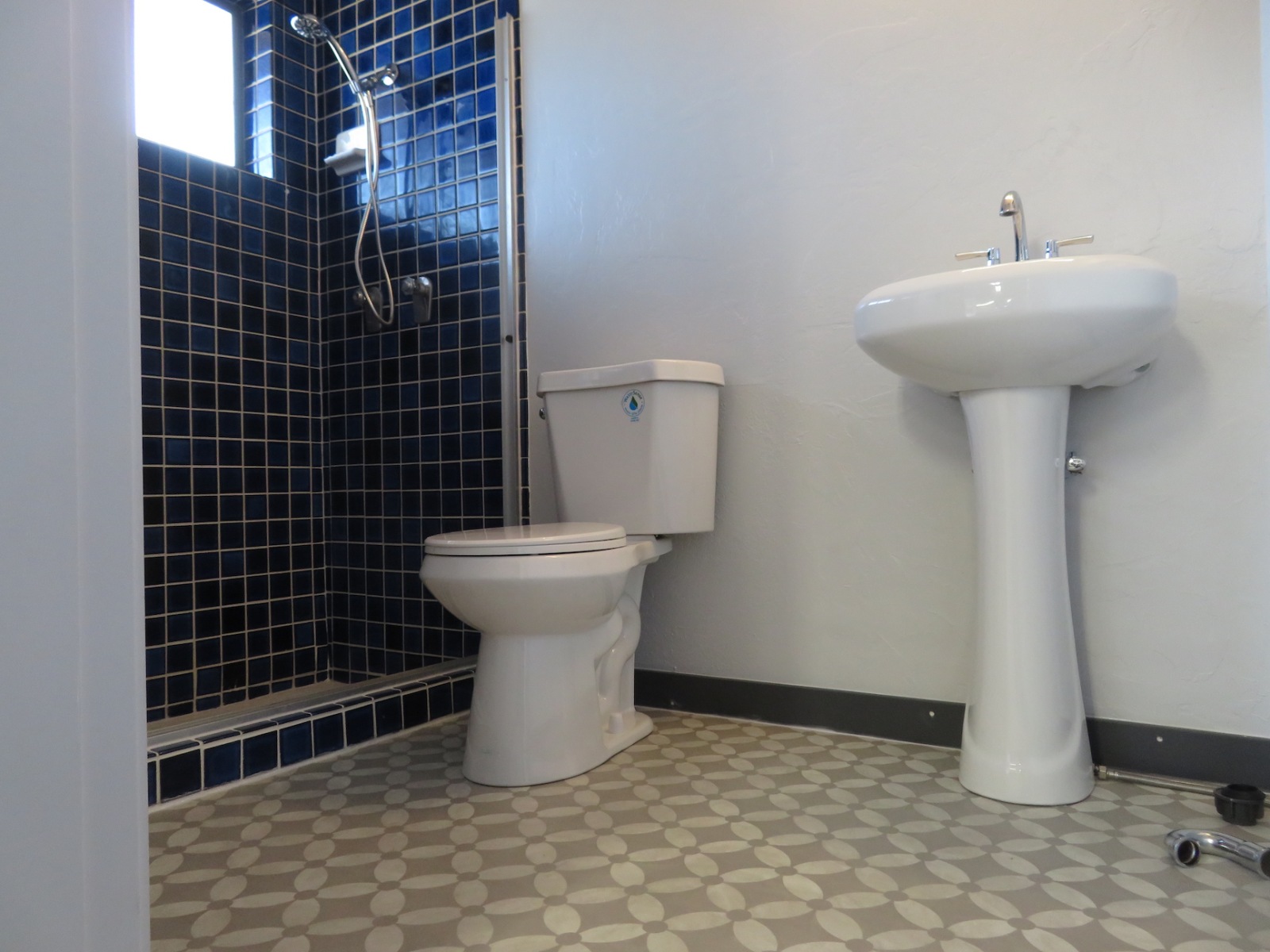
*Bathroom*
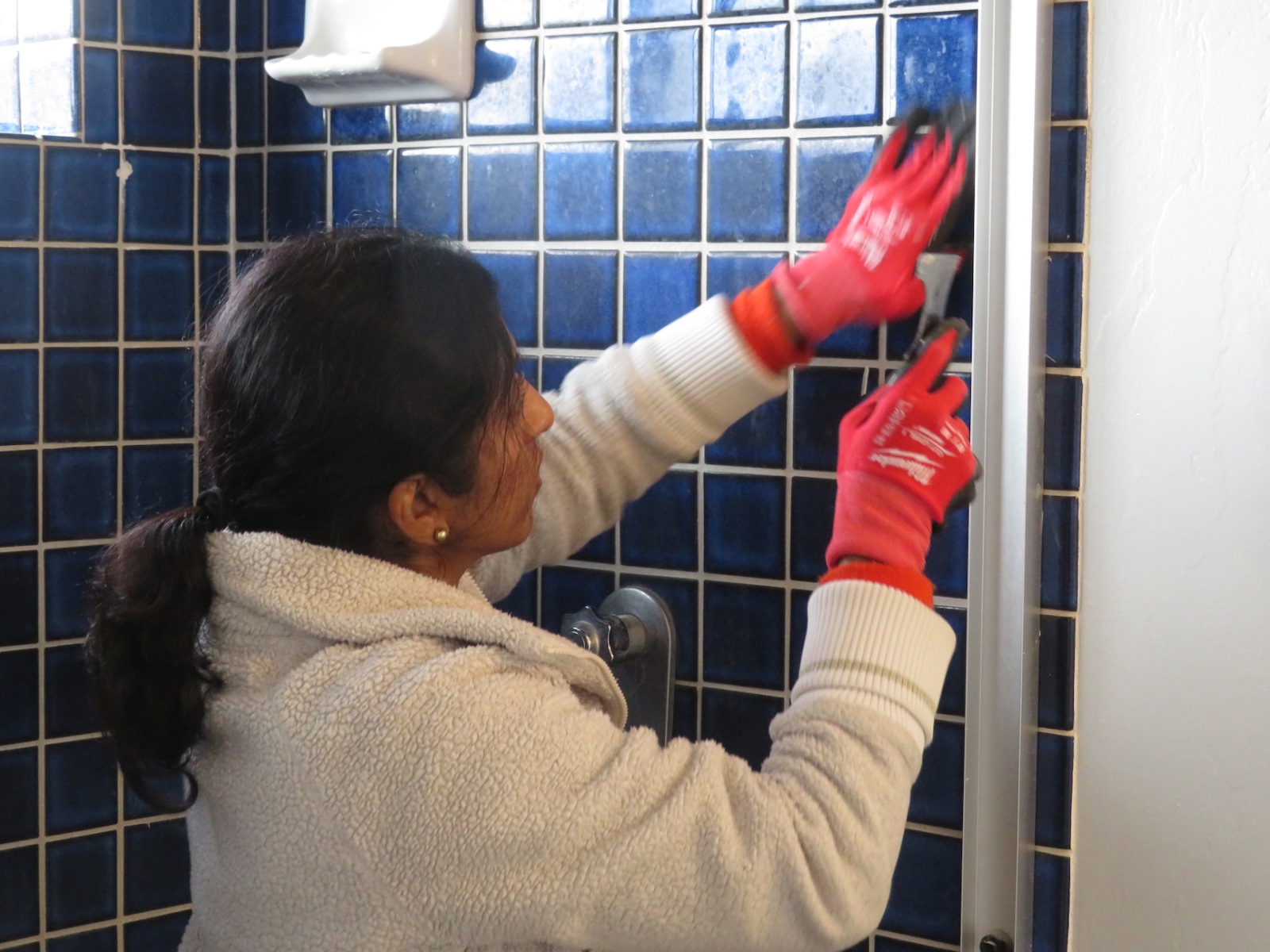
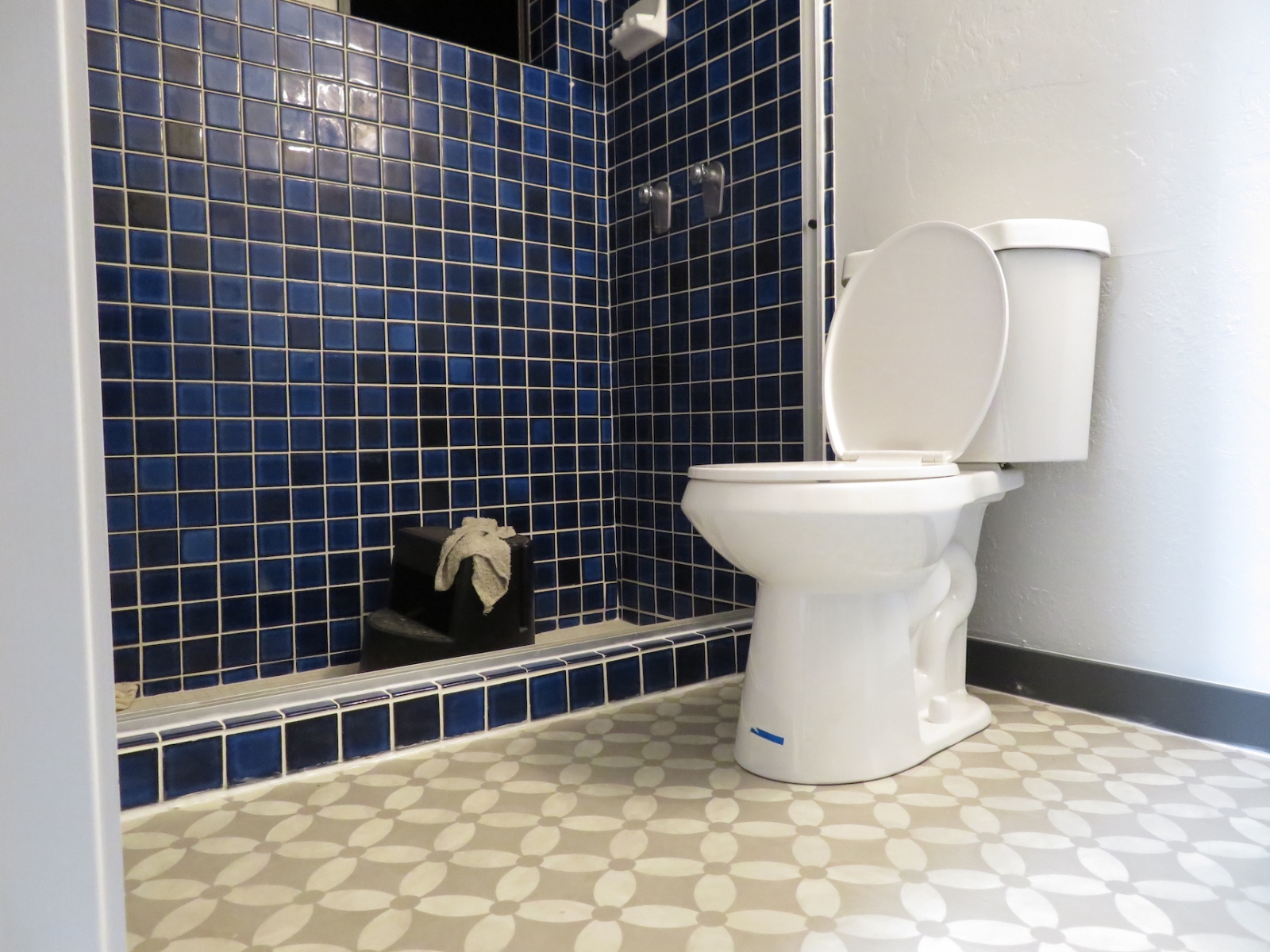
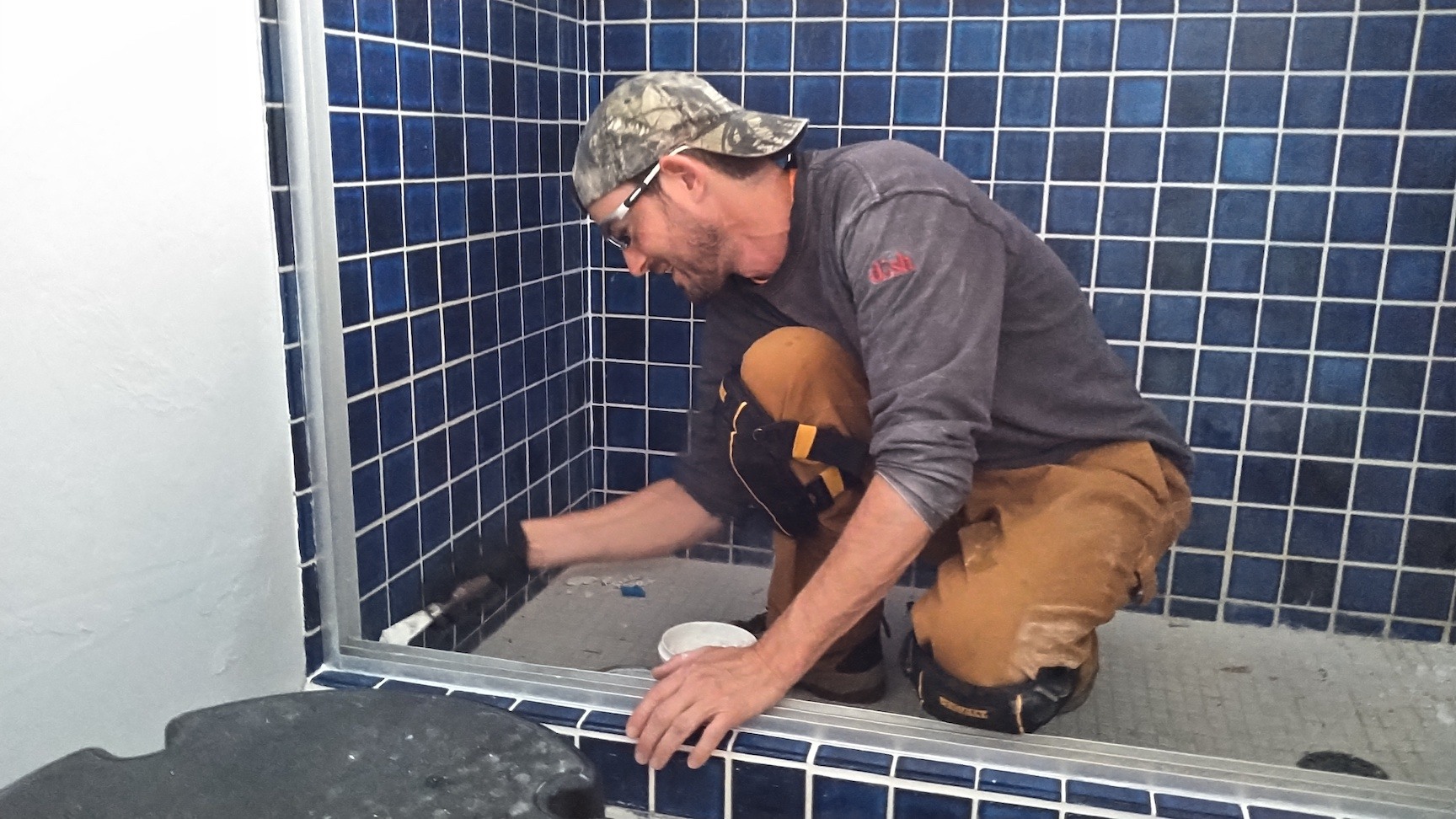
– shower tiles are grouted and cleaned
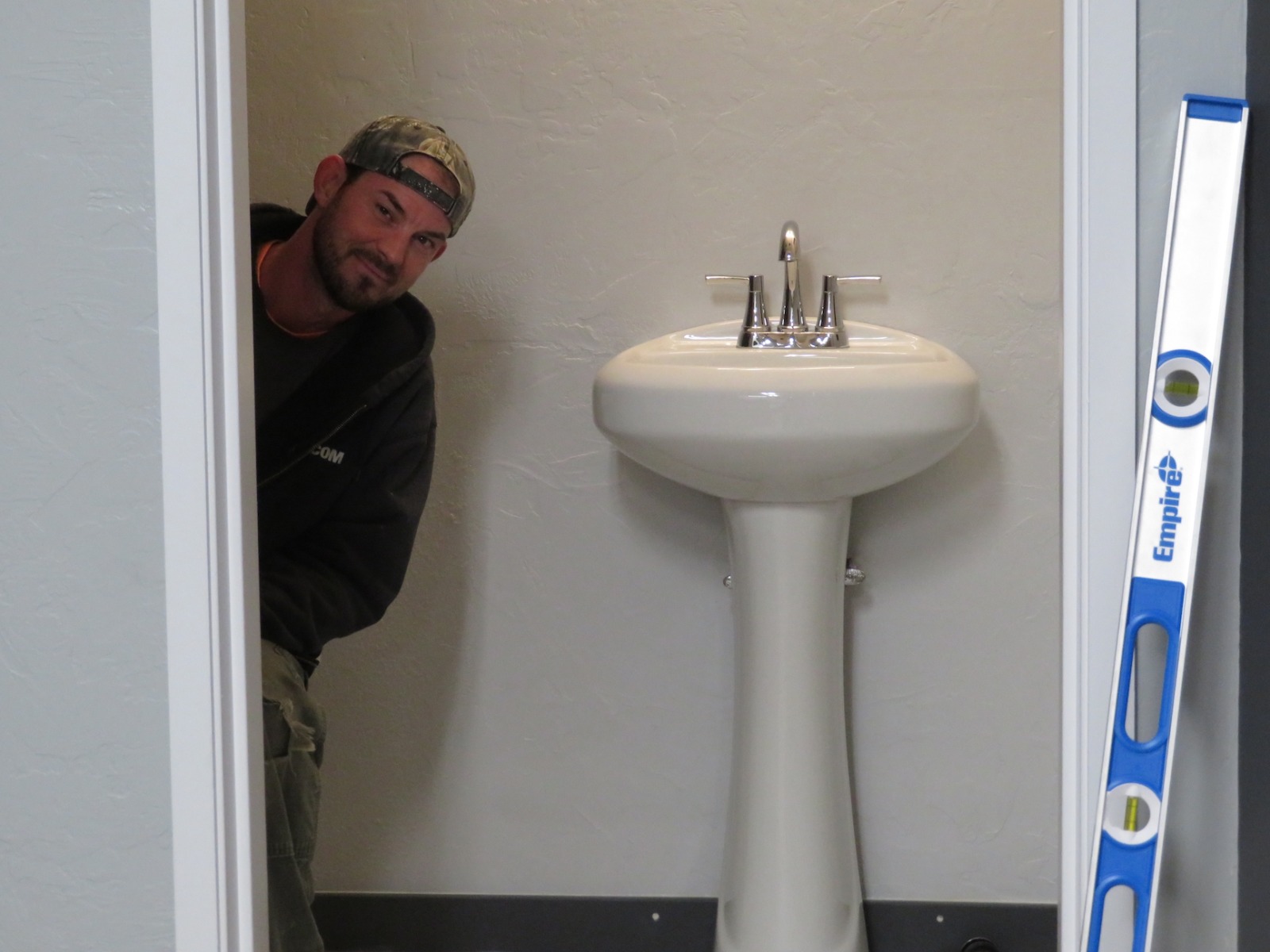
– sink is installed
– vanity light is installed
– toilet is set
– sliding doors and new head are hung

*Kitchen*
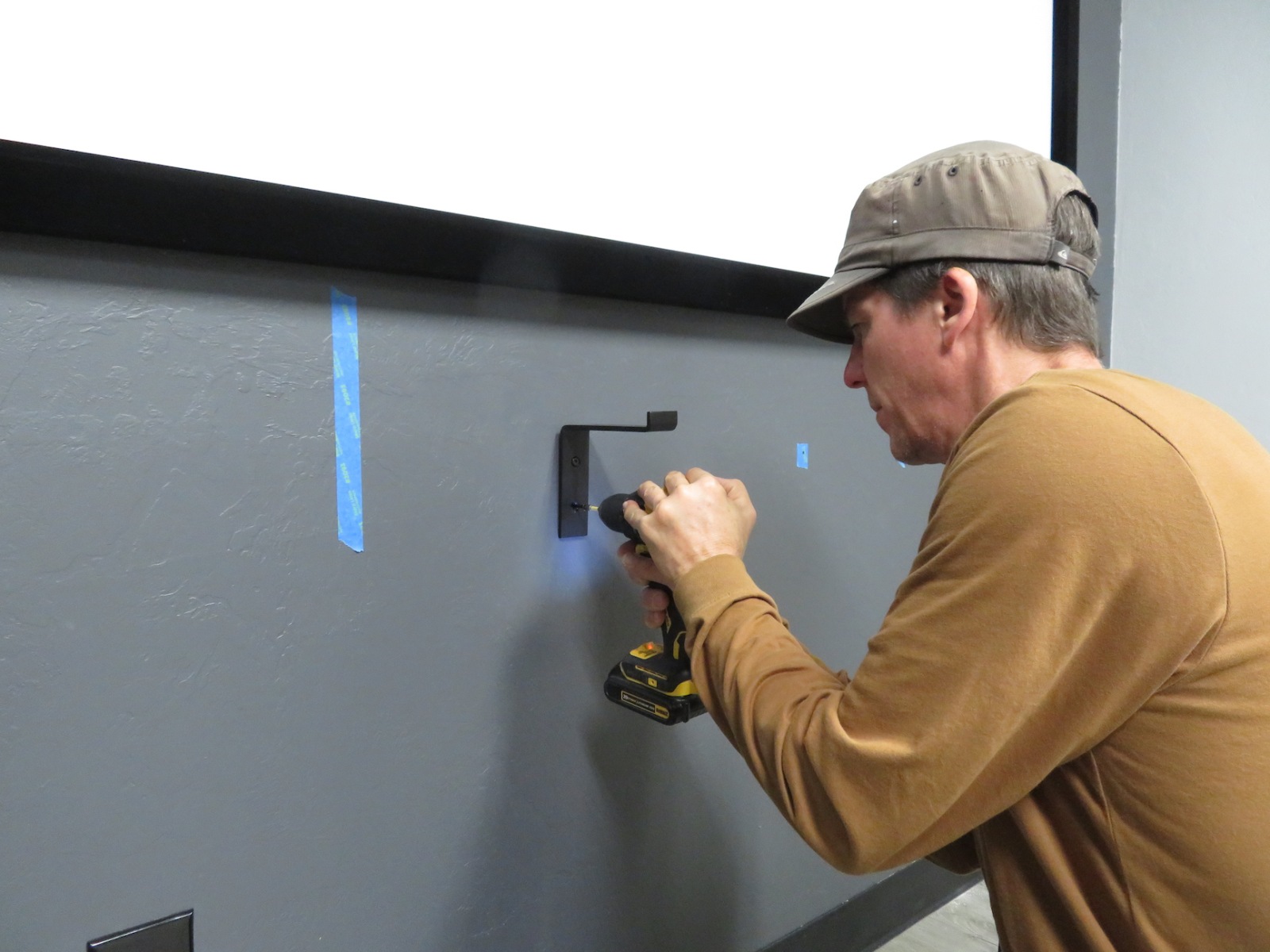
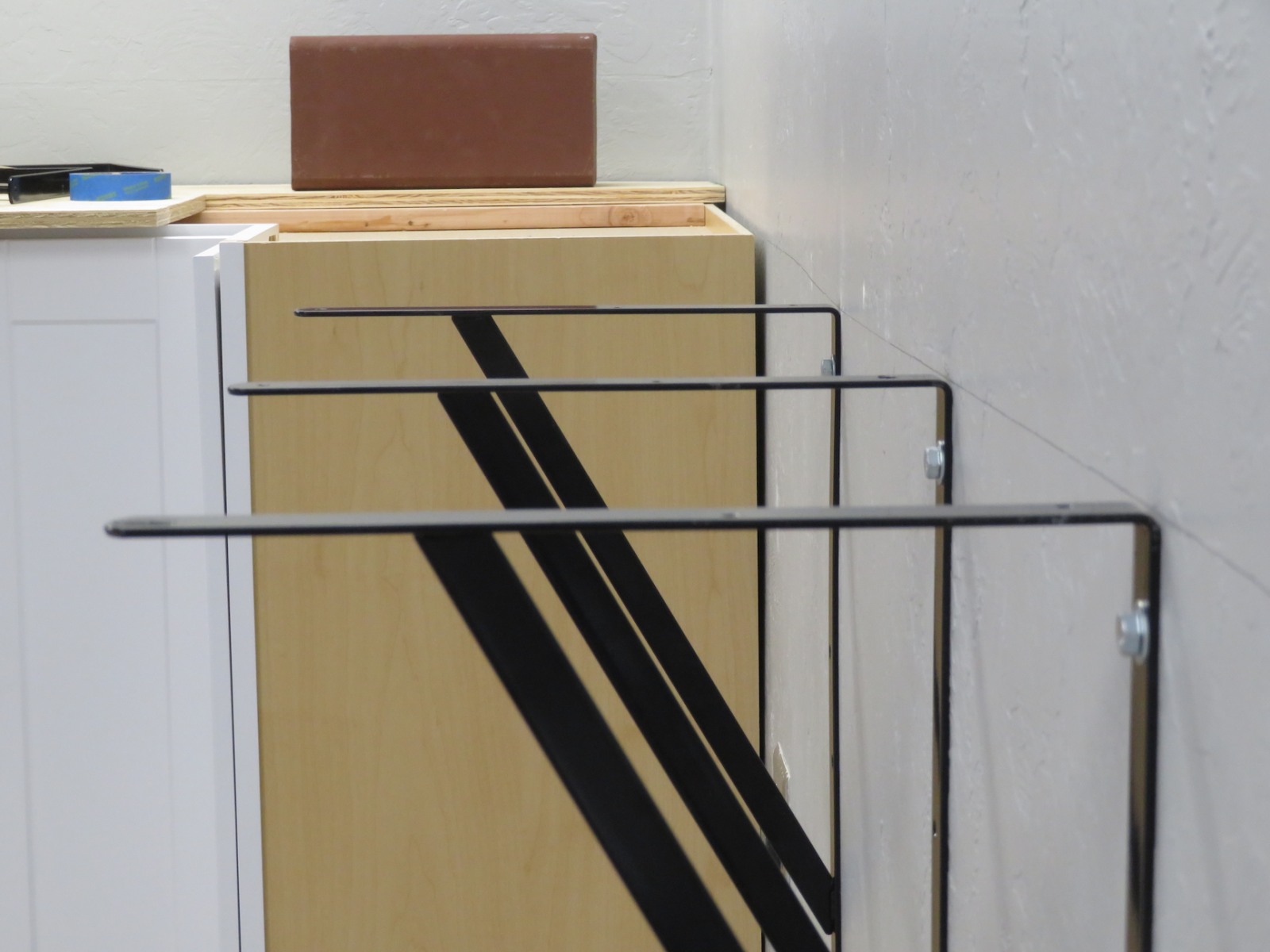
– countertop brackets are installed
– countertop template (plywood) is set
– butcher block is in-house; needs to be cut
– induction cook top arrived; waiting to be installed
– sink and faucet arrived; waiting to be installed

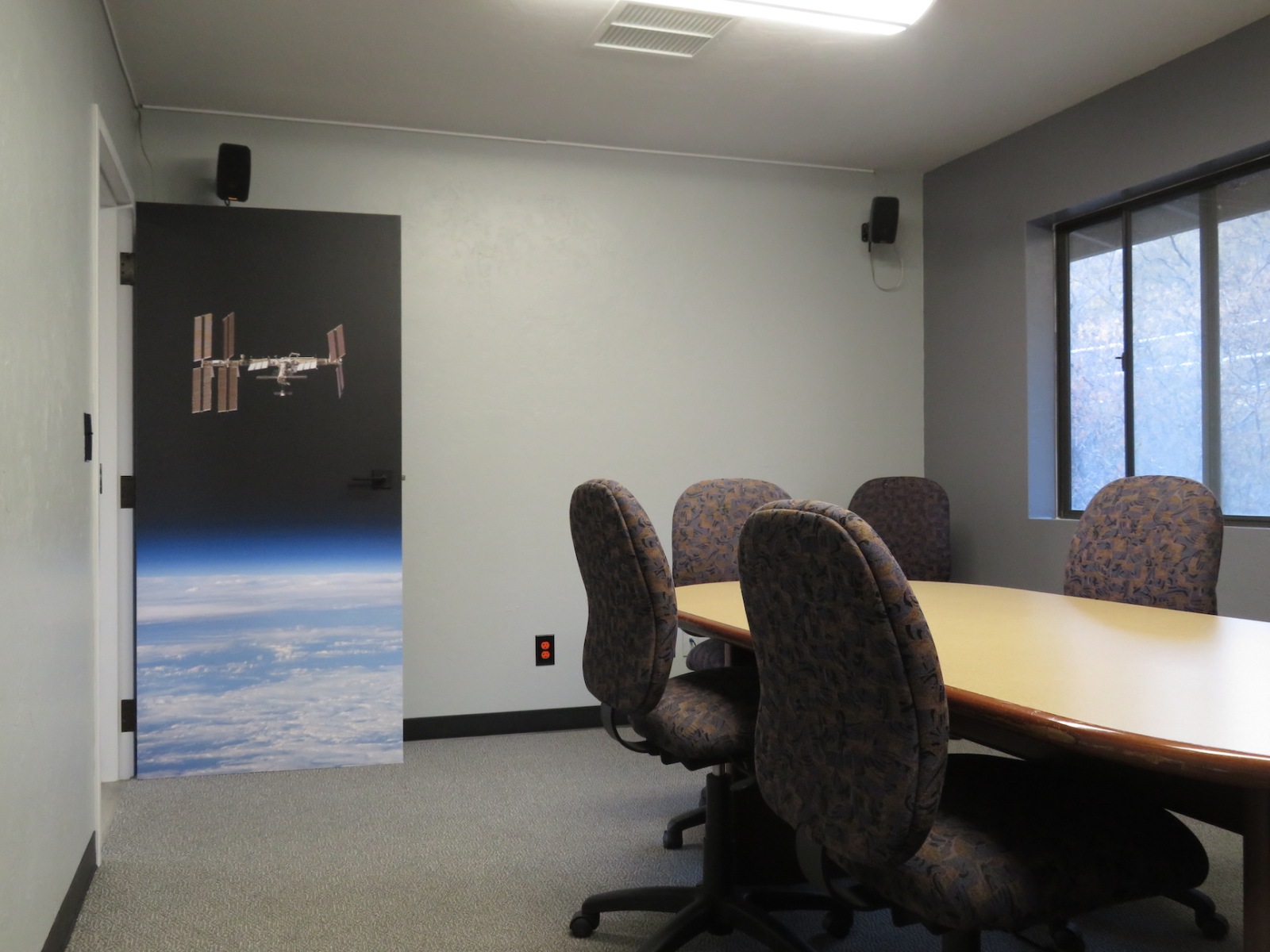
*Conference Room*
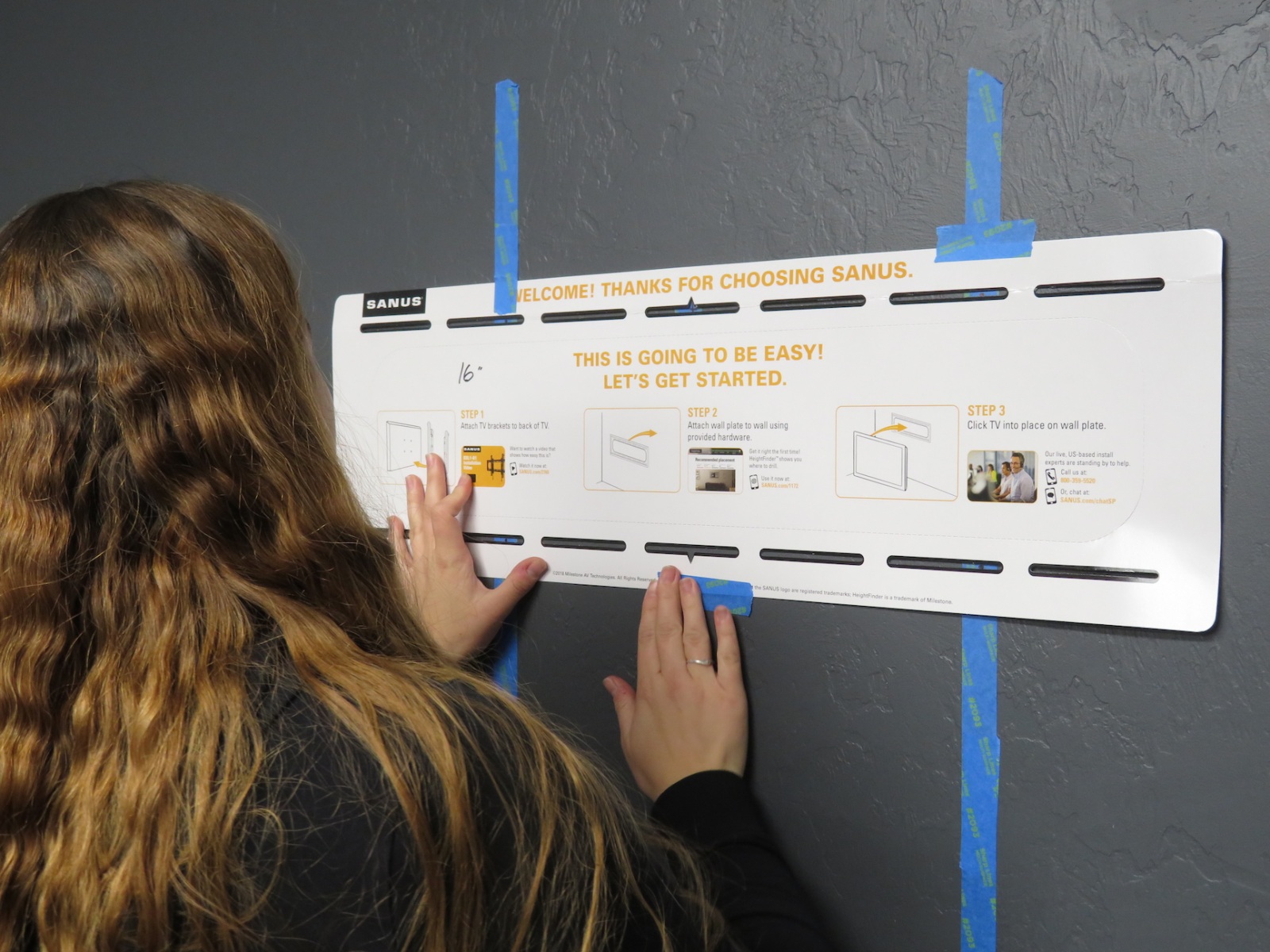
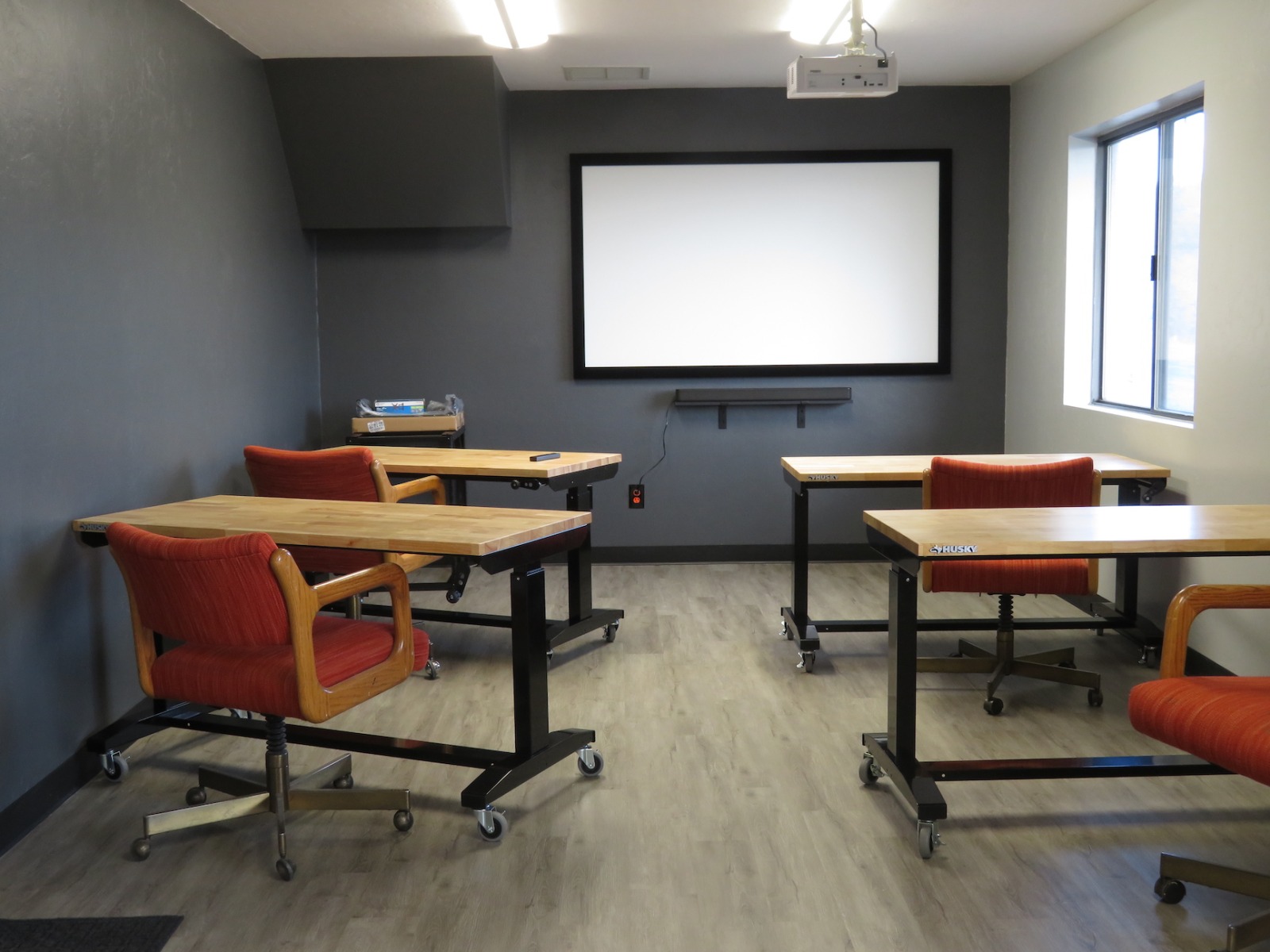
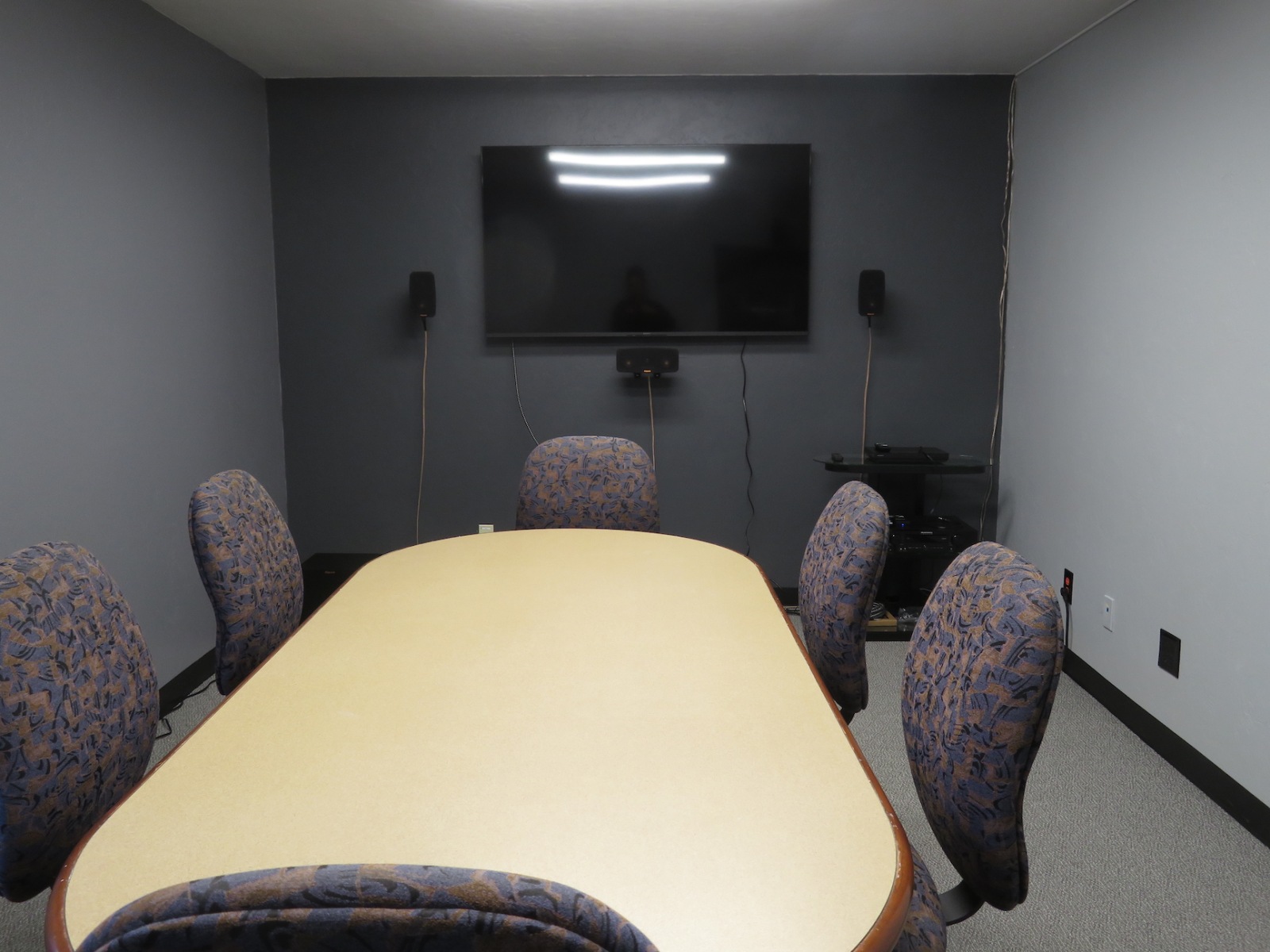
– 65″ TV installed
– 5.1 home theater speakers installed, cables run
– chairs and conference table cleaned
– “The Martian” watched !!!

*Mission Control*
– 4 mission control desks are installed
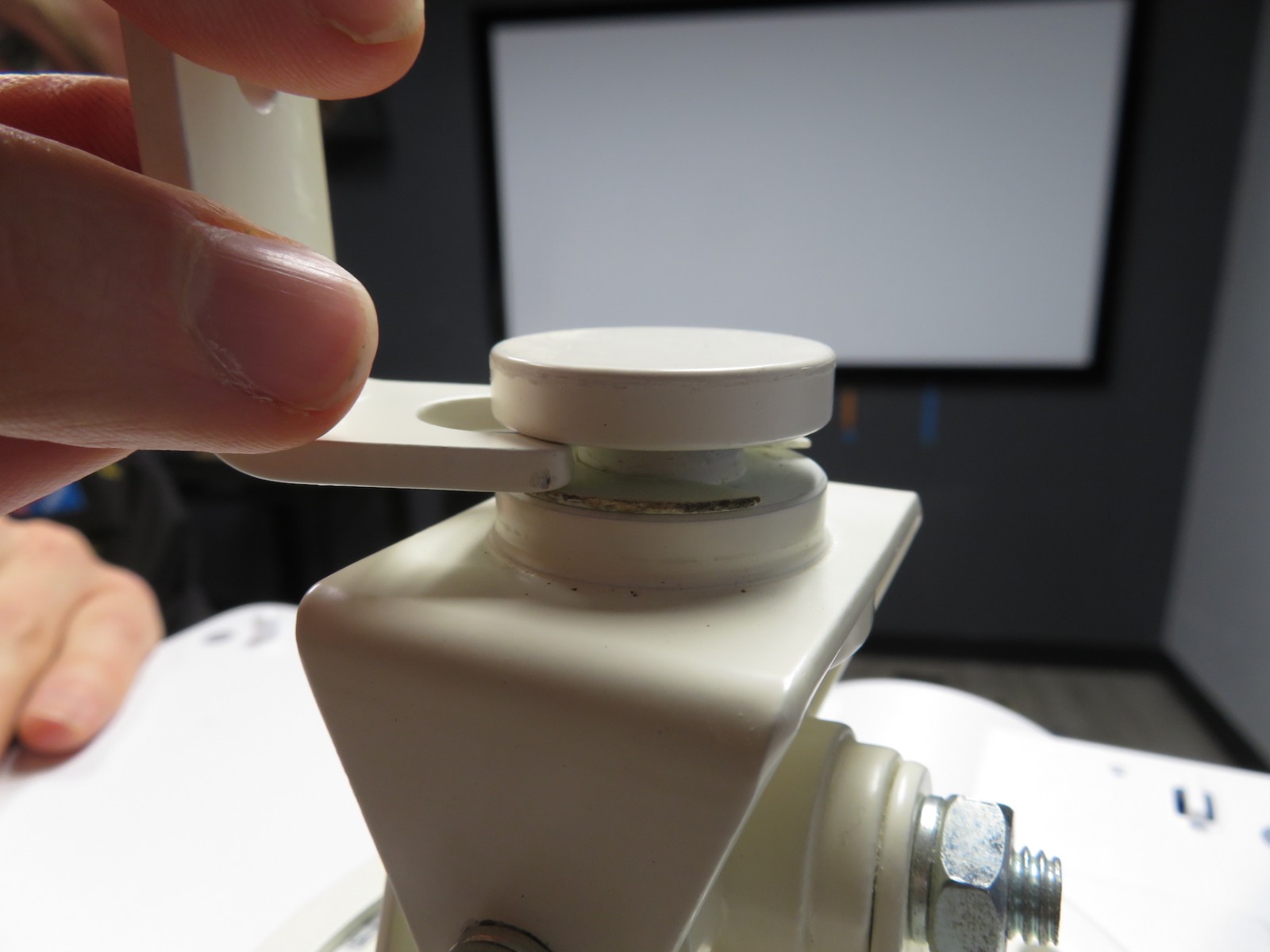
– LCD projector installed
– silver screen installed
– sound bar installed (and it sounds amazing!)
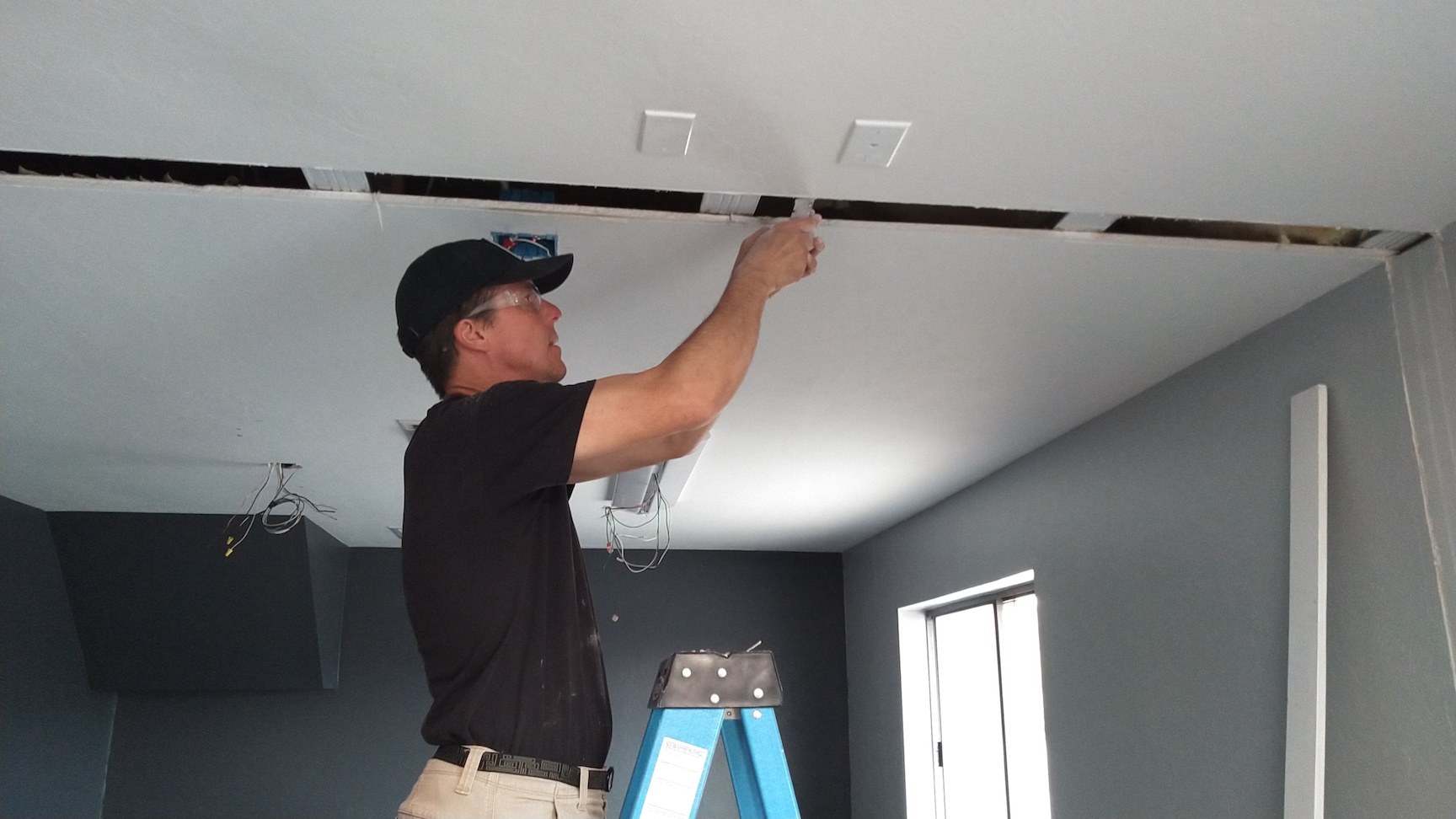
– all sheetrock work completed, painted
– IT rack assembled (needs to be reduced in size)

*Misc*
– all electrical breakers replaced
– fibre optic drop, ethernet, and WiFi are working with asynchronous 200 Mbps
– floors are washed (a few times)

*SAM*
– reduced gravity simulator removed and painted
– TM and 40′ hatches inspected, temp patched
– TM outlined on the Mars yard workshop floor
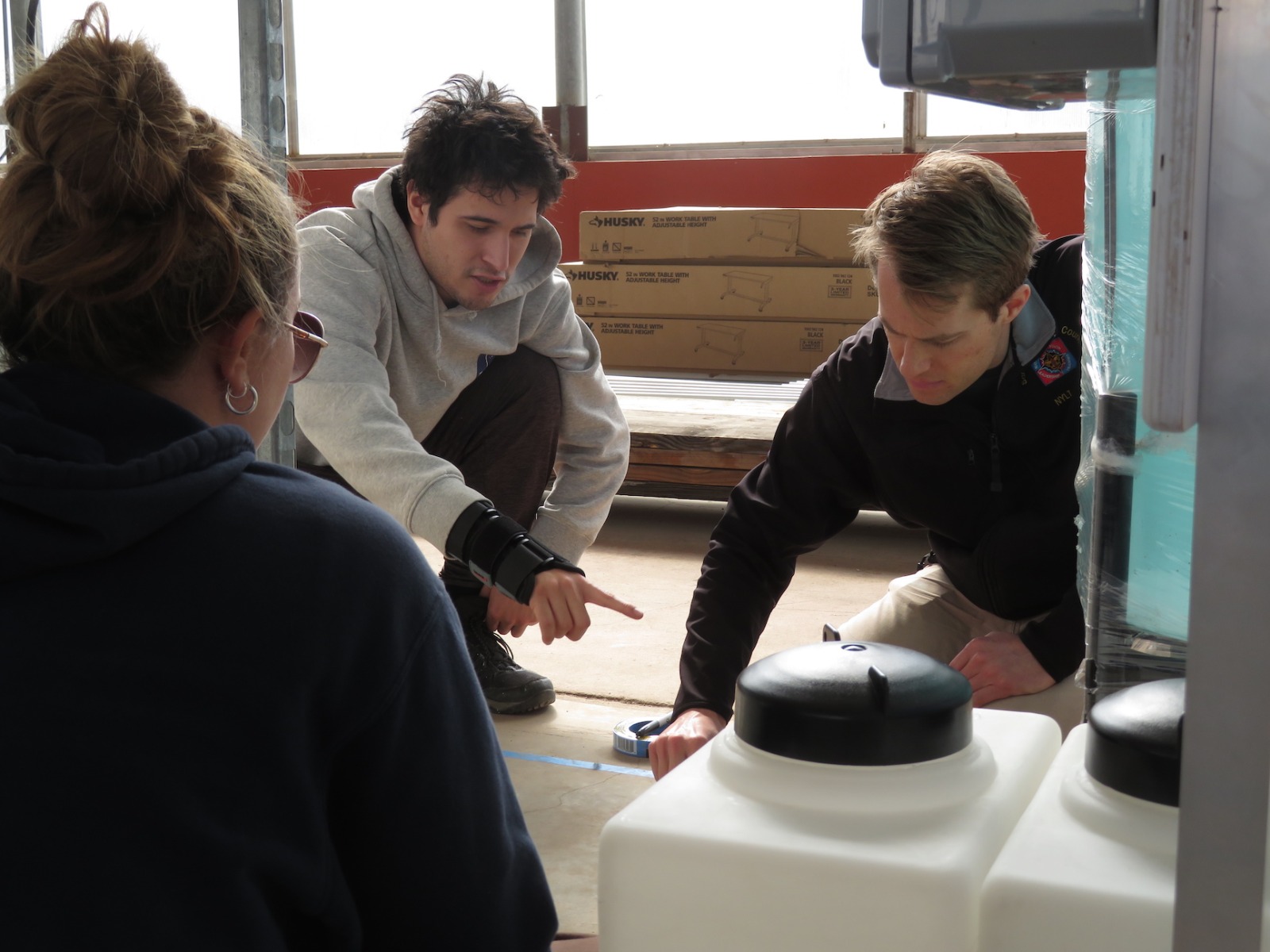
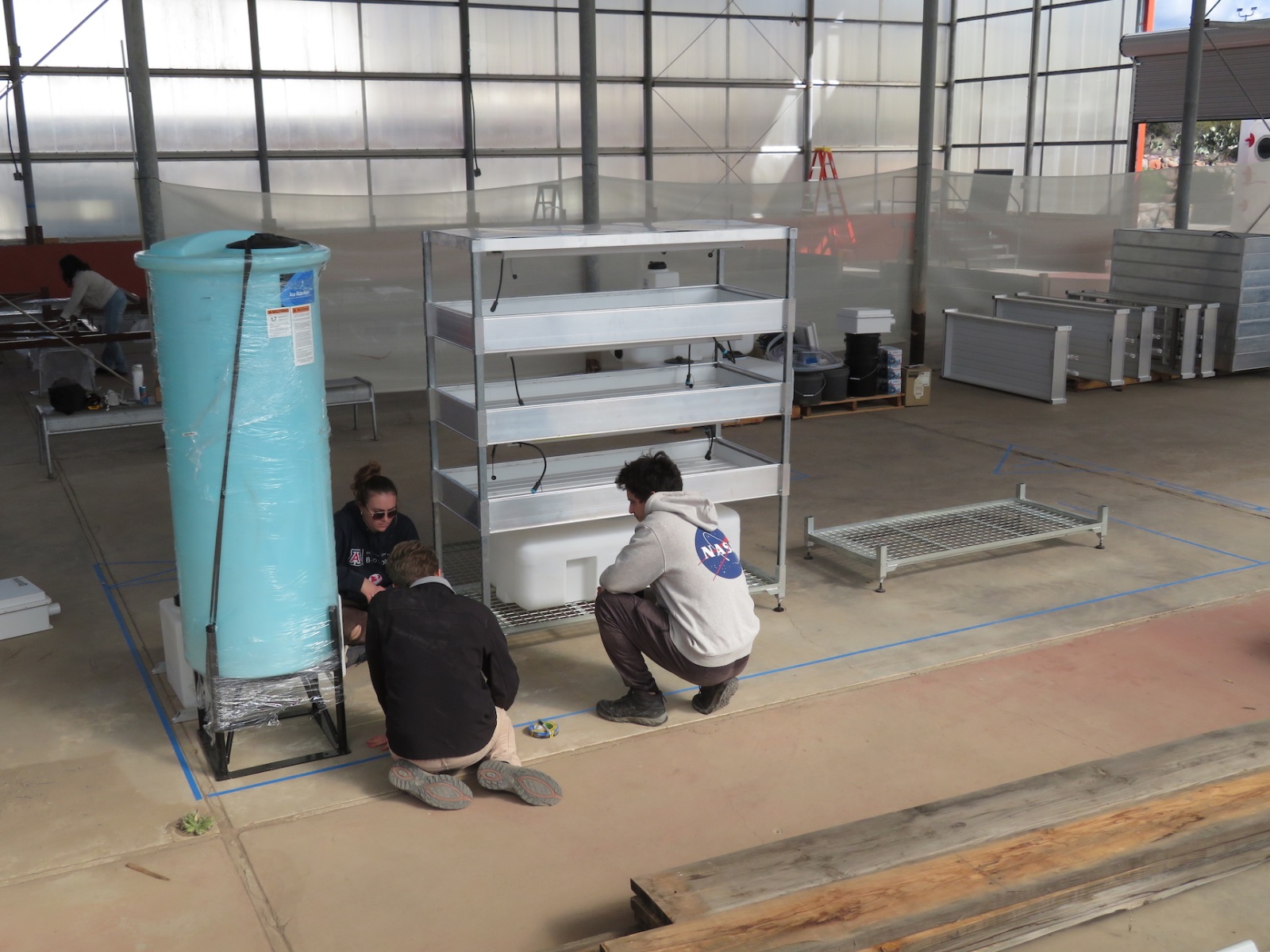
– hydroponics rough layout established; plans made
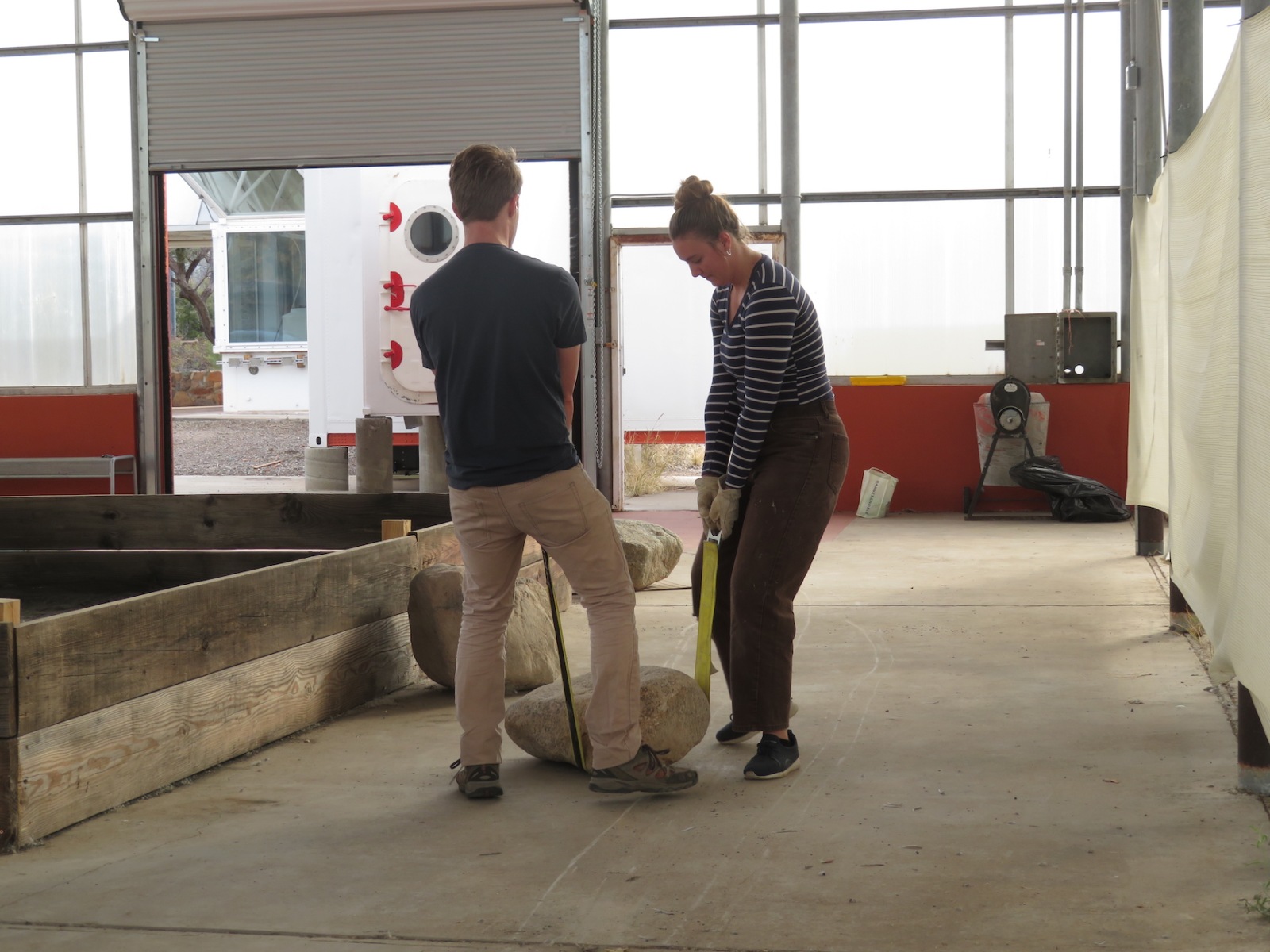
– Mars yard boulders moved (not an easy task)

This week we will:
– re-install the RGS at its working height
– build the gravity-offload rig (and test)
– remove the prototype Mars yard and basalt (ugh!)
– prepare for delivery of a 20′ section of our sculpted Mars yard on Thursday

We kicked butt and got a LOT done! And this next week we again have our work cut out for us!

By |2024-02-15T16:00:21+00:00January 26th, 2024|Categories: Construction|0 Comments

Work at SAM Ops continues …

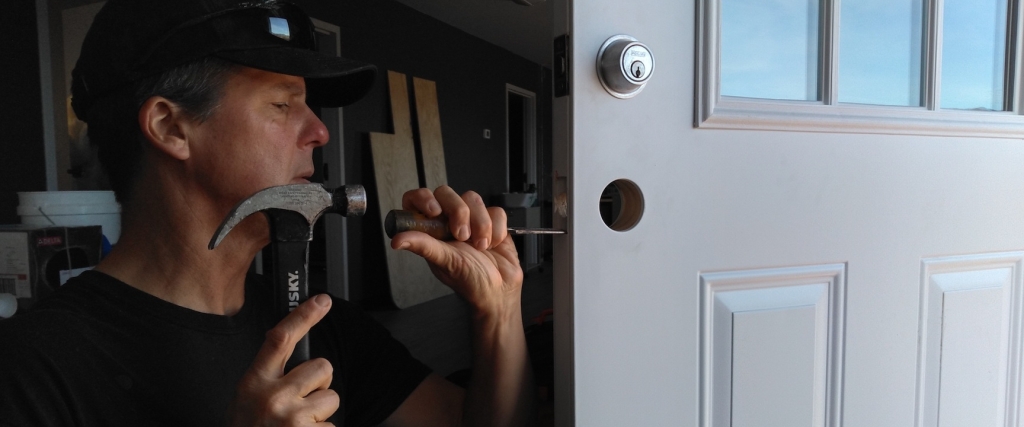
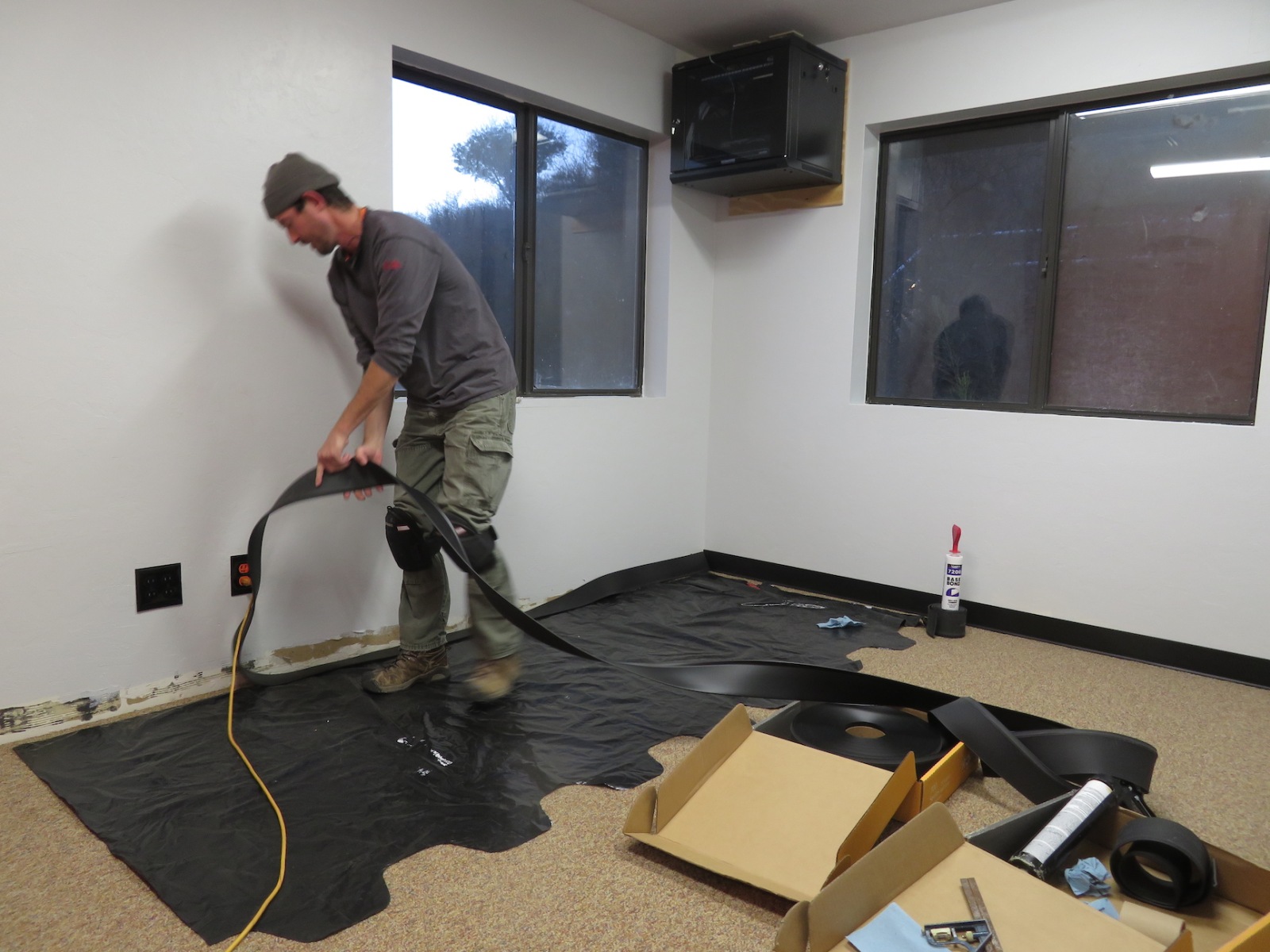
Kai Staats setting the front door at SAM Operations Center, Biosphere 2

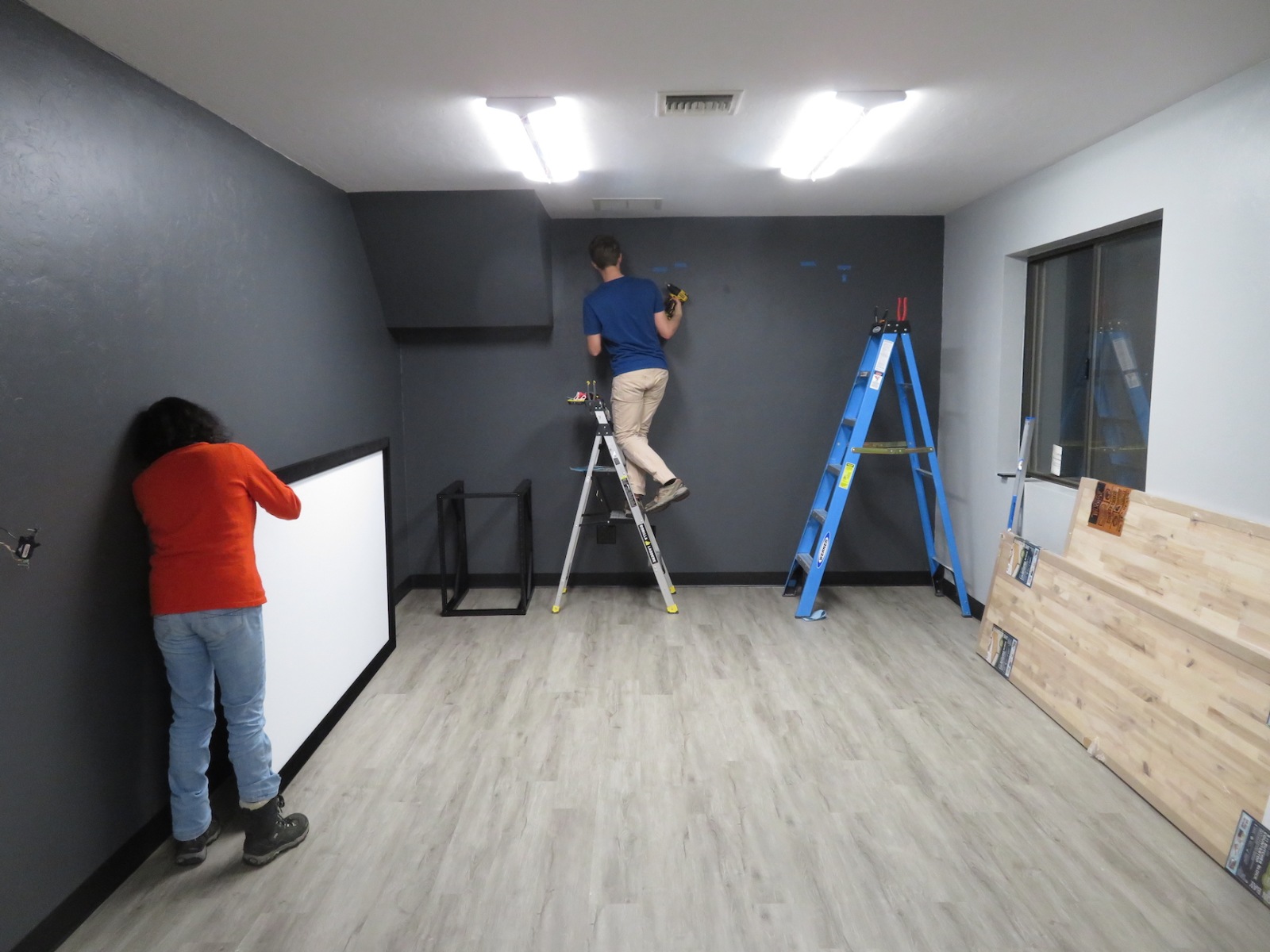
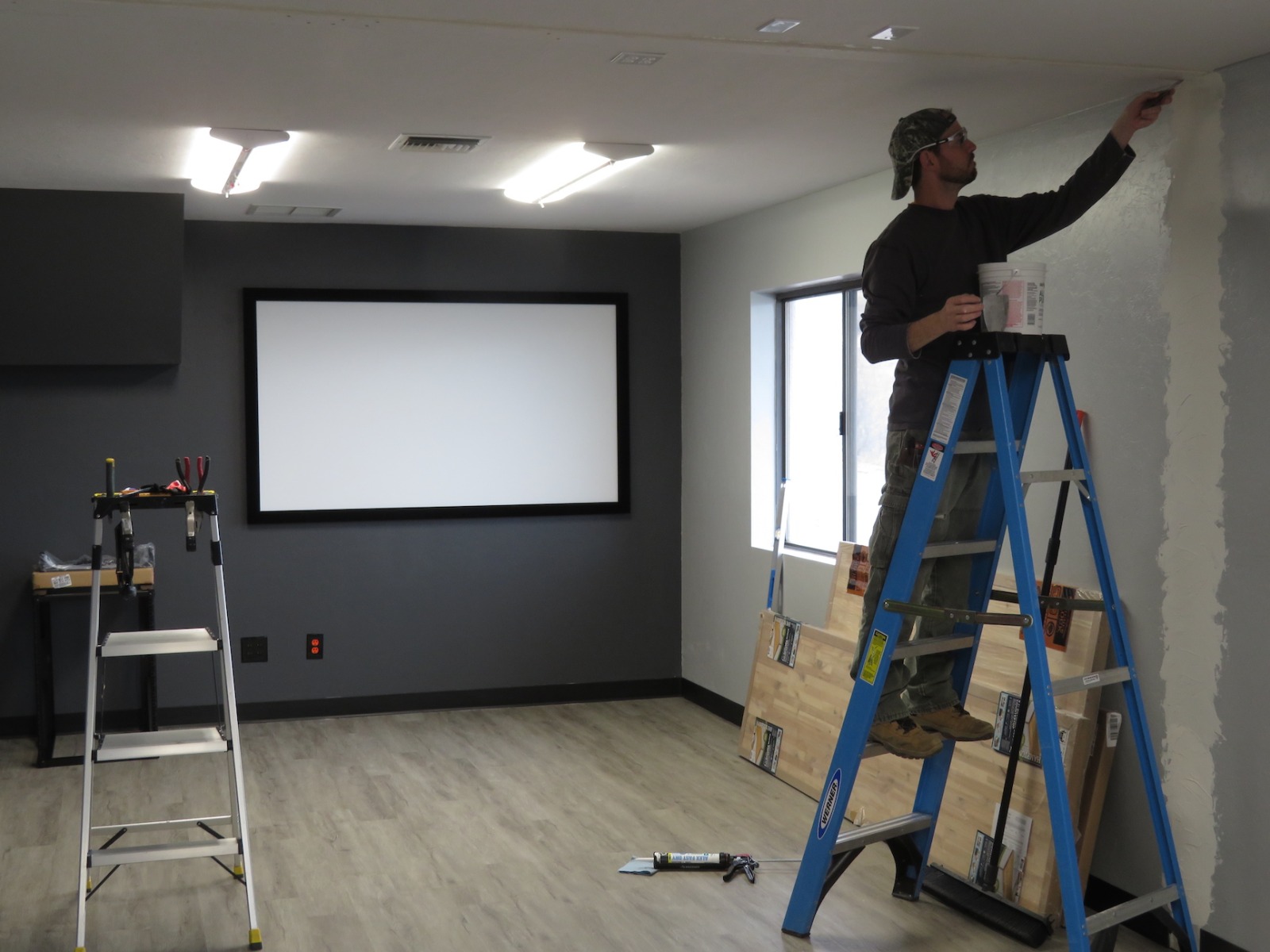
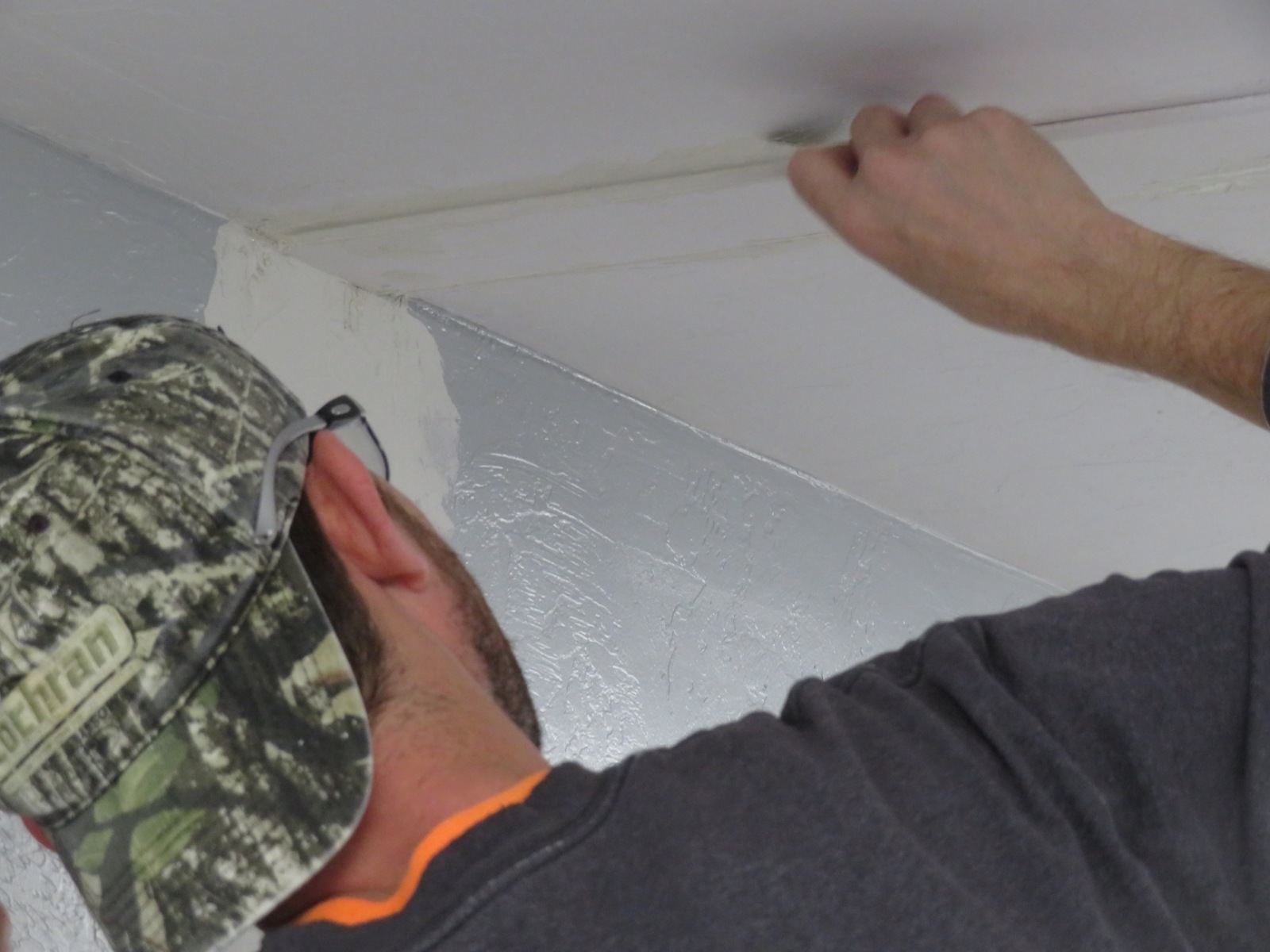
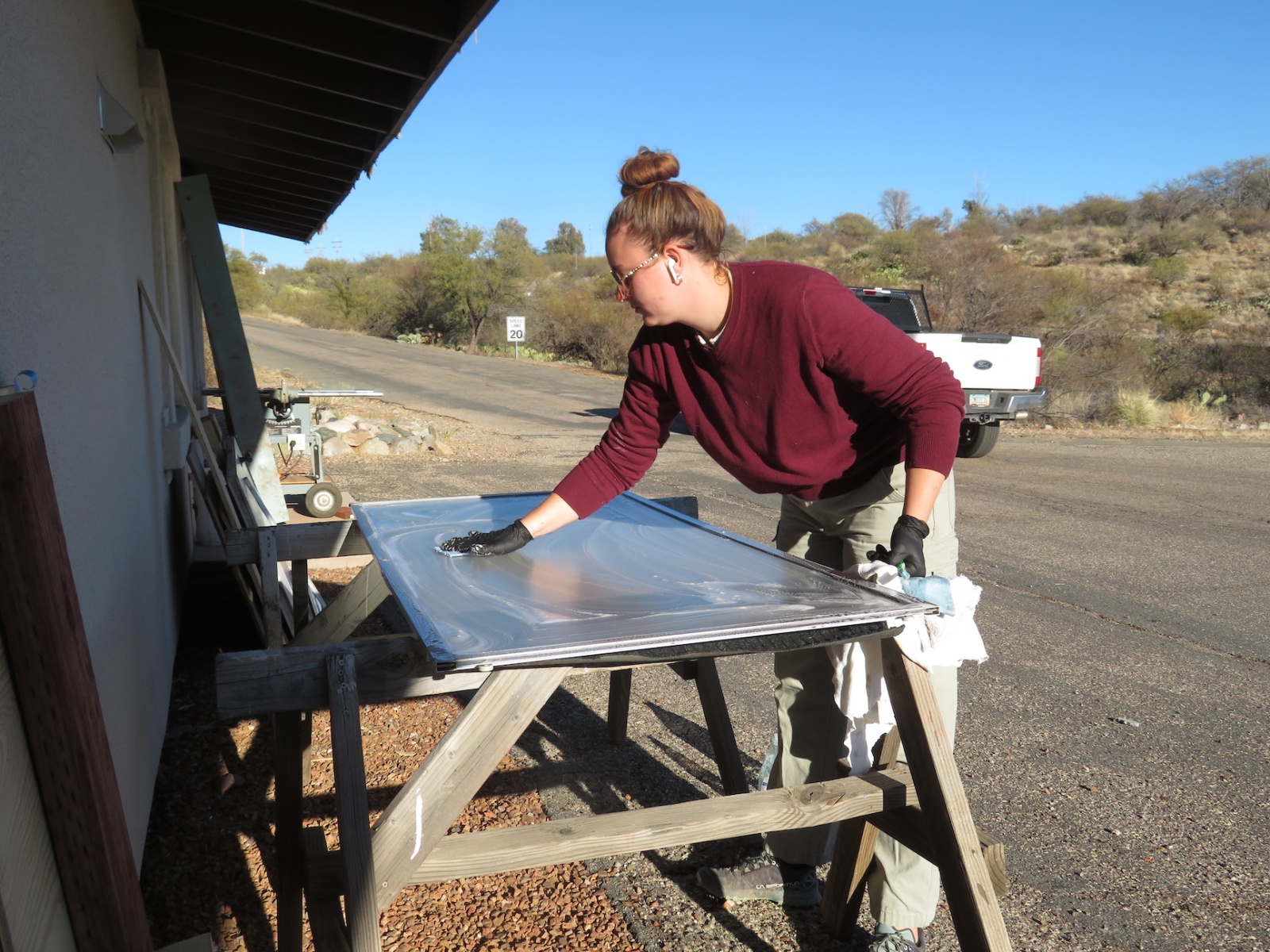
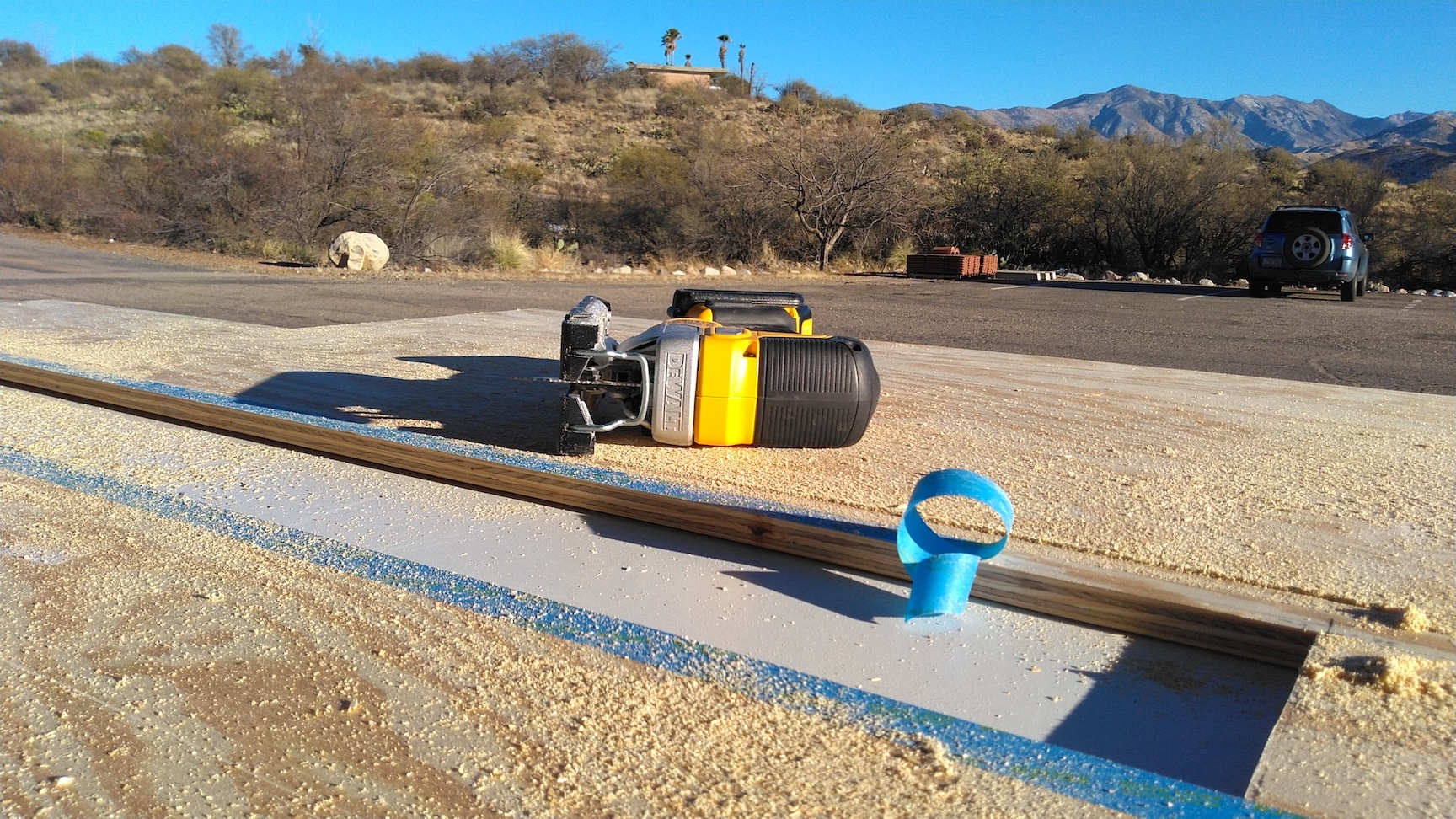
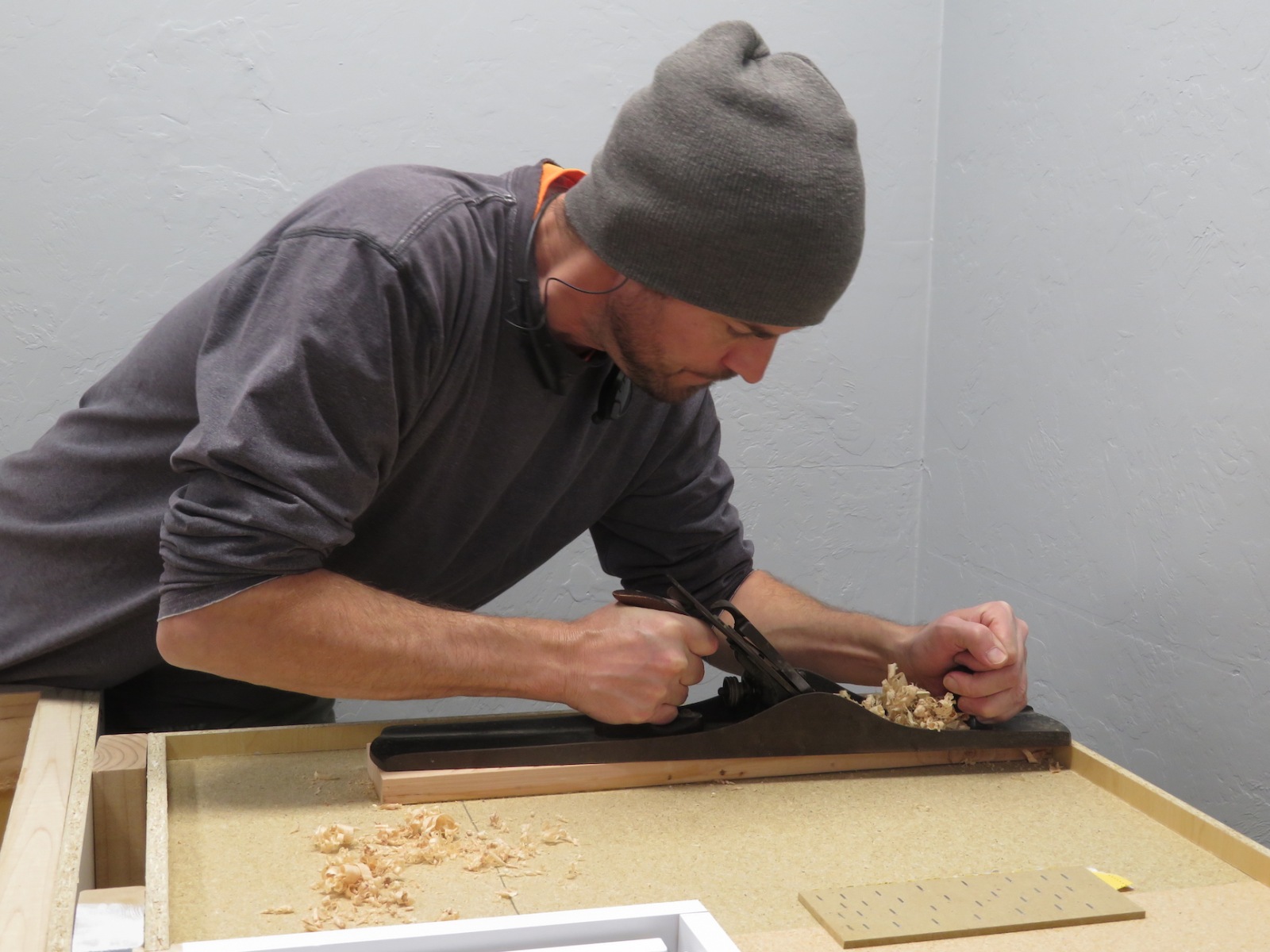
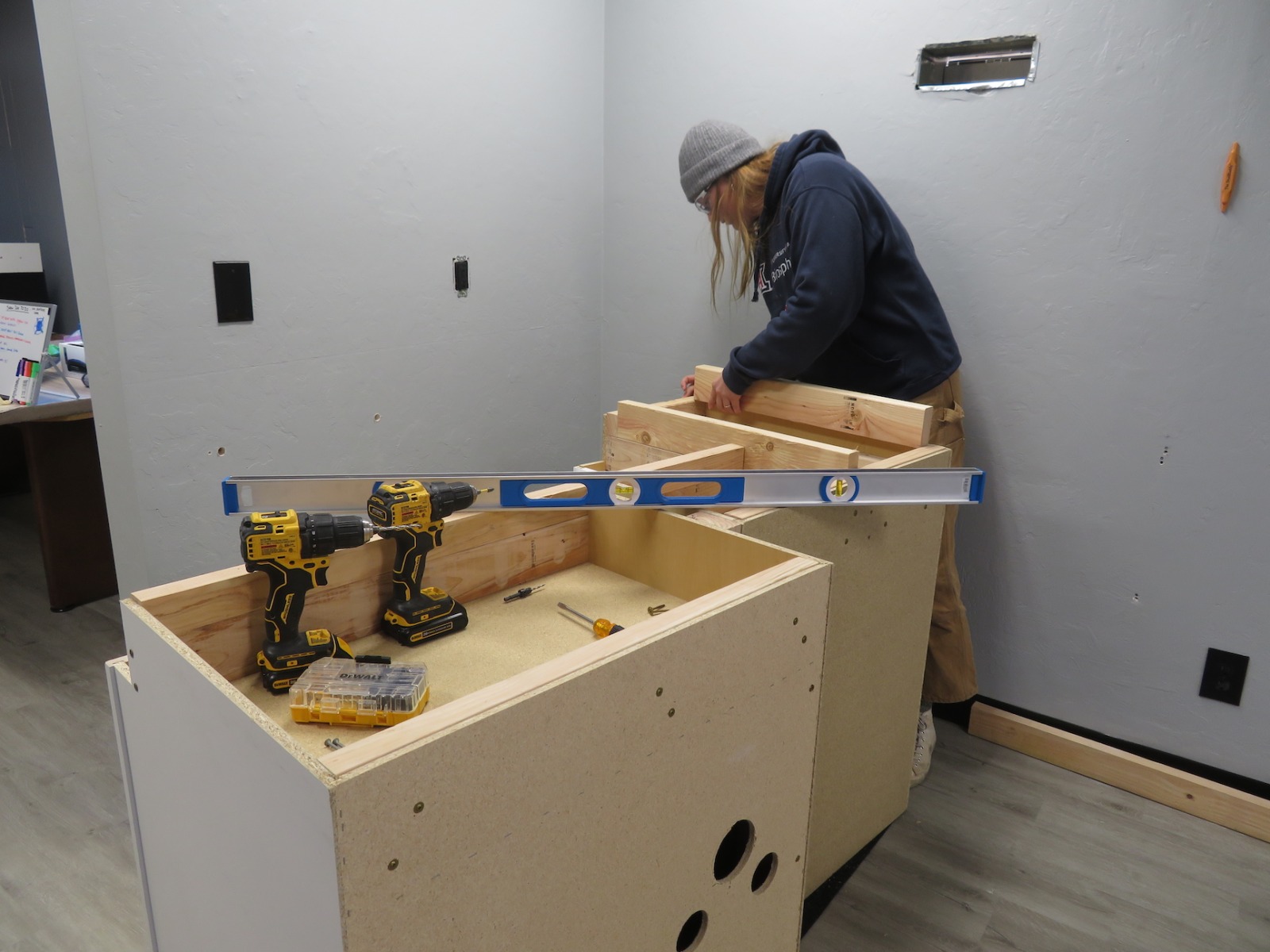
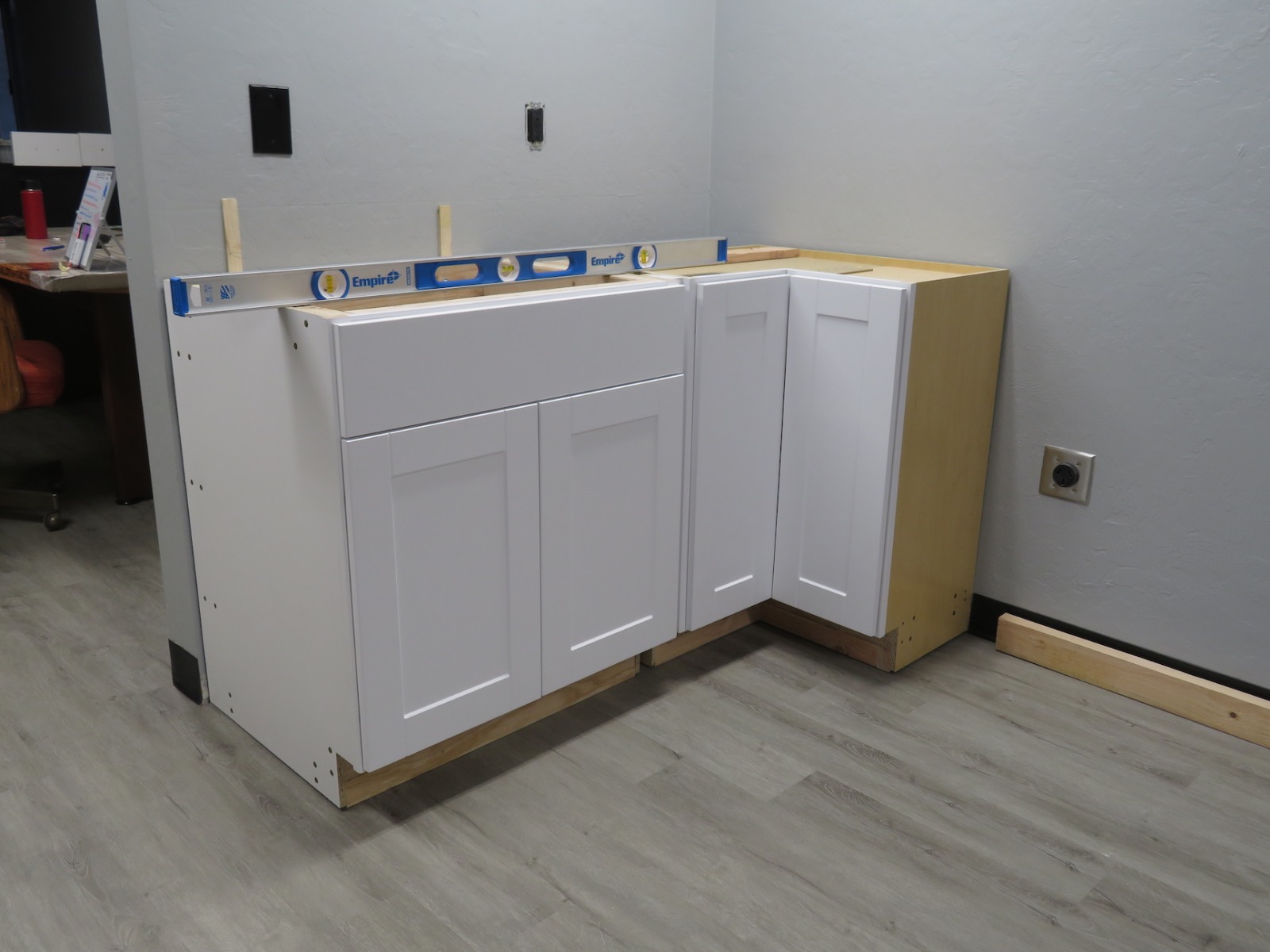
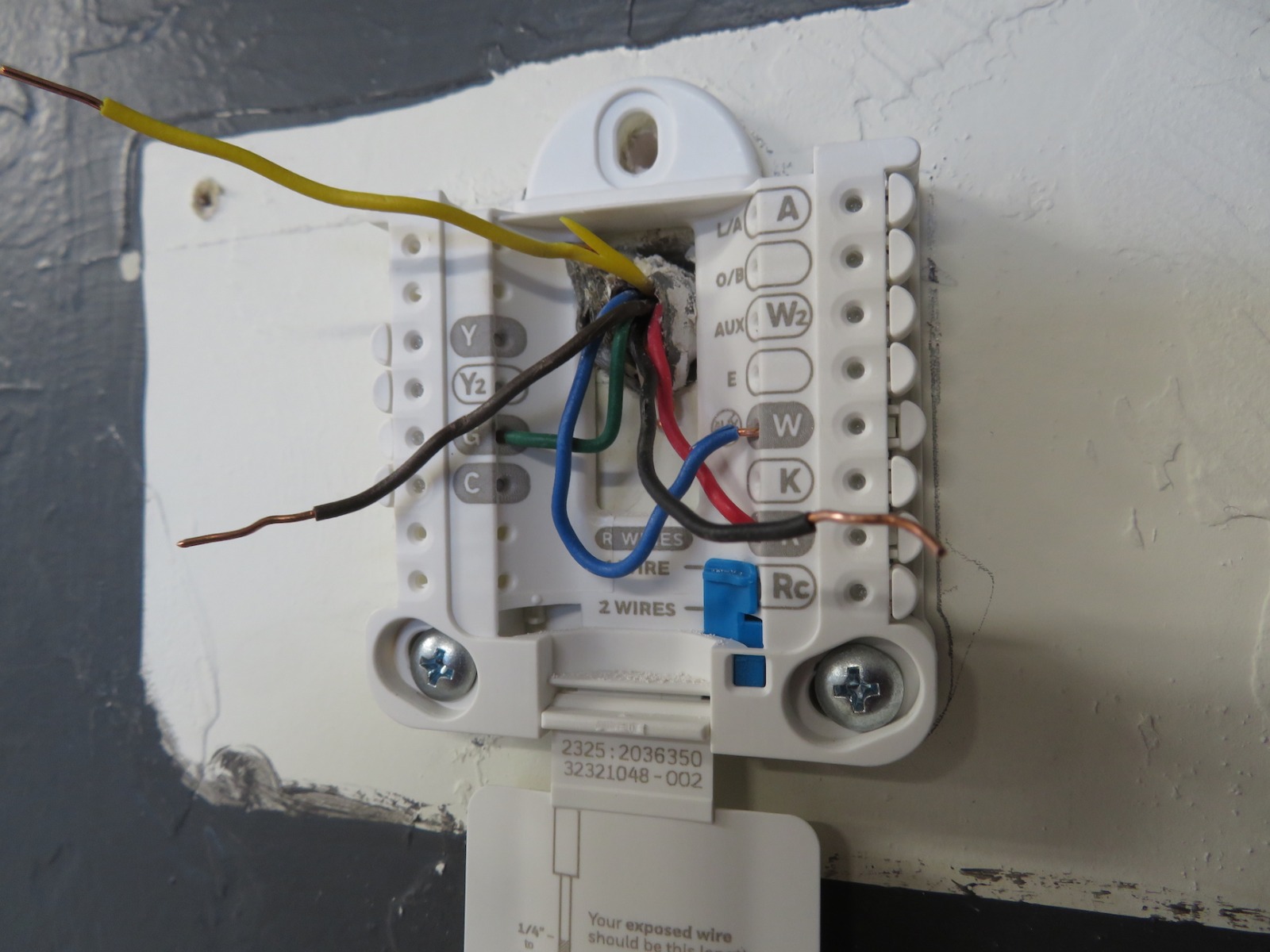
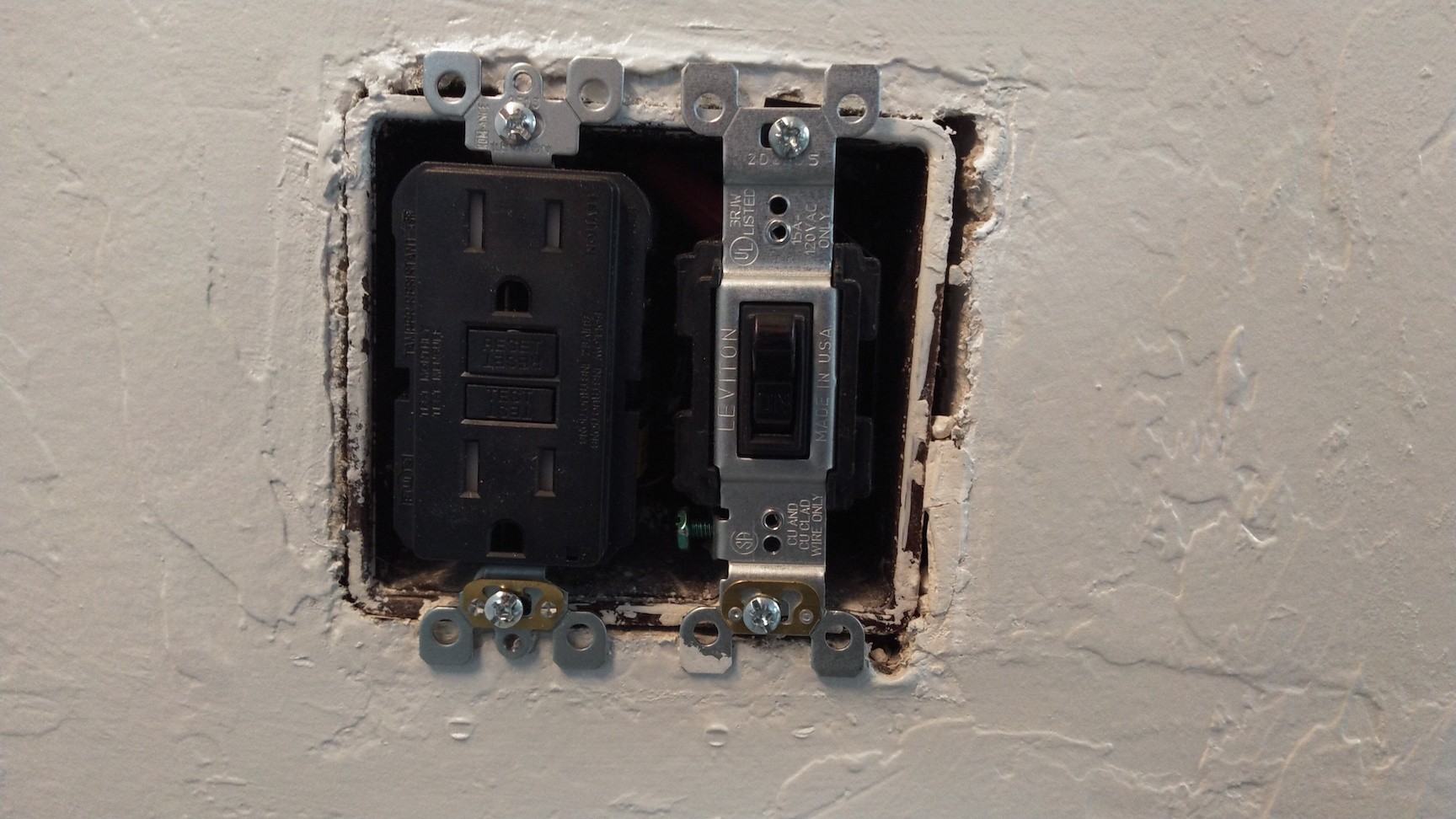
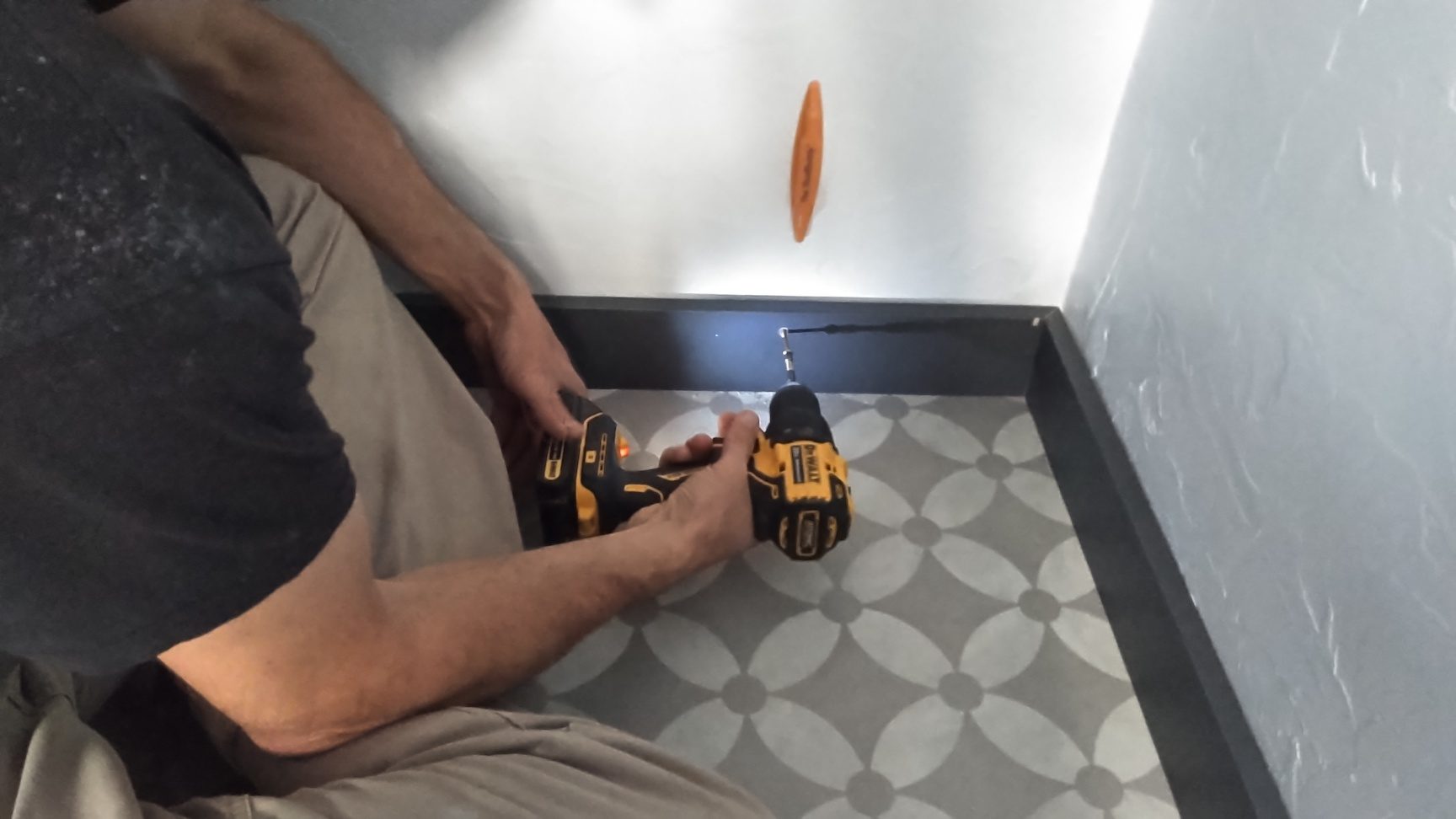
For as laborious as it may appear, our team has enjoyed nearly every minute of this completely normal office remodel. We don’t have to worry about maintaining a hermetic seal, or the structural integrity of a hull under pressure, or the circulation of air and CO2 monitoring—rather, were engaged in the rapid (by comparison) efforts to reinforce and level a new kitchen cabinet, hang two new doors, scrub bathroom tile, install a toilet, paint, and rewire a few outlets.

By |2024-02-15T16:20:56+00:00January 19th, 2024|Categories: Construction|0 Comments

Update from the SAM Operations Center

Today, Thursday, January 11 marks the fourth day that our team has returned to SAM since a few days before the Christmas holiday. We all needed the break after another three months of intense activity. Mason and Natasha have returned to Europe, with Bindhu and Sean in their home towns of Dallas and Chicago respectively, conducting research and working on SAM related projects from afar.

Matthias, Luna, and Kai engage daily with Atila balancing his graduate degree, thesis research, and time at SAM. We will all come together again in just twelve days for a week of intense, hands-on work at SAM. For the remainder of January our goals will be the continued renovation of the building we now claim as the SAM Operations Center, a return to the reduced gravity simulator, and the installation of the new array of hydroponics racks, shelving, nutrient tanks, runs, and computer control systems.

What’s more, we are preparing for the construction of a 3000 sq-ft Mars yard, co-designed and expertly crafted by a leading Hollywood set design company. Stay tuned for the official announcement and design details!

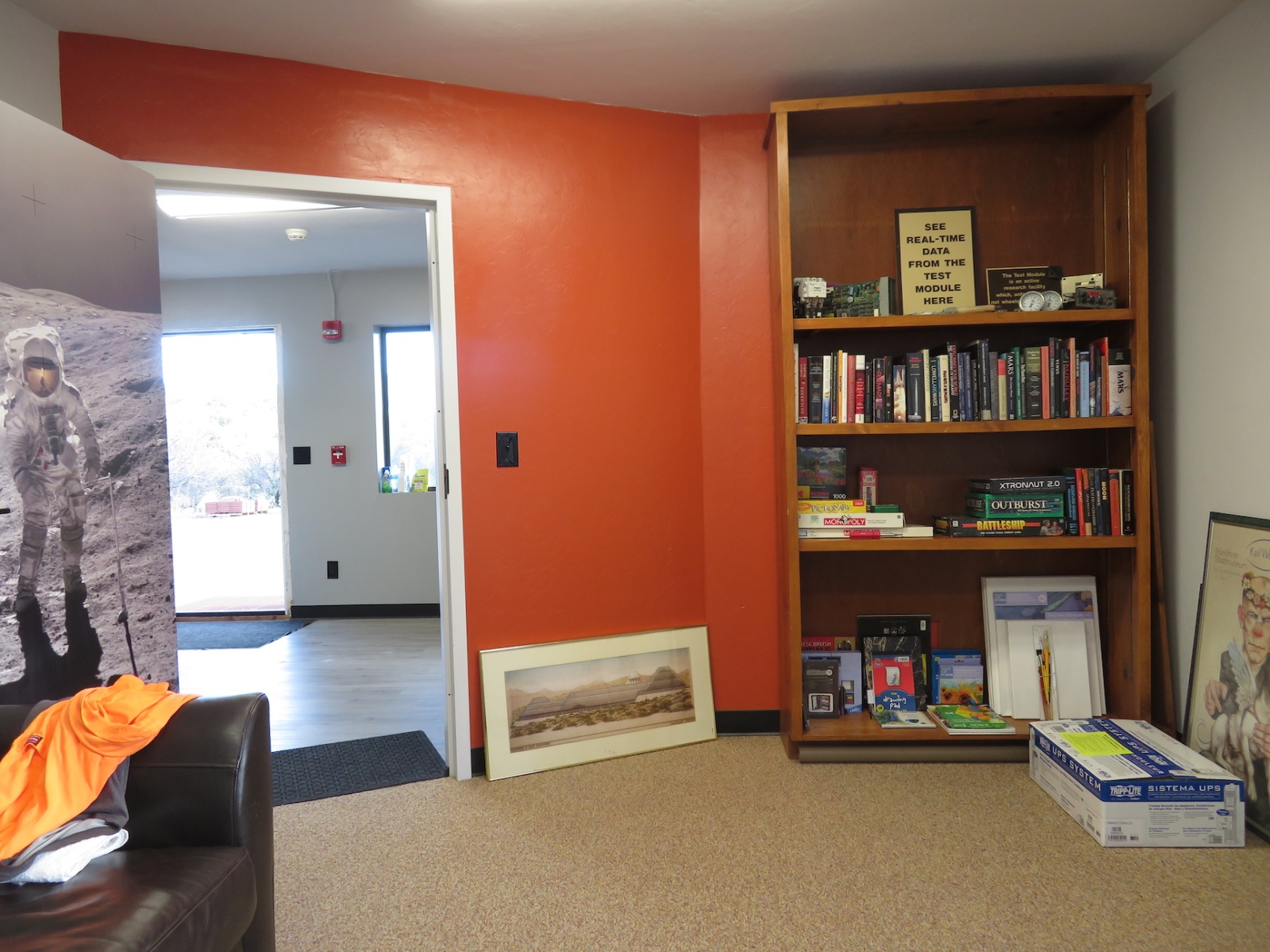
The SAM Operations Center is nearly fully transformed from a former storage facility for B2 house keeping to an elegant, modern facility with conference room, workshop, storage, library-den, full bath, kitchen, and a full-featured Mission Control Center complete with desks for four officers and heads-up displays for SAM monitoring and communications.

Our first team lead by Christopher Cokinos will be in SAM the second week of March. Our own SAM team members will be establishing baselines for CO2 production in preparation for a full suite of bioregenerative experiments October-December 2024.

2024 is the year we fully transition from construction to scientific studies, data collection, and building our legacy in human space exploration.

Stay tuned!

By |2024-01-12T15:04:32+00:00January 11th, 2024|Categories: Construction|0 Comments
Go to Top