
In October of 2023 the SAM team conducted an extensive, module-by-module test of the pressurized SAM to determine where the primary leaks were occurring. This process has been implemented several times, primarily after each major renovation or expansion of the facility.
There are five approaches.
LISTEN
If you can hear the leak, that means it’s big. But that does not mean it is easy to fix. While have often walked toward and in a matter of minutes isolated the internal leak point, the convolution of the walls, seams, and junctions might find the air escaping behind a panel or fixture, thus requiring a considerable effort to apply a patch.
INCENSE – LOOK
If the leak cannot be heard, we use incense. This trick was handed down to us from the original Biospherians who used incense to find the smallest of leaks. It works like this—wear a carpenter’s mask, the kind without a vent, so that your breathing does not stir the air. Light an incense stick and walk slowly through the habitat, stopping for minutes, sometimes, at places where you believe there might be a leak. Stand still. Let the smoke rise and look for the smoke being sucked into a seem, behind a patch, or out a corner. It will do a right-angle turn that makes it clear you’ve got a problem.
INCENSE – SMELL
Using the incense again, this time have someone on the outside such that they can sniff for the incense. While the human nose may not compare with that of a canine, it remains highly sensitive and can detect incredibly minute traces of that distinct incense smell. Trace the exit back to the origin (which can be challenging), patch, and try again.
ULTRASOUND
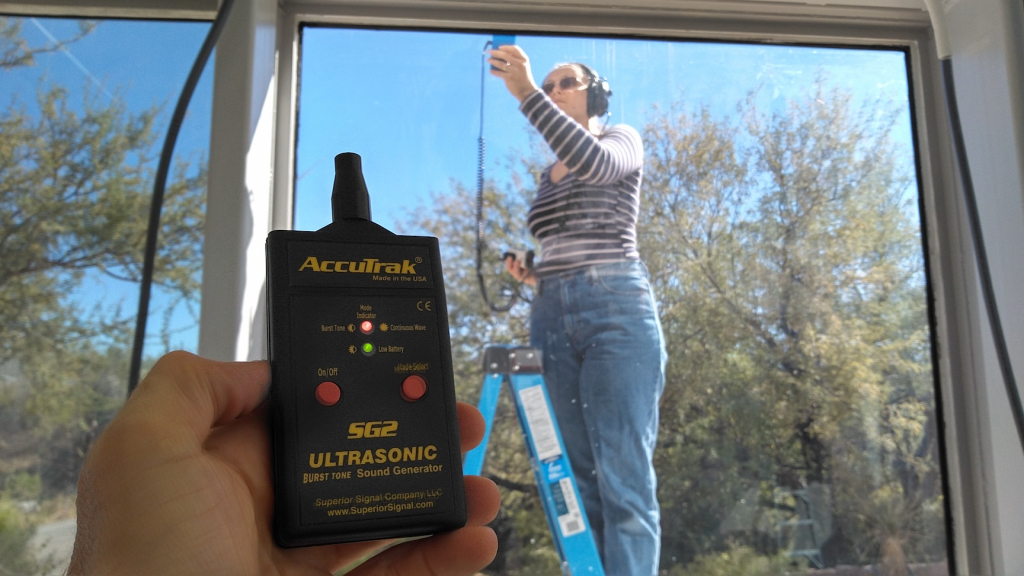
We purchased an ultrasound generated and detector. This proved remarkably valuable, as the generated is held inside of SAM while another team member is outside. We use this much as we do the incense, where the sound can travel around corners and through tubes. It is complimentary to the incense, and used in tandem.
THERMAL IMAGING
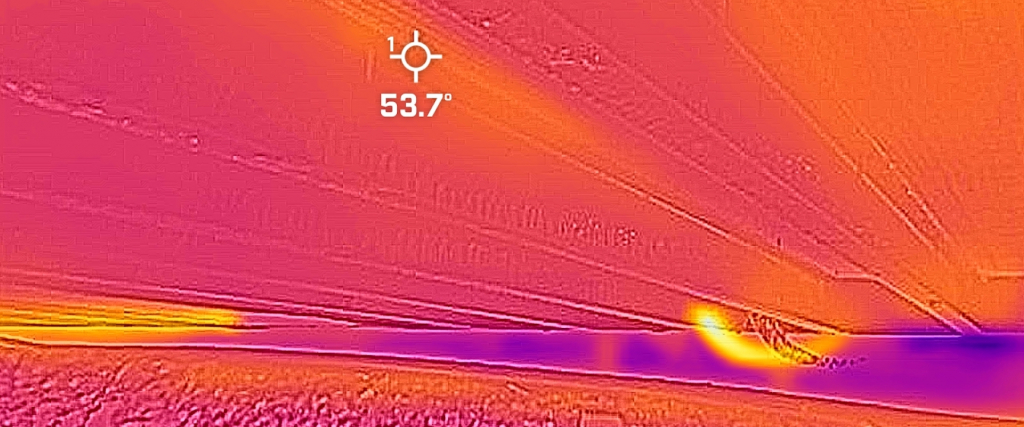
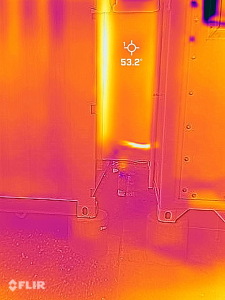
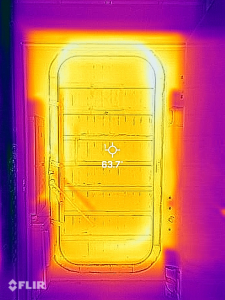
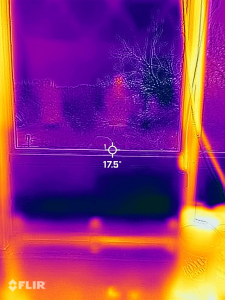
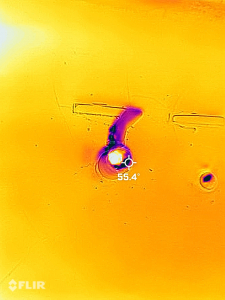
It would seem that a thermal imaging camera would be a top-pick, but in fact it is the least effective. This is in part due to the fact that you must have a fairly high degree of temperature differentiation and a high volume of air escaping to “see” a leak directly. If this is the case, it would likely be heard (#1 above). Rather, we look at the materials (aluminum, glass, caulking) with intent to locate reduced or increased temperature of structural elements due to the passing air. This has proved difficult, and less than valuable.